Skip to content
July 14, 2026
  • Facebook
  • Twitter
  • Instagram
  • Youtube
  • tiktok
MILLENNIUM NEWS 24/7

MILLENNIUM NEWS 24/7

Bridging The Community’s World Wide

  • Home
  • IP TV LIVE
  • U.S.News
  • LOCAL ELECTION
  • State News
    • Alabama
    • Alaska
    • Arizona
    • Arkansas
    • California
    • Colorado
    • Connecticut
    • Delaware
    • Florida
    • Georgia
    • Hawaii
    • Idaho
    • Illinois
    • Indiana
    • Iowa
    • Kansas
    • Kentucky
    • Louisiana
    • Maryland
    • Massachusetts
    • Michigan
    • Maine
    • Minnesota
    • Mississippi
    • Missouri
    • Montana
    • Nebraska
    • Nevada
    • New Hampshire
    • New Jersey
    • New Mexico
    • New York
    • North Carolina
    • North Dakota
    • Oregon
    • Pennsylvania
    • Rhode Island
    • South Carolina
    • South Dakota
    • Tennessee
    • Texas
    • Virginia
    • Washington
    • West Virginia
    • U.S. Virgin Islands
  • Politics
  • World News
  • Sports
  • Entertainment
  • Weather
  • Business
  • Health News
  • Urban Cultural Programs
  • ADVERTISEMENT
  • About Us
  • Contact us
Live TV

US Export Ban on Anthropic’s AI Models Further Strains Alliances

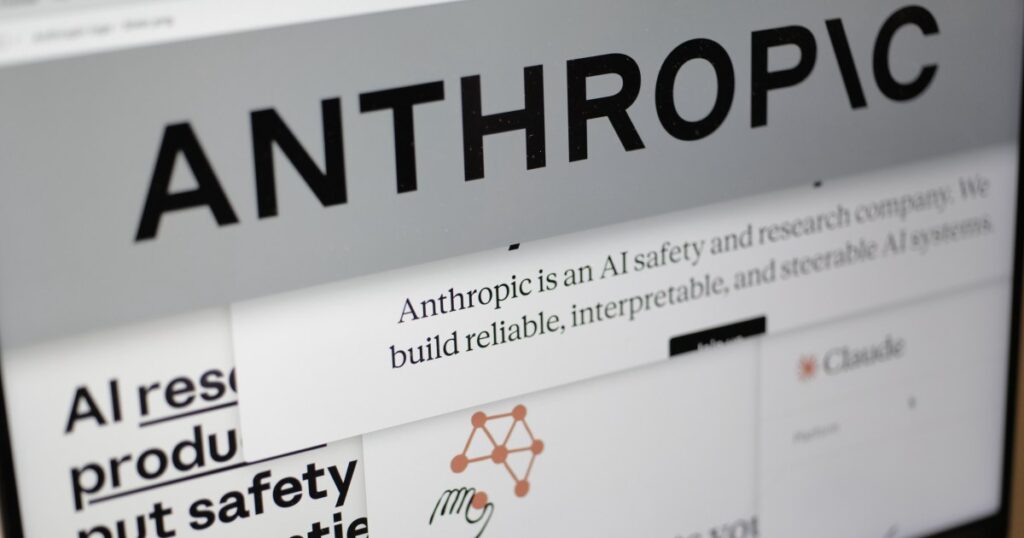
The recent export ban imposed by the US on Anthropic’s advanced AI models marks a significant escalation in technology restrictions, causing further strain on the United States’ alliances with key global partners. This move by the Trump administration, aiming to restrict access to cutting-edge artificial intelligence technology, has sparked concerns about the implications for international cooperation and security.

Anthropic, a leading AI research company known for developing some of the most advanced AI language models, has been at the center of this controversy. The ban effectively prevents many allied countries from accessing these AI systems, which have numerous applications in sectors ranging from defense to healthcare.

The rationale behind the ban revolves around national security concerns, as AI technologies can potentially be utilized for both defensive and offensive operations. The US government fears that these advanced AI models could fall into the hands of adversaries if exported indiscriminately, thus compromising strategic advantages.

However, this restriction has led to diplomatic unease among allied nations, which view the limitation as a sign of growing technological protectionism. Many of these allies have been dependent on the US for access to state-of-the-art AI technology and had expected continued collaboration in research and development.

Experts warn that such actions could trigger a technological decoupling, where countries begin to develop independent AI capabilities to reduce reliance on American technology. This could ultimately lead to fragmented technological standards and reduced global cooperation in the AI sector.

The export ban also highlights an emerging trend of countries adopting more stringent control over dual-use technologies—that is, technologies that can have civilian and military applications. Governments worldwide are increasingly cautious about sharing their most advanced innovations, particularly in fields like AI that are quickly reshaping geopolitical power dynamics.

In response to the export ban, affected countries are accelerating efforts to build their own AI infrastructure and research centers. This push for greater self-reliance is seen as both a strategic necessity and a chance to foster indigenous innovation ecosystems.

Meanwhile, the US administration has defended the export ban as necessary for maintaining its lead in artificial intelligence. Officials argue that controlling the dissemination of powerful AI models is essential to safeguard national interests and prevent potential misuse.

Despite these justifications, the policy has faced criticism from industry leaders and academics who warn that cutting off allied access could hinder collaborative progress on important global challenges, such as climate change, healthcare innovation, and cybersecurity.

The situation places international AI cooperation at a crossroads. The balance between protecting national security and fostering open technological exchange is delicate. Future dialogues among the US and its allies will be crucial in defining the global landscape of AI development and governance.

In conclusion, the US export ban on Anthropic’s AI models underscores the complexities of technological leadership in the 21st century. It reveals the geopolitical tensions underlying AI advancements and the increasing importance of self-reliance amid uncertainty. How countries navigate this new terrain will shape the future of AI innovation and international relations for years to come.


About Author

admin

See author's posts

Post navigation

Previous US Military Targets Alleged Drug Smuggling Vessel in Eastern Pacific, Resulting in Three Deaths
Next US-Iran Deal Talks Delayed Amid Israeli Strikes on Lebanon, Raising Concerns Over Regional Stability

Related Stories

More than 1.7 million evacuated as Typhoon Bavi makes landfall in China

More than 1.7 million evacuated as Typhoon Bavi makes landfall in China

Evacuations Ordered as Landslide Threatens Shimla Village; Construction Firm Faces Blame

Evacuations Ordered as Landslide Threatens Shimla Village; Construction Firm Faces Blame

US Lawmaker Khanna Criticizes Israeli Army After Detainment by Settlers in Palestine

US Lawmaker Khanna Criticizes Israeli Army After Detainment by Settlers in Palestine

Entertainment

Meta Withdraws AI-Generated Image Feature on Instagram Amid Privacy Concerns 1

Meta Withdraws AI-Generated Image Feature on Instagram Amid Privacy Concerns

Paramount-Warner Merger: A Potential Game-Changer for Media Landscape 2

Paramount-Warner Merger: A Potential Game-Changer for Media Landscape

US Court Rules That Trump’s Name Must Stay Off Kennedy Center During Appeal 3

US Court Rules That Trump’s Name Must Stay Off Kennedy Center During Appeal

Prince Harry Loses Privacy Lawsuit Against Daily Mail Publishers 4

Prince Harry Loses Privacy Lawsuit Against Daily Mail Publishers

Upcoming Bollywood Film ‘Chauhaan’ Sparks Controversy Among Kashmir Pellet Gun Victims 5

Upcoming Bollywood Film ‘Chauhaan’ Sparks Controversy Among Kashmir Pellet Gun Victims

Trevor Noah Mocks Trump Over FIFA World Cup Red Card Controversy 6

Trevor Noah Mocks Trump Over FIFA World Cup Red Card Controversy

‘Minions & Monsters’ tops Fourth of July holiday box office, barely beating ‘Toy Story 5′ 7

‘Minions & Monsters’ tops Fourth of July holiday box office, barely beating ‘Toy Story 5′

Top News

More than 1.7 million evacuated as Typhoon Bavi makes landfall in China

More than 1.7 million evacuated as Typhoon Bavi makes landfall in China

Evacuations Ordered as Landslide Threatens Shimla Village; Construction Firm Faces Blame

Evacuations Ordered as Landslide Threatens Shimla Village; Construction Firm Faces Blame

US Lawmaker Khanna Criticizes Israeli Army After Detainment by Settlers in Palestine

US Lawmaker Khanna Criticizes Israeli Army After Detainment by Settlers in Palestine

Over One Million Evacuated as Super Typhoon Bavi Strikes China

Over One Million Evacuated as Super Typhoon Bavi Strikes China

  • Home
  • About Us
  • Facebook
  • Twitter
  • Instagram
  • Youtube
  • tiktok
Editor: Nur M Tofader, Office: 250 Park Avenue, 7th Floor, New York, NY 10177 & Tell: 718 893 0002 (Office), 7188441300, +1212 401 6266, e-mail: Info@millenniuamtv24.com, e-mail: Info@millenniuamnews24.com, Copyright © Millennium News 24/7 | DarkNews by AF themes.