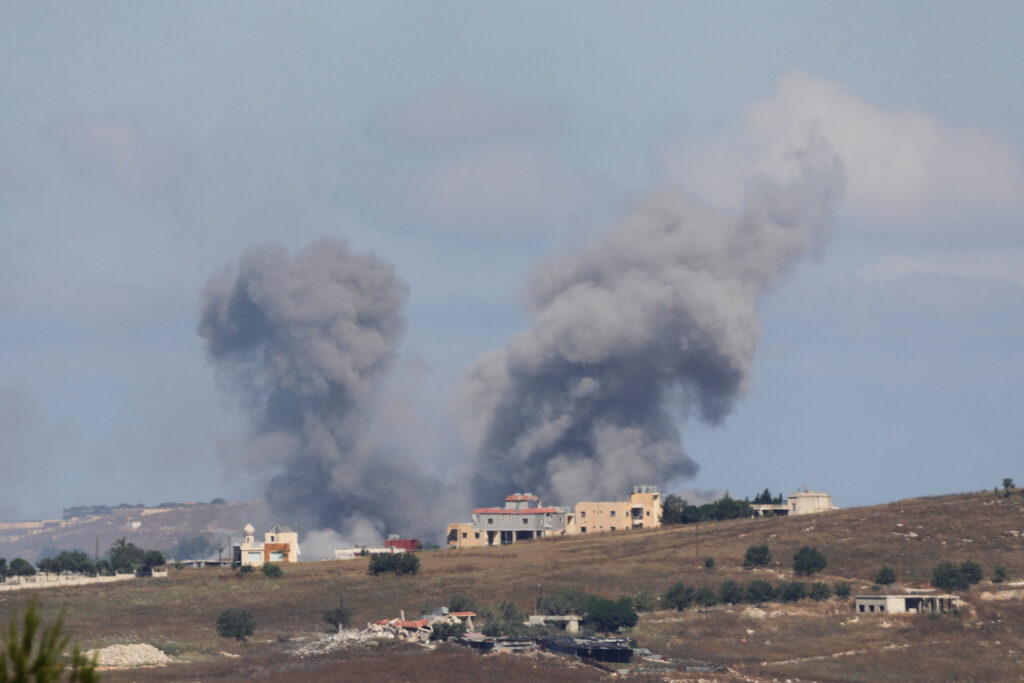
Smoke billows from southern Lebanon following an Israeli strike, as seen from Marjayoun, Lebanon, June 19, 2026. REUTERS/Stringer
In a significant development in Middle Eastern geopolitics, Israel has continued its military strikes on Lebanon despite a recent diplomatic agreement between the United States and Iran. The ongoing tension highlights the complexity and fragility of peace efforts in the region.
The US-Iran deal, aimed at reducing hostilities and promoting diplomatic engagement, was widely anticipated to bring a respite to various conflicts involving Iran’s regional allies, including Lebanon-based groups. However, Israel’s sustained military actions suggest a different trajectory.
Israel has justified its operations by citing security concerns related to militant groups operating in Lebanon, particularly those they associate with Iranian influence. The Israeli government views these groups as direct threats to its national security and has maintained a policy of preemptive strikes.
Lebanon has condemned the Israeli strikes, calling them violations of its sovereignty and international law. The Lebanese government has appealed to the international community for support and intervention to halt the attacks.
The US, while supporting the Iran deal, has not explicitly condemned Israel’s actions, reflecting the delicate balance Washington seeks to maintain between its strategic alliances with Israel and its efforts to engage Iran diplomatically.
Regional experts warn that continued hostilities could escalate tensions further, potentially destabilizing Lebanon and complicating the broader peace process in the Middle East. The situation remains fluid, with the international community closely monitoring developments.
This episode underscores the challenges of achieving lasting peace in a region marked by deep-seated rivalries and geopolitical complexities. It raises critical questions about the effectiveness of diplomatic agreements when underlying security concerns and strategic interests remain unresolved.
As the conflict persists, the human cost continues to mount, with civilian populations in Lebanon bearing the brunt of military confrontations. Humanitarian organizations have called for urgent measures to protect non-combatants and facilitate dialogue.
The international community’s response in the coming weeks will be crucial in shaping the trajectory of this conflict and the prospects for peace in the volatile Middle East region.