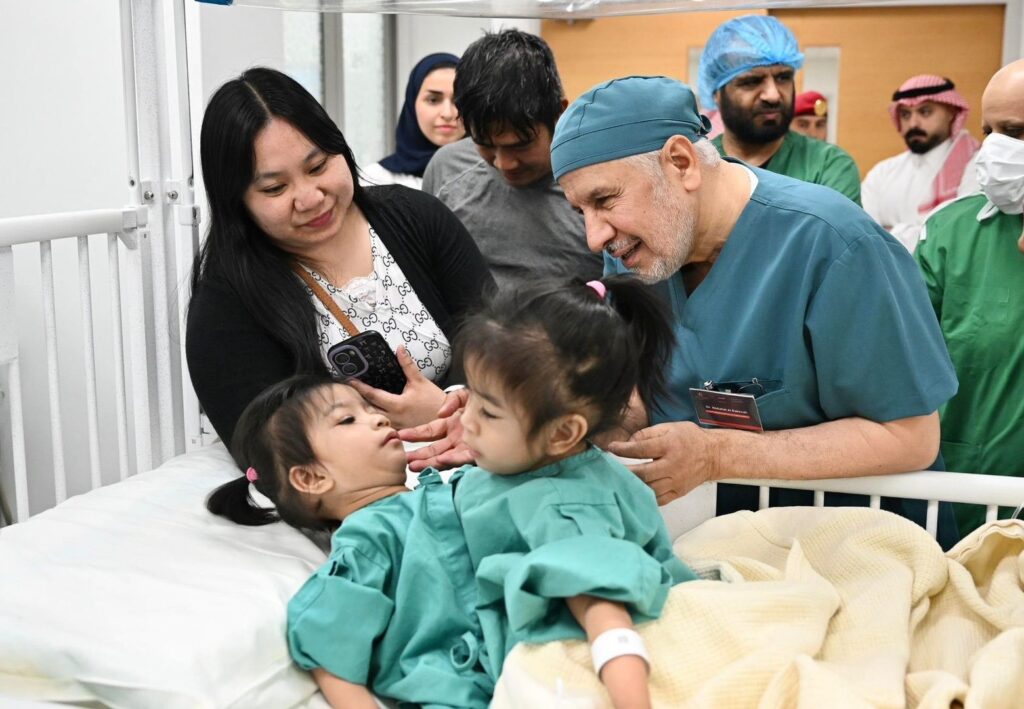
In a remarkable medical achievement, Filipino conjoined twins Olivia and Gianna were successfully separated after a complex six-hour surgery conducted in Saudi Arabia. The procedure marked a significant milestone in the medical field and was celebrated by the families and medical teams involved.
Olivia and Gianna, who were joined by a rare congenital condition, had their surgery meticulously planned and executed by a team of expert surgeons and medical professionals at a leading hospital in Saudi Arabia. The operation required an intricate understanding of the twins’ shared anatomy and the use of advanced surgical techniques.
Conjoined twins, also known as Siamese twins, are identical twins joined in utero. It is a rare phenomenon, occurring in about one in every 200,000 live births. Separation surgeries are highly complex and carry significant risks, often demanding months of preparation and a multidisciplinary team approach.
The six-hour surgery involved carefully separating the shared organs and tissues while ensuring that both Olivia and Gianna maintained stable vital functions throughout the procedure. Post-surgery, both twins were moved to intensive care where their recovery is closely monitored by healthcare professionals.
The successful separation has brought immense relief and happiness to the families, who have been robustly supported by the healthcare providers throughout the journey. Medical experts expressed optimism about the twins’ recovery and future quality of life, noting that ongoing rehabilitation and follow-up care are crucial.
This operation not only highlights the advancements in surgical techniques but also showcases the capabilities of Saudi Arabia’s medical infrastructure and its commitment to providing world-class healthcare. The cross-border collaboration and the dedication of the medical team played a pivotal role in the success of the surgery.
Olivia and Gianna’s story serves as an inspiring example of medical determination and hope, promising a new chapter of improved health and opportunities for the twins. Families with similar conditions often look forward to such breakthroughs, which underscore the importance of medical innovation and compassionate care.
As the twins continue their recovery, the medical community and supporters remain hopeful for their health and future milestones. This successful separation brings new possibilities to the field of conjoined twin surgeries and paves the way for more lives to be transformed through advanced medical intervention.