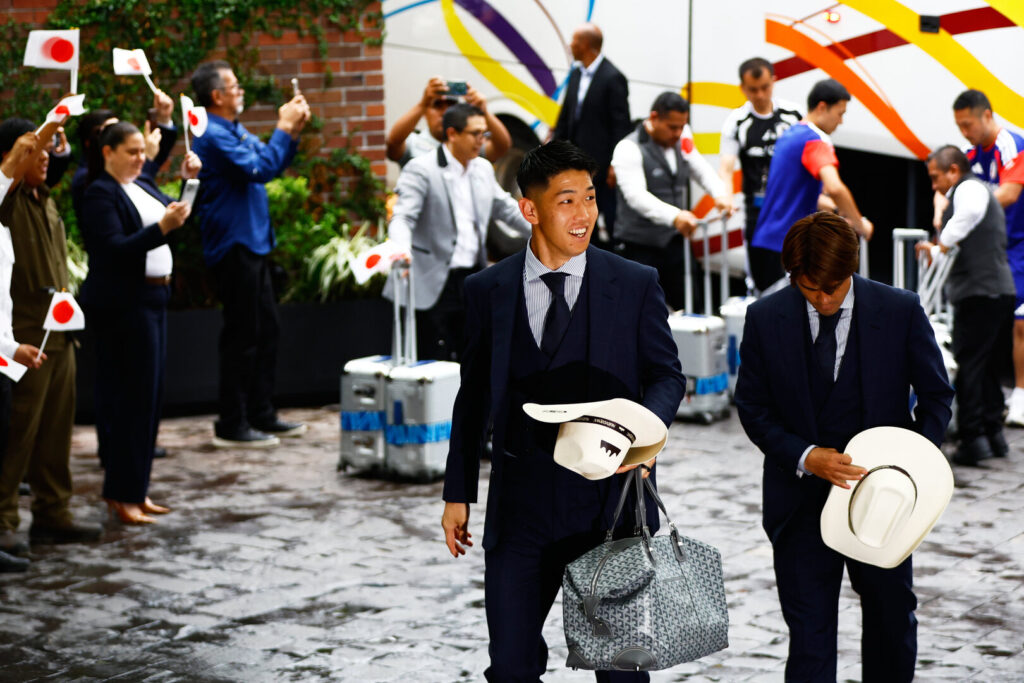
Japan’s national football team captures global attention with a distinct cultural gesture ahead of the World Cup. Upon arrival in Monterrey, Mexico, the players and staff donned traditional cowboy hats, a nod to the local Mexican culture and the hospitality they received from fans. This symbolic gesture was warmly received by the Mexican hosts and football enthusiasts alike, reflecting a unique blend of sportsmanship and cultural appreciation.
The choice of cowboy hats by the Japanese squad illustrated their willingness to embrace and respect the cultural identity of their host country. It also served as a lighthearted moment that helped bridge cultures and create a sense of camaraderie among fans and players from different nations. Monterrey, known for its rich cowboy tradition and vibrant football scene, offered the perfect backdrop for this cross-cultural exchange.
Fans gathered enthusiastically at the airport and various fan zones, cheering loudly as the Japanese players made their way through the crowds. The cowboy hats quickly became a symbol of the team’s goodwill and their excitement to compete in the tournament. Social media platforms buzzed with photos and videos of the Japanese team sporting the hats and engaging warmly with local fans, generating positive buzz around Japan’s World Cup campaign.
The World Cup itself is a global event that transcends sports, often highlighting cultural intersections and mutual respect among participating countries. Japan’s playful yet respectful homage to Mexican culture is an excellent example of how sports can serve as a bridge, promoting friendship and understanding on a global stage.
Historically, Japan has shown a strong football pedigree, frequently advancing well in international tournaments. This latest gesture adds to their positive image, showing that beyond athletic skill, the team values cultural exchange and community. The cowboy hats also symbolize the spirit of adventure and openness the team carries with them, vital traits in their quest for World Cup success.
As the tournament progresses, the images of Japan’s footballers in their cowboy hats may become iconic, representing a moment of cultural fusion and the universal language of football. It remains to be seen how far Japan will advance, but their opening moments in Mexico have already won hearts and fostered goodwill.
In summary, Japan’s national football team wearing cowboy hats in Monterrey signifies much more than a simple fashion statement. It is a heartfelt gesture of respect, cultural immersion, and a symbol of the joy and unity that football brings to the world stage. Fans and players alike look forward to an exciting and memorable World Cup, where cultural differences are celebrated as much as athletic prowess.