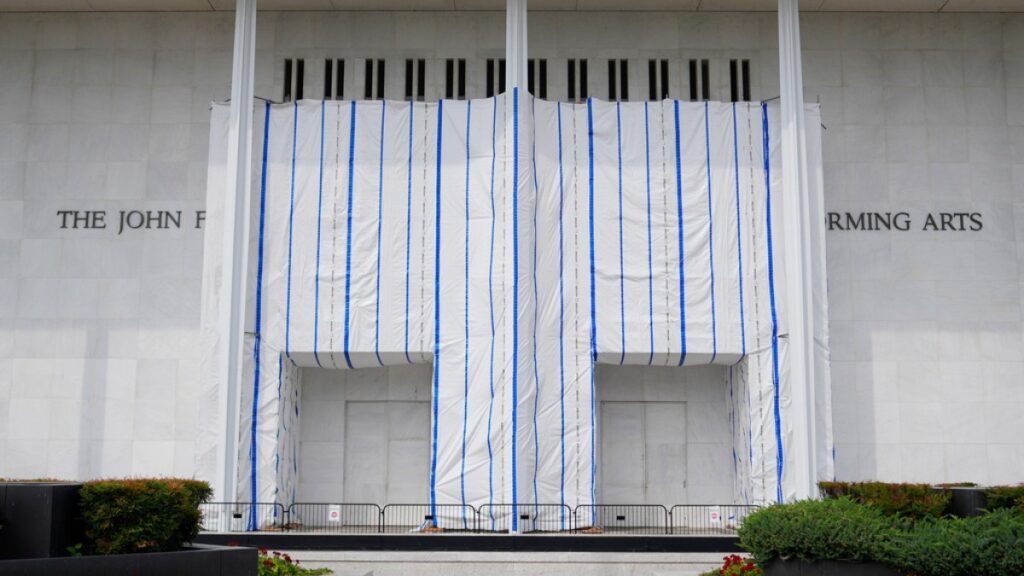
A recent move by the Kennedy Center’s board of directors to reinstate former President Donald Trump’s name on the prestigious venue has come under scrutiny from a US judge. The board, known to be filled with Trump supporters, voted to add his name back to the facility, reversing an earlier decision. This development has reignited debates surrounding Trump’s legacy and the appropriateness of his association with cultural institutions.
The Kennedy Center, a renowned performing arts venue in Washington, D.C., had previously removed Trump’s name following controversies and rulings that questioned his suitability for such an honor. The initial removal reflected broader concerns about the politically charged atmosphere surrounding Trump’s tenure as president.
However, the recent vote by the board to restore Trump’s name indicates a shift, largely influenced by the composition of the board members who maintain strong affiliations with Trump. This decision has drawn criticism from various quarters, emphasizing the potential infringement on the independence of cultural institutions and the implications for their reputations.
During court proceedings, the US judge expressed skepticism about the motivations behind the push to re-add Trump’s name, pointing out the conflicts of interest given the board’s partisan leanings. The judge’s questions highlight the legal and ethical complexities involved in decisions that blend politics with cultural commemorations.
Supporters of reinstating the former president’s name argue that Trump’s contributions and impact justify the honor. They claim that removing his name was politically motivated and that his re-naming recognizes his influence on American history.
Conversely, opponents argue that Trump’s divisive presidency and the controversies associated with him do not align with the values that the Kennedy Center represents. They caution that his name’s presence might politicize the venue and alienate performers and patrons.
The Kennedy Center, traditionally seen as a non-partisan venue for arts and culture, now faces the challenge of balancing diverse perspectives while maintaining its integrity. This episode underscores the ongoing tensions in America over how history and political figures should be commemorated in public spaces.
Legal experts suggest that the case may set important precedents regarding the governance of cultural institutions and the role of politics in their management. If the court rules against the board’s decision, it could reaffirm safeguards against politically motivated influences.
On the other hand, upholding the board’s choice may embolden similar actions in other institutions, potentially leading to increased political polarization in cultural domains.
As the judicial review continues, the wider public and stakeholders remain divided on the issue. The outcome will likely influence not only the Kennedy Center but also the broader discourse on political legacy, institutional neutrality, and cultural inclusion.
This situation highlights the intricate connection between politics, public memory, and cultural policy in contemporary America. It remains to be seen how the court will navigate these sensitive questions to arrive at a decision that respects both legal standards and public sentiment.