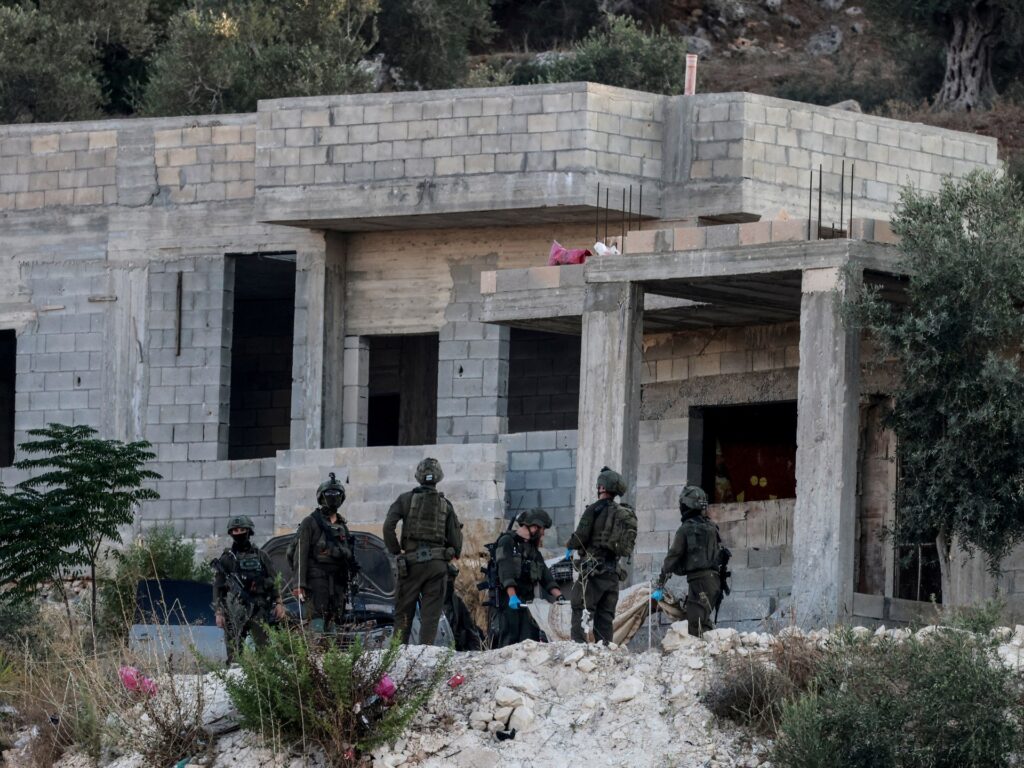
In a recent escalation of violence in the West Bank, an Israeli military strike targeted a location in Jenin, resulting in the deaths of three Palestinians. This incident underscores the continuing conflict and tensions between Israeli forces and Palestinian inhabitants in the region.
The Israeli Prime Minister and Defence Minister have publicly praised the military operation, emphasizing the necessity of such actions for national security and the prevention of further attacks against Israeli citizens. According to their statements, the strike was part of ongoing efforts to combat terrorism and maintain peace in Gaza and the West Bank.
On the other side, Hamas, the Palestinian militant group that governs Gaza, has condemned the attack vehemently. They labeled the strike as a severe crime committed by Israeli forces and called for an immediate halt to what they described as ongoing Israeli aggression and violations against Palestinian civilians.
The incident took place in Jenin, a city located in the northern part of the West Bank, which has been a flashpoint for clashes between Israeli forces and Palestinian groups. Jenin has witnessed numerous confrontations over the years, reflecting the broader Israeli-Palestinian conflict.
This latest strike adds to the growing list of violent confrontations that have occurred recently in the region. It highlights the fragile security situation and the deep-rooted animosities that continue to fuel the conflict.
The international community has often expressed concern over such incidents. Calls for restraint and dialogue have become frequent as each side accuses the other of provocation and misconduct. However, on the ground, the security dynamics remain tense and volatile.
Israeli officials argue that military operations are targeted and necessary for preventing attacks on Israeli civilians and soldiers. They claim that such strikes are intelligence-led efforts aimed at dismantling terrorist infrastructure and capturing or eliminating militant operatives.
Conversely, Palestinian groups and rights organizations accuse Israeli forces of disproportionate use of force, collective punishment, and violations of international law. They argue that such attacks cause unnecessary civilian casualties and exacerbate the humanitarian situation.
The deaths of three Palestinians in Jenin have sparked widespread condemnation among Palestinian communities and activist groups. Funerals and protests have been reported following the strike, with calls for unity and resistance against Israeli actions.
Analysts suggest that the cycle of violence in Jenin and other parts of the West Bank reflects the failure of political solutions to address the underlying issues. The status of the West Bank remains a core point of contention in the Israeli-Palestinian conflict.
Efforts towards peace negotiations have repeatedly stalled, with mutual distrust and periodic escalations undermining progress. International mediators continue to urge both sides to return to dialogue and seek peaceful resolutions.
Meanwhile, the humanitarian situation in the West Bank remains precarious, with restrictions on movement, limited access to essential services, and frequent security operations affecting the daily lives of Palestinian residents.
This recent strike in Jenin is a stark reminder of the ongoing instability in the region and the urgent need for renewed diplomatic efforts. Without a concrete political framework and security guarantees, such incidents are likely to continue, perpetuating the cycle of violence and suffering.
The Israel-Palestine conflict remains one of the most complex and protracted disputes in modern history, with deep historical, religious, and political dimensions. The international community watches closely as both sides navigate a path that could either lead to peace or further conflict.
In conclusion, the killing of three Palestinians in the Israeli strike in Jenin has intensified tensions and drawn strong reactions from both Israeli officials and Palestinian authorities. The situation underscores the critical challenges facing the region and the importance of sustained efforts for peace and security.