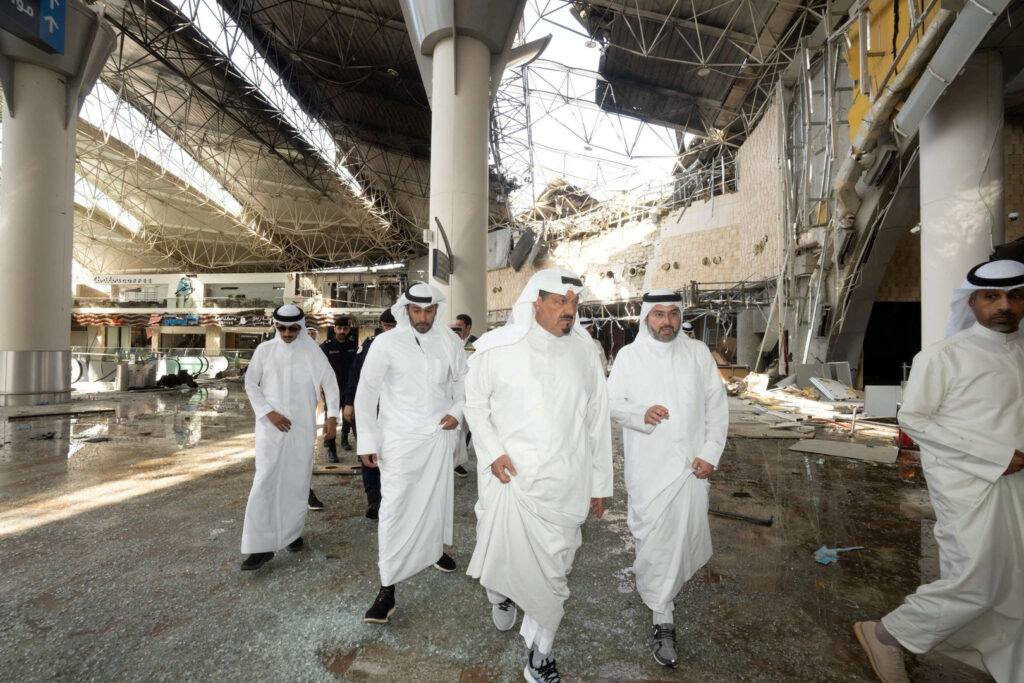
Kuwaiti officials inspect damage inside a terminal at Kuwait International Airport following a drone and missile attack, in Kuwait City, Kuwait, June 3, 2026. Kuwait News Agency/Handout via REUTERS THIS IMAGE HAS BEEN SUPPLIED BY A THIRD PARTY NO RESALES. NO ARCHIVES TPX IMAGES OF THE DAY
In a strong statement, Kuwait’s defence ministry has labelled the recent attack on the country’s international airport as an act of ‘heinous Iranian aggression.’ This condemnation comes in the wake of a security breach that has raised concerns about regional stability and the safety of crucial infrastructure in Kuwait. The ministry’s statement underscores the gravity of the incident and points directly to Iran as responsible for the aggression.
The attack on Kuwait’s international airport has sent shockwaves through the nation, disrupting travel and prompting heightened security measures. Authorities are currently investigating the incident to ascertain the full extent of damages and to prevent future occurrences. Meanwhile, the defence ministry’s choice of words highlights the geopolitical tensions simmering in the Gulf region.
This incident is viewed by many as part of a broader pattern of hostility and proxy conflicts involving Iran and its neighbors. Kuwait, historically taking a more neutral stance in regional disputes, now explicitly blames Iran for this blatant act of aggression, which it describes as ‘heinous.’ This marks a significant escalation in rhetoric, which could influence diplomatic relations and security policies in the Middle East.
Kuwait’s response is likely to rally international support, particularly from Gulf Cooperation Council (GCC) members and allies who view Iran’s regional ambitions with concern. The attack could lead to calls for tightened security measures at critical infrastructure sites across the region, as well as increased intelligence sharing to counter such threats.
Furthermore, this development may affect ongoing diplomatic efforts aimed at de-escalating tensions in the Gulf. The naming of Iran as the aggressor complicates peace talks and could trigger retaliatory actions or sanctions.
Local residents and travelers have expressed alarm over the attack and the potential risks it poses to their safety and the country’s economic stability. The airport, a vital gateway for commerce and tourism in Kuwait, faces challenges in restoring normal operations while ensuring protection against future threats.
In conclusion, Kuwait’s defence ministry’s labeling of the attack as ‘heinous Iranian aggression’ represents a critical moment in regional politics. As investigations continue and diplomatic responses unfold, the international community watches closely, aware that stability in the Gulf is pivotal to global economic and security interests.