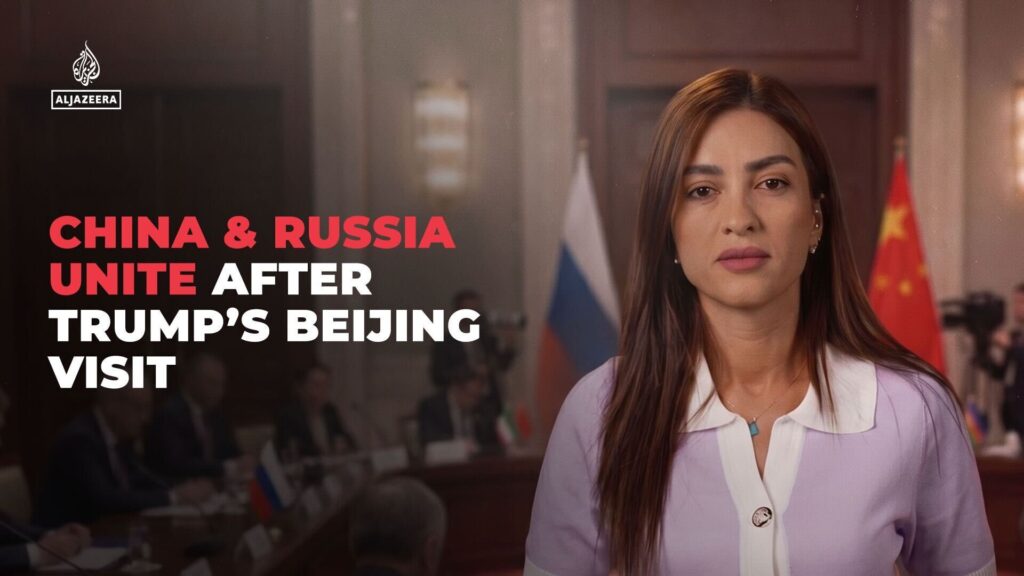
In a significant geopolitical development, China and Russia have moved closer together in the wake of recent high-profile diplomatic engagements. Just days after former U.S. President Donald Trump’s visit to Beijing, Russian President Vladimir Putin arrived in China for an important summit with Chinese President Xi Jinping. This sequence of events signals a strategic partnership aimed at reinforcing their bilateral relationship amid evolving global dynamics.
Trump’s visit to Beijing, widely covered by international media, was seen as an attempt to reengage with China amidst ongoing tensions and competition between the U.S. and China. His meetings focused on trade, technology, and security issues, highlighting the complexity of the U.S.-China relationship.
Shortly after, Putin’s arrival in China marked the continuation of high-level diplomacy in the region. The summit with Xi Jinping focused on strengthening cooperation across a range of areas including energy, military collaboration, economic development, and regional security. Both leaders emphasized the importance of sovereignty, mutual respect, and a multipolar world order.
Experts suggest that these developments reflect a common interest shared by Russia and China to create a counterbalance to U.S. influence globally. The leaders discussed infrastructure projects related to the Belt and Road Initiative and the Eurasian Economic Union, integrating their economic strategies to boost trade and connectivity.
Military ties are also expected to deepen, with joint exercises and intelligence sharing forming part of the agenda discussed at the summit. The defense collaboration aims to enhance security along their shared borders and in areas of mutual concern.
On the economic front, energy cooperation remains a priority, with Russia continuing to supply significant volumes of oil and natural gas to China, which is eager to diversify its energy sources for sustainability and economic security.
The summit also addressed regional issues, including the situations in North Korea, Afghanistan, and the Middle East, areas where both nations seek stability and a reduction of Western influence.
Analysts note that the timing of these visits is critical, illustrating a united front that may reshape regional and global power structures. The alignment of China and Russia could influence upcoming international negotiations, trade agreements, and security policies.
While both China and Russia maintain their unique foreign policy goals, their cooperation indicates a strategic alliance grounded in shared interests and mutual benefits. This partnership may present challenges to Western alliances such as NATO and the Quad, as well as to the United States’ global leadership.
In conclusion, the visits by Trump and then Putin to Beijing underscore the critical role China plays in global affairs. The reinforcing of China-Russia ties following these high-profile visits marks a new chapter in international relations characterized by balanced power and strategic collaboration. Monitoring these developments will be essential for understanding future geopolitical shifts.
This enhanced diplomatic relationship between China and Russia reflects broader trends in international politics where alliances are fluid and driven by pragmatic concerns rather than ideology alone. As they deepen their partnership, the global community watches with keen interest to see how this powerful duo will impact future world order.