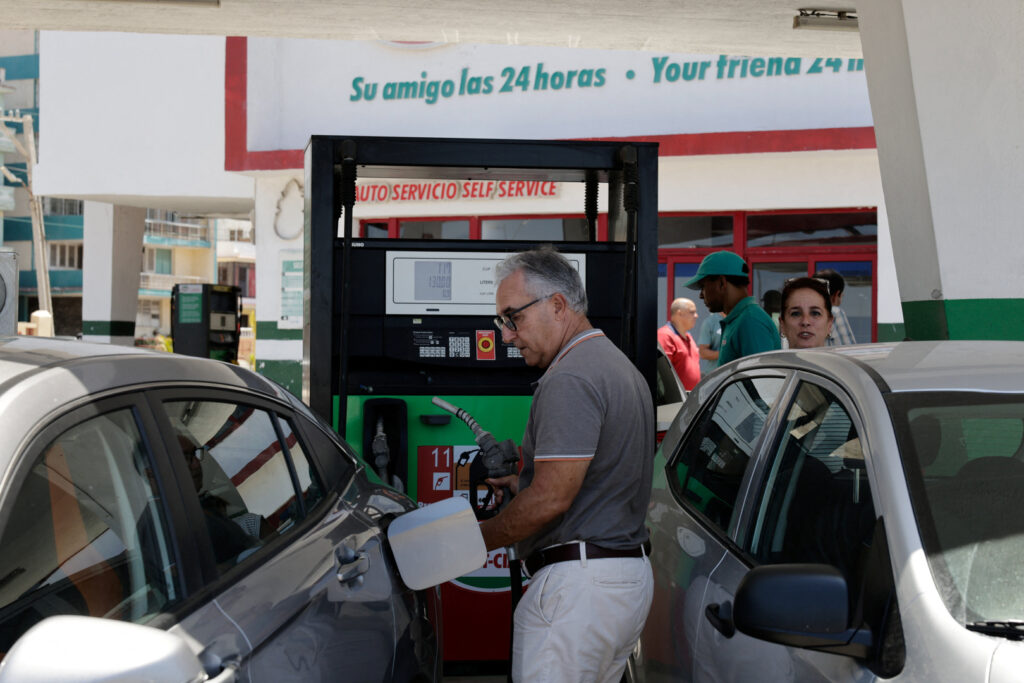
A driver fills up his tank as Cuba announces new and variable fuel prices at the pump beginning on May 15 to better reflect the actual costs of importing gas and diesel amid an ongoing U.S. fuel blockade, in Havana, Cuba, May 12, 2026. REUTERS/Norlys Perez
US President Donald Trump has intensified his administration’s campaign against Cuba, branding the island nation as ‘a failed nation’ amid a deepening fuel crisis. The move comes as the Trump administration expands its pressure on Cuba, aiming to further isolate the government and exacerbate existing economic challenges. The fuel shortages have led to significant disruptions across Cuba, impacting transportation, energy availability, and everyday life for ordinary Cubans. Trump’s rhetoric underscores the US government’s frustration with Cuba’s communist regime and reflects a broader strategy to leverage economic hardship as a tool to instigate political change.
The fuel crisis in Cuba has been worsened by tightened US sanctions, which limit Cuba’s ability to procure oil and fuel from international markets. This has fueled economic instability and heightened public discontent, leading to fears of protests and social unrest. Trump’s hardline stance is consistent with his administration’s broader policy of maximum pressure against countries it deems adversarial, particularly those with socialist or authoritarian governments.
Though the Cuban government blames the fuel crisis on the US embargo, critics argue that internal mismanagement and economic inefficiencies also play a significant role. Nevertheless, the US campaign includes measures aimed at restricting Cuba’s international trade and financial transactions, seeking to curtail the regime’s sources of revenue.
Experts say that while the sanctions may increase hardships for ordinary Cubans, the overall goal is to force the Cuban government to reform or face further isolation. Trump’s administration has repeatedly stated its desire for democratic reforms and increased freedoms in Cuba, framing the pressure campaign as a moral imperative.
The unfolding situation has drawn international attention, with various countries expressing concern over the humanitarian impact of the fuel shortages. Some allies worry that excessive pressure might backfire, strengthening anti-US sentiments in the region and leading to unpredictable political consequences.
As Cuba navigates the escalating crisis, the Trump administration continues to apply diplomatic and economic pressure, signaling an intent to maintain a tough stance despite warnings regarding potential humanitarian fallout. The coming months are likely to test the resilience of the Cuban government and the effectiveness of US policy in influencing its trajectory.