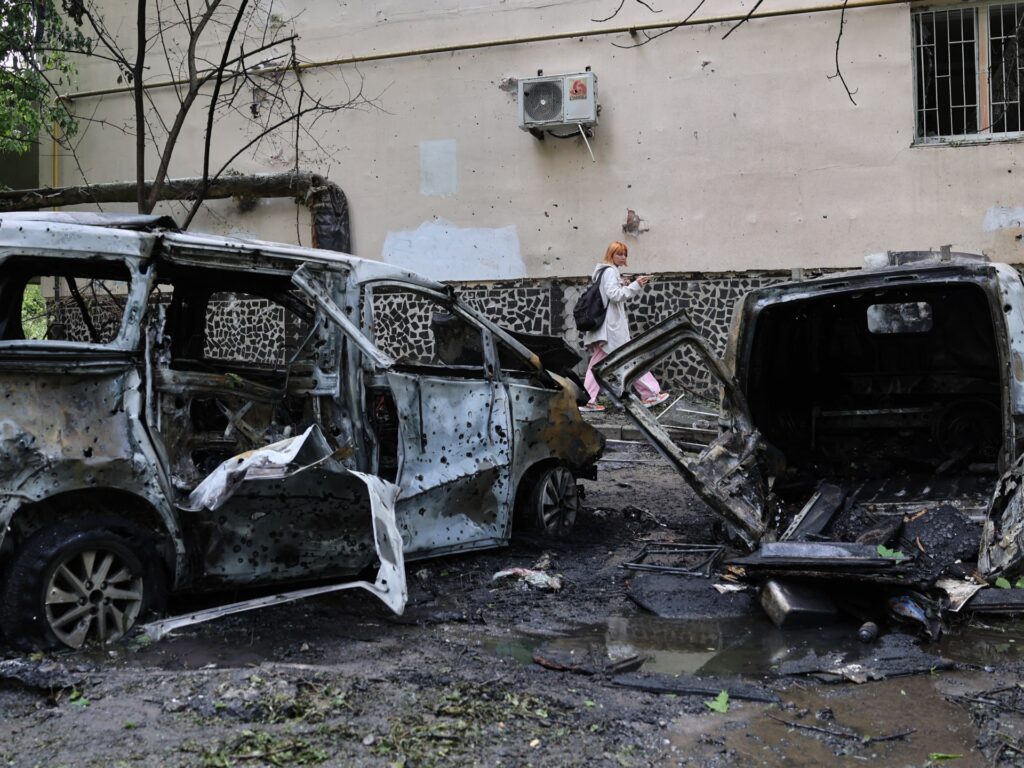
A relentless and prolonged Russian offensive has resulted in the deaths of at least six individuals in Ukraine, marking one of the longest sustained assaults in the ongoing conflict. The attack, characterized by continuous shelling and missile strikes, has severely affected civilian areas, provoking widespread concern and condemnation from the international community.
According to reports emerging from the region, the offensive has been marked by heavy artillery fire and aerial bombardments targeting Ukrainian positions and critical infrastructure. The sustained nature of the attack has disrupted daily life, causing casualties and displacing thousands of residents.
In response to these aggressive actions, Moscow declared it successfully intercepted and destroyed 286 Ukrainian drones over a single night. These drones, primarily used by Ukrainian forces for reconnaissance and tactical strikes, represent a significant component of Ukraine’s efforts to counter Russian military advances.
The Russian Defense Ministry announced that the intercepted drones were neutralized by advanced air defense systems, emphasizing Moscow’s preparedness and technological capabilities amid escalating hostilities. This claim underscores the increasing reliance on unmanned aerial vehicles in modern warfare, highlighting the tactical importance of controlling the skies.
The clash between drone technology and air defense systems underscores a new dimension in the conflict, where technological superiority and electronic warfare play critical roles alongside traditional ground combat.
International observers have expressed concern over the high number of drone interceptions, suggesting both sides are intensifying their use of unmanned systems to gain strategic advantages. The destruction of 286 drones signifies a major loss for Ukrainian forces, potentially impacting their surveillance and attack capabilities.
The ongoing violence continues to destabilize the region, drawing attention to the urgent need for diplomatic efforts to de-escalate tensions and prevent further civilian casualties.
As the situation evolves, humanitarian agencies warn of worsening conditions for people caught in the crossfire, urging immediate aid and protection for vulnerable populations.
The international community remains watchful, calling for restraint and adherence to international law to avoid a broader escalation. Meanwhile, Ukraine continues its resistance amidst a challenging security environment marked by sophisticated Russian military operations and significant drone warfare.
This recent chapter in the conflict highlights the complex dynamics of modern warfare, where conventional battles intersect with cutting-edge technology, profoundly affecting the course of the war and the lives of those involved. The world watches closely as both nations grapple with the harsh realities of war, signaling a critical juncture in their struggle.