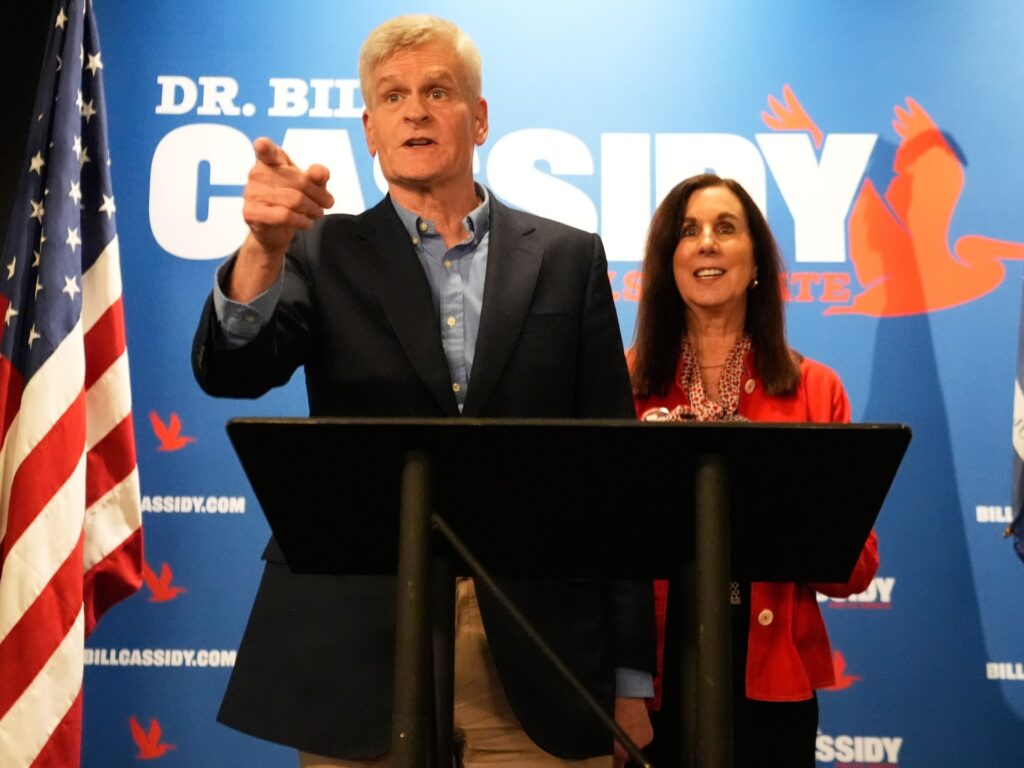
The ongoing political dynamics in Louisiana are currently spotlighted by the looming primary election, where US Senator Bill Cassidy’s controversial 2021 vote to convict former President Donald Trump during his impeachment trial is proving to be a significant issue. This decision, which went against many in his party, has now become a pivotal factor as Cassidy faces a formidable challenger backed by Trump himself—a true test of the former president’s influence in the state.
Senator Cassidy’s vote to convict Trump was a rare posture among Republican lawmakers during the impeachment, signaling a critical moment of dissent within the party. While some voters praised his decision as an act of principle, others viewed it as a betrayal. This divide set the stage for the upcoming electoral challenge.
The primary election in Louisiana is not only about choosing a representative but also serves as a referendum on Trump’s residual power within the GOP. Trump has actively endorsed candidates who oppose those who voted for his conviction, injecting high stakes into local races such as Cassidy’s.
Facing this Trump-backed challenger, Cassidy’s campaign is navigating a complex political terrain where loyalty to the former president often translates into electoral success. The juxtaposition between Cassidy’s moderate stance and the challenger’s alignment with Trump’s more aggressive rhetoric encapsulates the ongoing ideological battle shaping the Republican Party.
The election outcome will likely influence the broader national landscape, signaling whether Trump’s brand of politics continues to dominate the party or if a shift towards more independent conservatism is possible. For Louisiana voters, this primary presents a critical choice that could redefine their state’s political future.
Senator Cassidy has emphasized his commitment to serving all constituents in Louisiana, highlighting his legislative achievements and experience. Meanwhile, the Trump-endorsed challenger capitalizes on the former president’s loyal base, campaigning on a platform of unwavering support for Trump’s policies and persona.
This contest also reflects wider tensions in American politics, where divisions within parties are intensifying and loyalty to individual leaders can supersede traditional party considerations. The fallout from Trump’s impeachment and the subsequent electoral battles underscore the evolving challenges faced by politicians in the current polarized environment.
Political analysts suggest that Cassidy’s refusal to fully align with Trump could either cost him the primary or cement his reputation as an independent-minded leader capable of bipartisan cooperation. The race is therefore watched closely not only in Louisiana but nationally, as an indicator of the GOP’s direction post-Trump era.
Voter turnout and engagement in the Louisiana primary will be a critical factor. The primary is expected to attract significant attention and resources from both local and national political entities, reflecting the broader implications of the race.
Ultimately, the primary election serves as a barometer of the power struggle within the Republican Party and the extent to which Trump’s influence remains potent in shaping political careers. Senator Cassidy’s vote to convict Trump remains a defining moment—a political gamble that may determine his political future as well as the future trajectory of the party in Louisiana and potentially beyond.