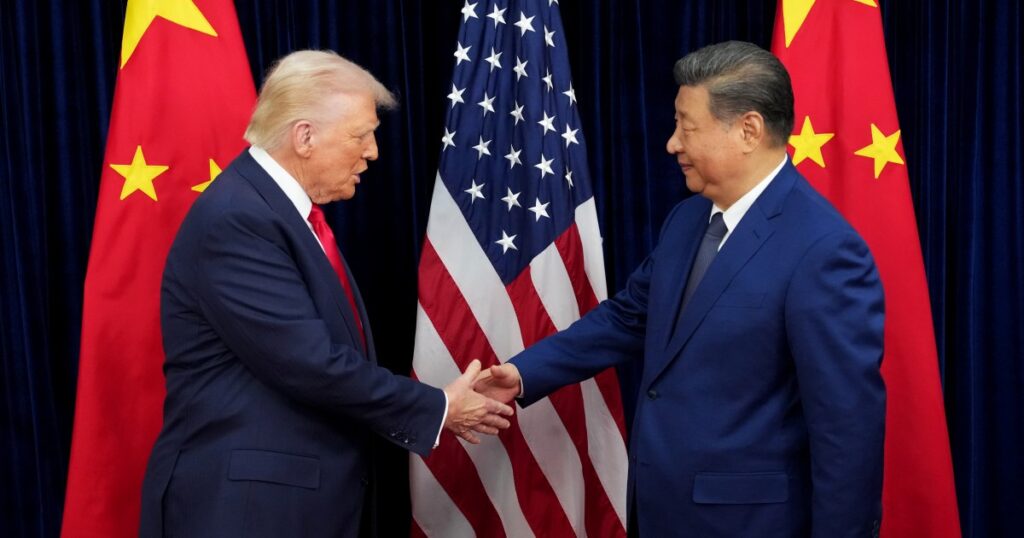
Since 2017, US President Donald Trump and Chinese President Xi Jinping have met on six significant occasions, highlighting the complex and evolving relationship between the world’s two largest economies and superpowers. These meetings have not only shaped bilateral ties but also influenced global geopolitics.
The first encounter took place in April 2017 at the Mar-a-Lago estate in Florida. This meeting set the tone for the Trump-Xi relationship, focusing on trade, North Korea, and the South China Sea. Despite initial optimism, tensions simmered under the surface, particularly over trade imbalances and intellectual property issues.
Their second meeting was at the G20 summit in Hamburg, Germany, in July 2017. Here, they discussed North Korean nuclear threats and agreed on the importance of denuclearizing the Korean Peninsula. This summit was marked by a cautious but constructive dialogue signaling a willingness to engage.
In November 2017, they crossed paths again at the APEC summit in Vietnam. The interaction was brief but underscored mutual interests in stabilizing trade relationships and managing competitive pressures, especially in technology and market access.
By November 2018, tensions had escalated due to the ongoing US-China trade war. They met at the G20 summit in Buenos Aires, Argentina, engaging in high-stakes negotiations. While no major agreement was reached, they agreed to pause tariff escalations and continue talks, aiming to avoid further economic disruption.
The fifth meeting occurred in June 2019 at the G20 summit in Osaka, Japan. This encounter was pivotal; both leaders agreed to resume trade negotiations after months of tariff exchanges that had strained not only their economies but global markets. The handshake between Trump and Xi was seen as a hopeful sign for easing tensions.
Their sixth and most recent meeting happened during the January 2020 talks at the White House, where they signed the ‘Phase One’ trade deal. This agreement marked a significant de-escalation in the trade war, with China committing to increase purchases of American goods and address intellectual property concerns. However, many issues remained unresolved, setting the stage for future negotiations.
Throughout these six encounters, the relationship between Trump and Xi has been marked by a blend of cooperation and confrontation. Their meetings often reflected the broader strategic rivalry, with trade and security issues at the forefront. These interactions have not only affected bilateral relations but have also had far-reaching implications globally, impacting international trade, security alliances, and diplomatic norms.
In conclusion, the history of meetings between Donald Trump and Xi Jinping from 2017 to 2020 encapsulates a critical period in US-China relations, illustrating the delicate balance between competition and cooperation between two superpowers navigating a rapidly changing world order.