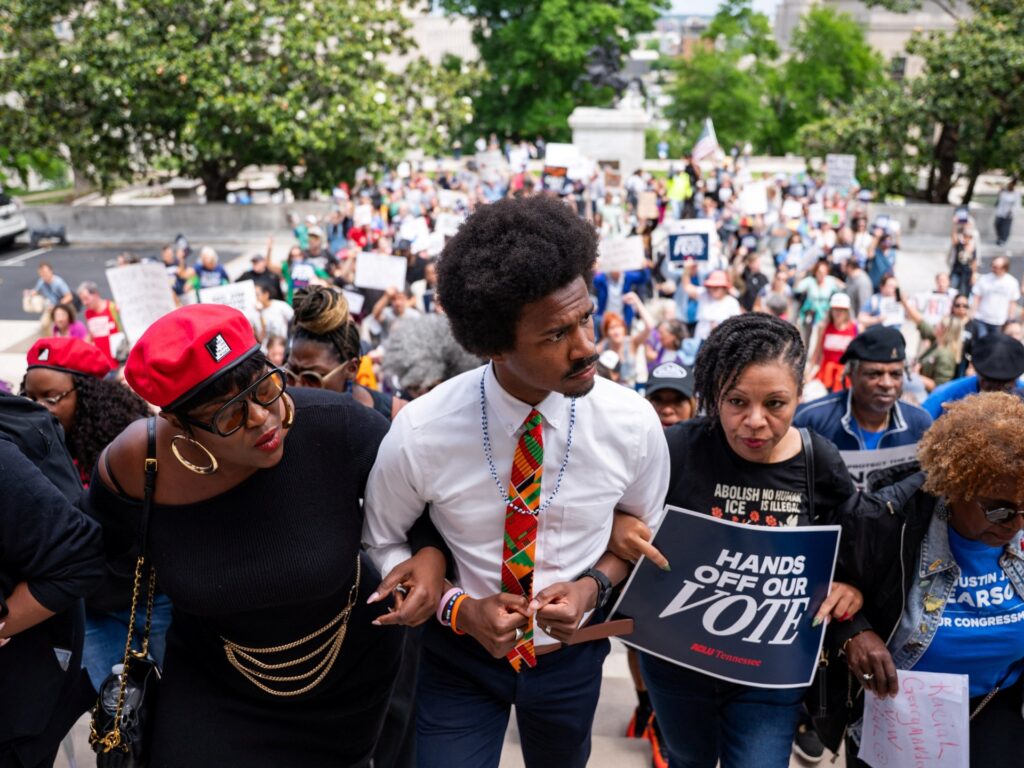
In recent days, demonstrators have gathered in both Louisiana and Tennessee to protest against ongoing redistricting efforts in their states. These rallies are part of a broader public outcry over the proposed redrawing of electoral district boundaries, which many citizens believe could undermine fair representation and favor certain political interests.
In Louisiana, protesters assembled in key areas including downtown and outside government buildings to express their concerns. They argue that the redistricting plans potentially dilute the voting power of minority communities and could skew future elections.
Similarly, in Tennessee, similar demonstrations took place as citizens took to the streets to demand transparency and fairness in the redistricting process. Activists emphasize the importance of keeping electoral districts competitive and representative of the diverse population.
The redistricting process, which occurs every ten years following the national census, is mandated to adjust electoral boundaries in accordance with population changes. However, critics warn that it can be manipulated for partisan advantage, a practice known as gerrymandering.
Organizers of the protests in both states have called for public involvement and scrutiny in the redistricting decisions. They encourage lawmakers to adopt impartial criteria and engage with community input to ensure that electoral maps reflect the true demographics of the states.
These protests align with a nationwide movement advocating for election reforms and voting rights protections, highlighting the ongoing tension between political power and democratic representation.
Lawmakers in Louisiana and Tennessee have yet to publicly respond to the protests, but the rallies have already brought significant media attention to the issue, fueling further debate about the fairness and integrity of the redistricting process.
Community leaders, civil rights organizations, and concerned citizens continue to monitor the developments closely, with some planning additional events to keep pressure on decision-makers.
The outcome of these efforts could shape the political landscape of both states for the next decade, impacting local and federal elections alike.
As the conversation around redistricting unfolds, it remains clear that public engagement and vigilance are crucial for protecting democratic principles and ensuring equitable representation for all citizens.