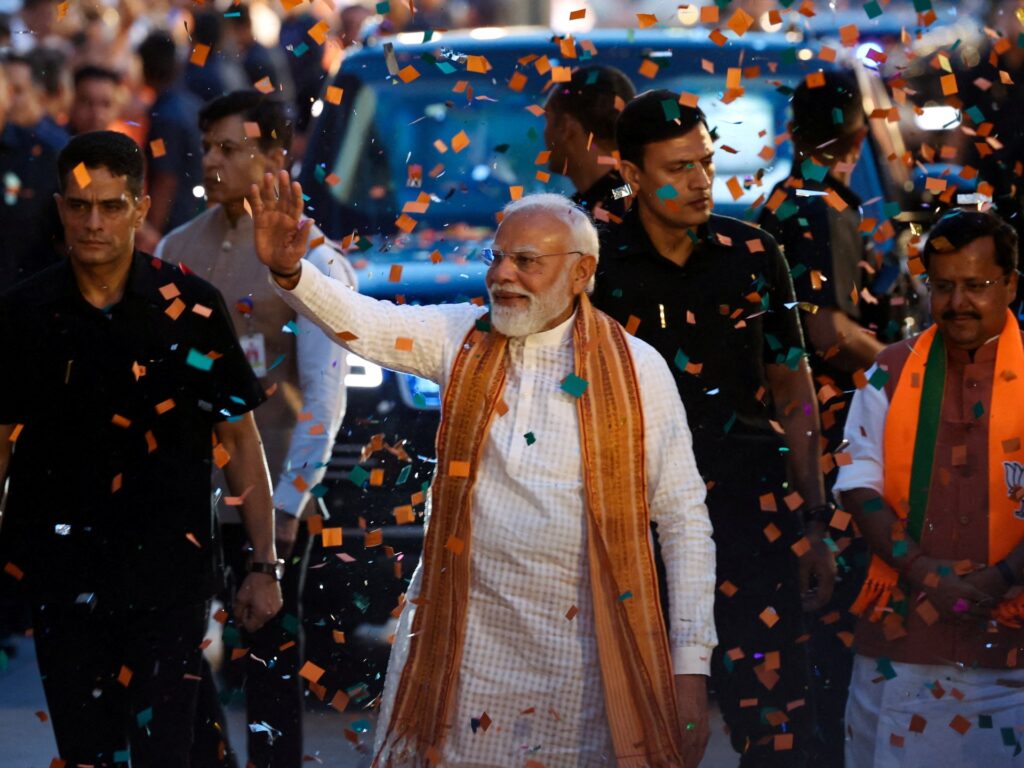
Narendra Modi’s Bharatiya Janata Party (BJP) achieved a historic victory in the West Bengal state elections, marking its first ever win in this key region. This win is significant as West Bengal has traditionally been a stronghold of opposition parties, especially the Trinamool Congress (TMC). The BJP’s ability to secure this state underscores a shift in the political landscape of India, indicating the growing influence of Modi’s party across the country.
The election campaign was fiercely contested and heavily polarized, reflecting deep societal divisions. Modi’s message and the BJP’s strategy resonated with a large segment of the electorate, emphasizing nationalism, development, and governance reforms. The victory in West Bengal is likely to embolden the BJP and could change the dynamics of future elections at both state and national levels.
However, the election results have also raised important questions about the health and future of Indian democracy. The campaign was marked by intense political rivalry, incidents of violence, and controversies regarding media freedom and electoral fairness. Critics argue that the BJP’s dominance might come with a cost to democratic norms and pluralism.
There are concerns about increasing centralization of power and the diminishing space for dissent and opposition voices. The democracy in India, lauded for its vibrancy and diversity, now faces tests regarding the balance of power, protection of minority rights, and the independence of institutions.
Moreover, the election outcome highlights challenges related to social cohesion and communal harmony. West Bengal’s diverse population includes various linguistic, religious, and cultural communities. How the new government manages these complexities will be a critical determinant of the state’s stability and progress.
The BJP’s victory also signals a changing political discourse that might prioritize majoritarian narratives, potentially sidelining minority concerns. This shift could influence policy-making and impact grassroots democratic participation.
In summary, Modi’s big win in West Bengal is a landmark event with significant implications. While it reflects the expanding reach of the BJP and the endorsement of its agenda by a broad voter base, it simultaneously throws up questions about democratic resilience, inclusivity, and the future of pluralism in India’s political system. The election serves as a bellwether for ongoing debates on democracy and governance in the world’s largest democracy, with outcomes that will reverberate beyond West Bengal and resonate across India.