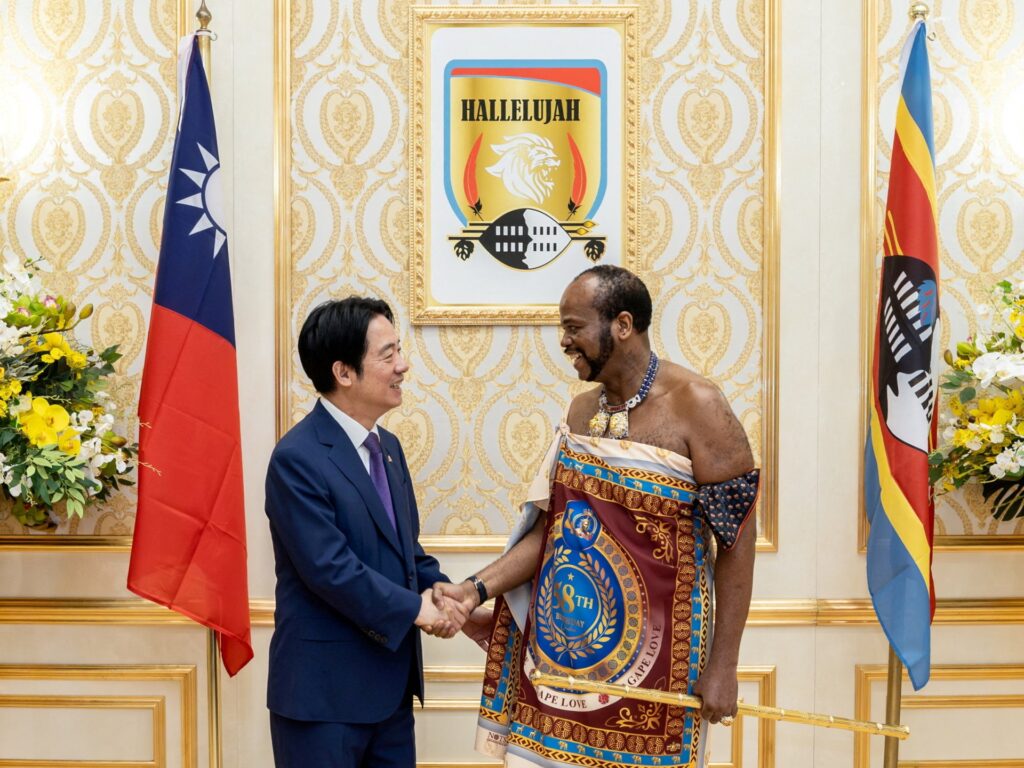
In a bold diplomatic move, Taiwan’s President William Lai Ching-te recently visited Eswatini, reaffirming the island nation’s commitment to its ally despite significant pressure from China, which has attempted to block the trip. The visit marks a significant moment in Taiwan’s efforts to maintain and strengthen its international relationships amid ongoing tensions with China.
During his visit, President Lai met with King Mswati III of Eswatini, a country located in Southern Africa and one of the few nations in the world that maintains official diplomatic relations with Taiwan. This meeting highlights the continuing partnership and friendship between the two nations in the face of growing geopolitical challenges.
The discussions between President Lai and King Mswati III focused on multiple areas of cooperation, reflecting a mutual desire to deepen their bilateral ties. Most notably, the leaders signed a series of trade agreements, which are expected to boost economic collaboration and aid development projects in Eswatini.
These agreements are significant because they demonstrate Taiwan’s commitment to supporting its allies economically, despite diplomatic isolation imposed by China. As China expands its global influence, it frequently pressures countries to sever formal ties with Taiwan. China considers Taiwan a breakaway province and seeks to isolate it diplomatically on the global stage.
Taiwan, however, continues to resist these pressures by strengthening bonds with its remaining diplomatic partners. The visit by President Lai to Eswatini is a clear message to the international community: Taiwan will continue to engage with and support its allies.
King Mswati III welcomed the Taiwanese leader warmly, emphasizing the longstanding friendship between Eswatini and Taiwan. The two leaders expressed optimism about the future of their bilateral relationship, particularly in economic development, healthcare, and education.
The trade agreements signed during this visit include initiatives aimed at enhancing Eswatini’s agricultural sector, promoting technology transfer, and improving healthcare infrastructure. For Taiwan, these initiatives are part of a broader strategy to bolster its international presence through economic diplomacy.
China’s attempts to block the visit stem from its ‘One-China policy,’ under which it demands that countries recognize only one Chinese government. Taiwan’s independent international engagements, such as this trip, challenge this policy and thus attract Beijing’s opposition.
Despite these challenges, Taiwan’s leadership argues that engaging with allies like Eswatini is vital for global cooperation, mutual development, and the island’s own democratic values.
This visit sends a powerful signal about Taiwan’s resilience and determination to maintain its sovereignty and international space. By signing trade agreements and fostering goodwill, Taiwan seeks to prove that it remains a valuable and productive partner on the global stage.
The relationship between Taiwan and Eswatini is unique in the global context, given the limited number of countries that officially recognize Taiwan as a sovereign state. This visit not only strengthens bilateral relations but also serves as a beacon of hope for Taiwan amid its diplomatic struggles.
In summary, President William Lai Ching-te’s visit to Eswatini symbolizes Taiwan’s firm commitment to its diplomatic allies and its rejection of attempts by China to isolate it. The signing of new trade agreements underscores the practical benefits of this partnership and positions both nations for future cooperation and growth.
As Taiwan continues to navigate complex international waters, the Eswatini trip highlights the importance of resilience, strategic diplomacy, and the pursuit of mutually beneficial partnerships in an often challenging geopolitical environment.