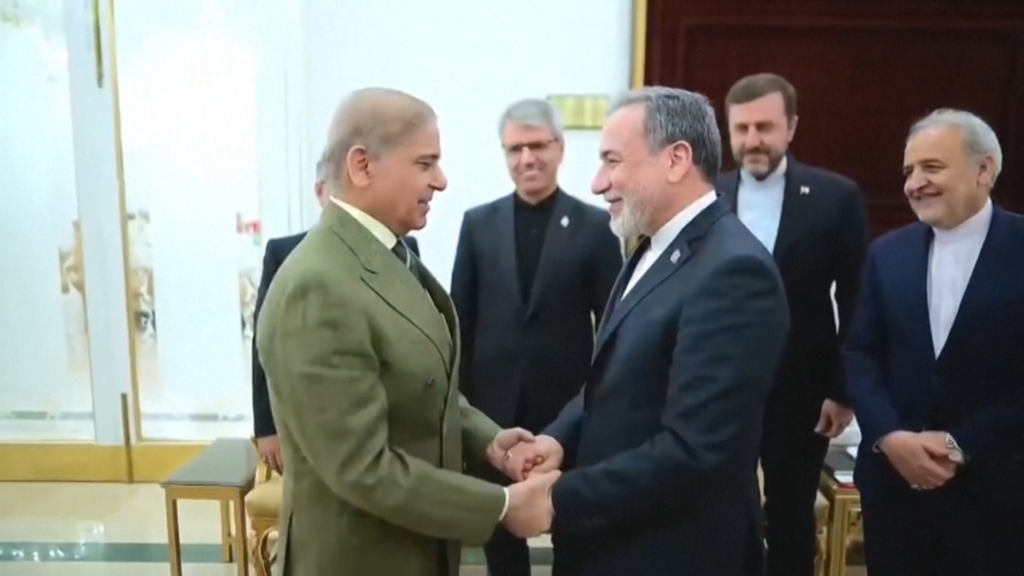
In a significant diplomatic engagement, Iran’s Foreign Minister Abbas Araghchi met with Pakistan’s Prime Minister Shehbaz Sharif in Islamabad. This meeting underscores the ongoing regional efforts aimed at reviving direct negotiations between Iran and the United States, which have seen a prolonged standstill amid geopolitical tensions.
The talks between Araghchi and Sharif were described as constructive, with both leaders emphasizing the importance of dialogue and cooperation in ensuring regional stability. Pakistan, sharing borders and complex relations with both Iran and the US, is playing a crucial role as a facilitator in the diplomatic process.
Abbas Araghchi’s visit to Pakistan is part of a broader strategy by Iran to explore possible avenues for restarting the stalled nuclear deal discussions, officially known as the Joint Comprehensive Plan of Action (JCPOA). Since the US withdrawal from the JCPOA in 2018, efforts to bring both parties back to the negotiating table have been intermittent and challenging.
During the Islamabad meeting, Shehbaz Sharif reiterated Pakistan’s commitment to promoting peace and security in the region and highlighted Islamabad’s willingness to support efforts that could lead to de-escalation between Iran and the West. Pakistan’s role as a mediator is particularly sensitive given its relations with both countries.
Analysts observe that the meeting could signal a warming of diplomatic channels that might eventually facilitate more direct communication between Iran and the US. The regional context, including security concerns and economic sanctions, provides a complex backdrop to these discussions.
Direct negotiations are seen by many international observers as essential for resolving outstanding issues related to Iran’s nuclear program and addressing wider concerns about stability in the Middle East. Iran has expressed willingness to negotiate but insists on lifting unilateral sanctions that have severely impacted its economy.
Pakistan, under Prime Minister Sharif’s leadership, appears eager to position itself as a constructive intermediary, promoting dialogue over confrontation. This approach aligns with its broader foreign policy goals of regional cooperation and economic connectivity.
The Tehran-Islamabad-Washington diplomatic axis faces many challenges, including mistrust and hardened positions, but the recent meeting signifies a possible opening to renewed engagement. The continuation of such talks will be closely watched by global powers and regional actors alike.
As the dynamics of Middle Eastern diplomacy evolve, meetings like that of Araghchi and Sharif reflect the ongoing search for pathways to peace and stability through dialogue rather than conflict. The coming weeks may reveal further developments as negotiations potentially resume, influenced by this significant engagement in Islamabad.