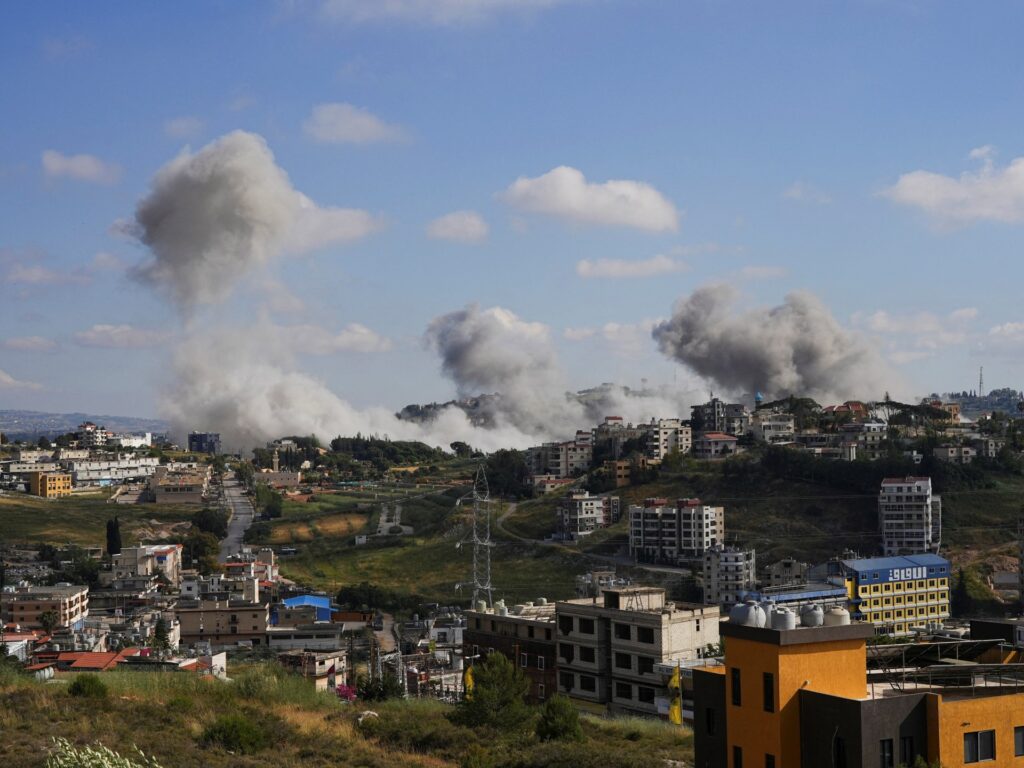
Israel has announced plans to intensify its military operations in Lebanon with the declared objective of severely weakening or “crushing” Hezbollah, the powerful militant group and political party operating primarily out of Lebanon. This strategic decision follows an order from Israeli Prime Minister Benjamin Netanyahu, marking a significant escalation in the ongoing tensions between Israel and Hezbollah.
This move comes despite a ‘ceasefire’ agreement that was reached between Israel and Lebanon just last month. The ceasefire, aimed at reducing hostilities along the Israel-Lebanon border, was recently extended, signaling an initial commitment from both parties to prevent further conflict escalation. However, the recent intensification of Israeli offenses suggests a shift in the political and military landscape.
Hezbollah, backed by Iran and considered a terrorist organization by Israel and other Western countries, has long been a focal point of conflict in the region. It wields considerable military capacity and controls substantial territory in southern Lebanon, complicating the already volatile dynamics.
The decision to ramp up military action against Hezbollah reflects Israel’s broader security concerns, including the militant group’s rocket attacks, cross-border raids, and influence within Lebanese politics. Netanyahu’s directive underscores Israel’s unwillingness to tolerate what it perceives as existential threats from Hezbollah’s capability buildup.
Experts warn that escalating military actions could destabilize the already fragile security situation in Lebanon, potentially triggering wider regional consequences. Lebanon, grappling with a severe economic crisis and internal political strife, could be further destabilized by intensification of hostilities.
The international community has expressed concern over the renewed military activities. Calls for restraint and continued engagement in diplomatic efforts to de-escalate tensions have been made by various global actors, including the United Nations and the European Union.
Background:
The Israel-Lebanon border has been a flashpoint for decades due to Hezbollah’s guerilla warfare tactics and Israel’s counteractions. Multiple conflicts, including the 2006 Lebanon War, have left deep scars and long-lasting challenges to peace.
The recent ceasefire agreement represented a rare moment of reduced tension, facilitated by UN peacekeeping forces stationed in southern Lebanon and diplomatic negotiations. The extension of the ceasefire was initially seen as a hopeful step towards stabilization.
However, the recent order from Netanyahu signals a return to aggressive military posturing, indicating Israel’s prioritization of national security over the ceasefire terms.
Implications:
– Potential increase in cross-border skirmishes and rocket attacks.
– Risk of escalation to full-scale conflict impacting civilian populations on both sides.
– Further strain on Lebanon’s political and economic crisis.
– Possible shifts in regional alliances and responses.
Looking Ahead:
The coming weeks are expected to be critical in determining the trajectory of Israel-Hezbollah relations. Diplomatic efforts face heightened challenges amid military escalations.
Monitoring by international observers will be crucial in assessing the impact of intensified operations and in providing timely information to prevent wider regional destabilization.
In conclusion, Israel’s decision to intensify its offensive in Lebanon represents a significant development in Middle Eastern geopolitics. The move raises urgent questions about the prospects for peace, the stability of Lebanon, and the broader regional security environment.