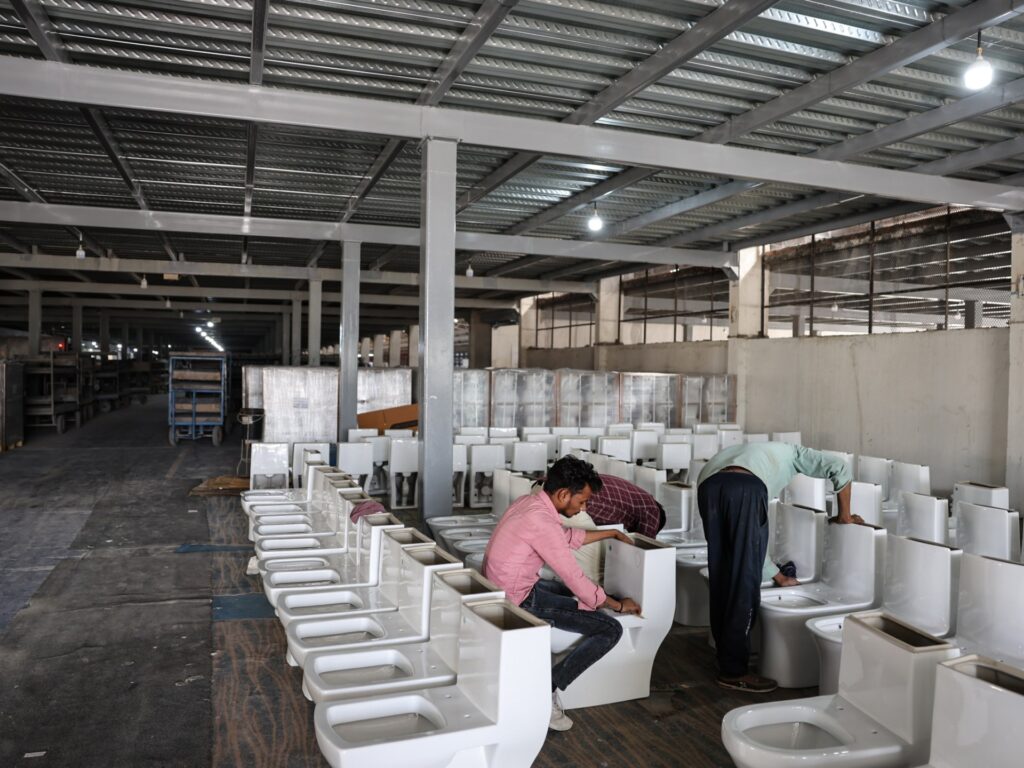
The ceramics industry in Morbi, Gujarat, renowned as one of India’s leading ceramic manufacturing hubs, has been severely impacted by a fuel crisis originating from the ongoing Iran war situation. This crisis has led to a significant shortage of fuel supplies, which are critical for the functioning of ceramic manufacturing units in the region.
As a direct consequence, a majority of the ceramic units in Morbi have shut down operations temporarily or indefinitely. The fuel shortage has crippled the production process, rendering it impossible for many factories to maintain regular activity levels.
The shutdown of these units has had a profound effect on the labor market in Morbi. Thousands of workers employed directly and indirectly in the ceramics industry have been laid off, leading to job losses that have unsettled the local economy. This loss of employment has left many workers with little option but to migrate back to their native places, resulting in a phenomenon of reverse migration.
Historically, Morbi has attracted a large workforce due to its thriving ceramics industry. Workers from various parts of India have settled here, contributing to the socio-economic fabric of the town. However, the current fuel scarcity and operational disruptions have reversed this trend, causing an outflow of labor that affects both the industry and the community.
Industry experts highlight that the ceramics sector in Morbi depends heavily on consistent fuel availability, especially natural gas, to power the kilns used in ceramic production. Interruptions in the fuel supply chain have made it challenging to sustain production.
The Iran war has disrupted international fuel supply lines, which has had a cascading effect on the availability and cost of fuel in many parts of the world, including India. Since Morbi’s ceramic units rely on relatively affordable fuel to keep their production costs competitive, the increase in fuel price and scarcity have hit them hard.
Small and medium enterprises (SMEs) in the ceramics sector, which constitute a large portion of Morbi’s industry, are particularly vulnerable to such supply shocks. Many have reported mounting losses and uncertainty about future operations.
The economic repercussions extend beyond the ceramic units themselves, affecting local businesses, transportation, and ancillary services that support the industry and its workforce.
Government officials and industry bodies are engaging in dialogue to find solutions. Discussions focus on securing alternative fuel sources, potential subsidies, and emergency relief measures to mitigate the impact on workers and businesses.
Additionally, the situation has brought attention to the need for more resilient and sustainable energy resources in industrial hubs like Morbi to reduce dependency on vulnerable international fuel supplies.
Community support groups and NGOs have also stepped in to provide temporary assistance to migrant workers and their families, who face financial hardships due to job losses.
As of now, the future of Morbi’s ceramic industry remains uncertain, with recovery hinging significantly on the resolution of the fuel crisis and stability in global fuel markets.
The ongoing challenges underscore the interconnectedness of global geopolitical events and their direct impact on local economies and livelihoods, exemplified by the situation faced by Morbi’s ceramic sector amid the Iran war-fueled energy crisis.