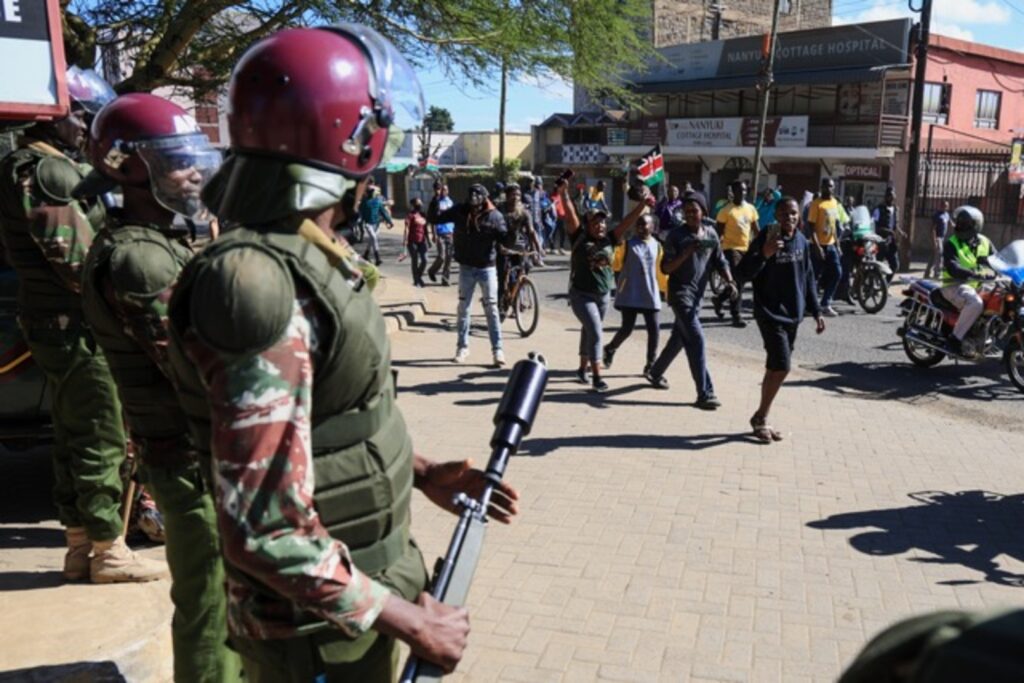
Anti-riot police officers stand by as demonstrators protest against a proposed Ebola quarantine center to be established by the United States at Laikipia Air Base in Nanyuki, Kenya, Monday, June 1, 2026. (AP Photo/Andrew Kasuku)
Kenyan President William Ruto has publicly defended the decision to allow the United States to build an Ebola quarantine facility in Kenya, calling it the “right thing” despite recent deadly protests against the project. The facility is intended to help contain and control any potential outbreaks of the deadly Ebola virus, which has caused major health crises in parts of Africa.
The announcement of the quarantine center’s construction was met with fear and suspicion among some Kenyan communities, resulting in violent demonstrations that tragically led to fatalities. Critics worry about the possible stigma, safety risks, and implications of hosting a foreign-run Ebola containment site.
President Ruto emphasized the importance of preparedness and international cooperation in controlling infectious diseases that pose threats not only to Kenya but to the entire region. He argued that the quarantine facility would enhance national health security by providing advanced capabilities to isolate and treat Ebola cases effectively and prevent widespread transmission.
“It is a vital step towards strengthening our healthcare infrastructure,” Ruto stated during a recent press conference. “We cannot afford to be complacent when dealing with highly infectious diseases like Ebola, which can claim many lives if not properly contained.”
The US government has pledged support for the facility by providing medical expertise, equipment, and staffing, aiming to create a state-of-the-art quarantine center that meets global health standards. This partnership reflects longstanding US-Kenya cooperation in public health and disease control.
Health experts agree that having a dedicated Ebola quarantine center in Kenya could greatly improve readiness for outbreaks, given the country’s strategic location and frequent travel connections with other African nations where Ebola has been reported.
However, some local residents and activists remain deeply concerned about the risks associated with the facility, fearing it could become a source of infection or exacerbate social stigmatization against patients and healthcare workers.
To address these fears, the Kenyan government has pledged to engage in community education and transparent communication, aiming to build trust and reassure citizens about the rigorous safety measures in place.
The protests highlight the challenges governments face when implementing public health interventions that involve foreign entities and sensitive topics like infectious diseases. Balancing public health priorities and community consent remains critical.
Kenya has a history of dealing with infectious disease outbreaks, and the government is determined to leverage international partnerships to improve its epidemic response capabilities. President Ruto’s stance underscores the urgency of being proactive rather than reactive when it comes to health emergencies.
In conclusion, while protests and concerns persist, the Kenyan leadership is confident that the US Ebola quarantine facility is a necessary investment in national and regional health security. The project aims to save lives, prevent outbreaks, and strengthen Kenya’s ability to safeguard its population from deadly diseases in the future.