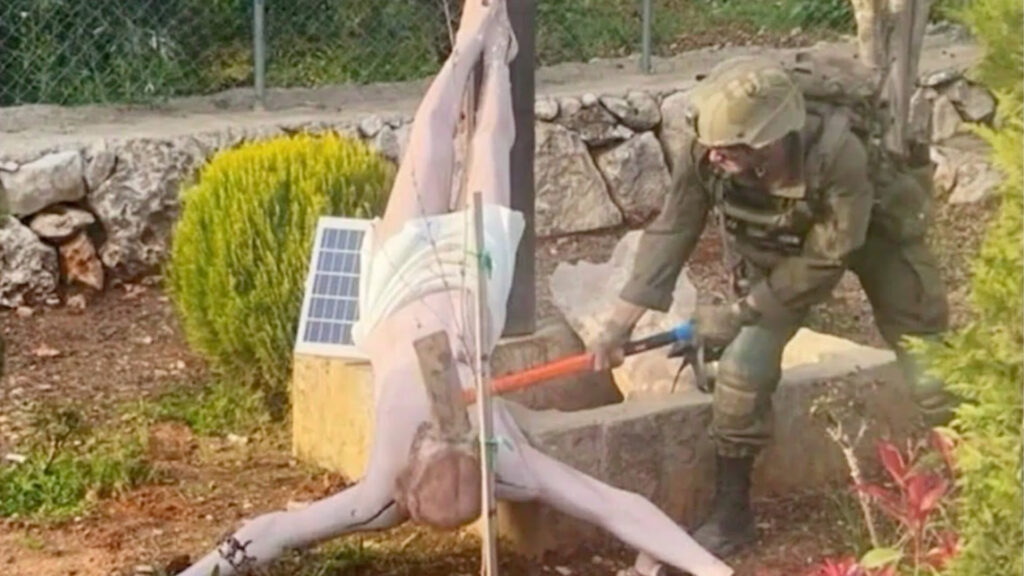
A recent incident in southern Lebanon has ignited widespread outrage after a photograph emerged showing an Israeli soldier smashing a statue of Jesus Christ. This act of desecration took place in a region already marked by political and religious sensitivities, intensifying tensions between communities.
The photograph, circulated rapidly on social media and news outlets, depicts the soldier breaking the statue with apparent disregard, an action viewed as deeply offensive by many, especially within Lebanon’s Christian communities and beyond. The statue, a symbol of faith and cultural heritage, stood as a representation of religious identity in a region where coexistence is often fragile.
Lebanese authorities and religious leaders condemned the act, calling it provocative and disrespectful. Many local citizens expressed their anger and sorrow, emphasizing that such actions undermine efforts toward peace and reconciliation.
The Israeli military has yet to officially comment on the incident, but the image has fueled debate over the conduct of soldiers during operations in hostile or contested areas. Human rights organizations have also weighed in, highlighting the need for respect for cultural and religious sites during military activities.
This event follows a history of conflicts in southern Lebanon, where diverse religious groups live side by side amidst the complexities of regional politics. Acts like this threaten to exacerbate sectarian divisions and provoke further unrest.
International observers have urged restraint and dialogue, pointing out that respect for religious symbols is crucial for maintaining coexistence and securing long-term peace. The destruction of religious artifacts not only causes immediate pain but also damages the cultural fabric that binds communities together.
In the wake of the incident, calls for investigations and accountability have grown louder. Movements promoting interfaith harmony see this as a setback but remain committed to fostering understanding across divides.
The image of the desecrated statue has become a stark reminder of the ongoing challenges faced in areas where geopolitical conflicts intersect with deeply held religious sentiments. As Lebanon navigates these difficulties, the need for careful handling of cultural symbols is underscored more than ever.
This situation serves as a poignant example of how actions at the individual level can have broad implications, fueling animosity in a region already burdened by decades of conflict. It is a call to all parties to respect not only human life but also the diverse cultural and religious heritage that shapes their shared history.