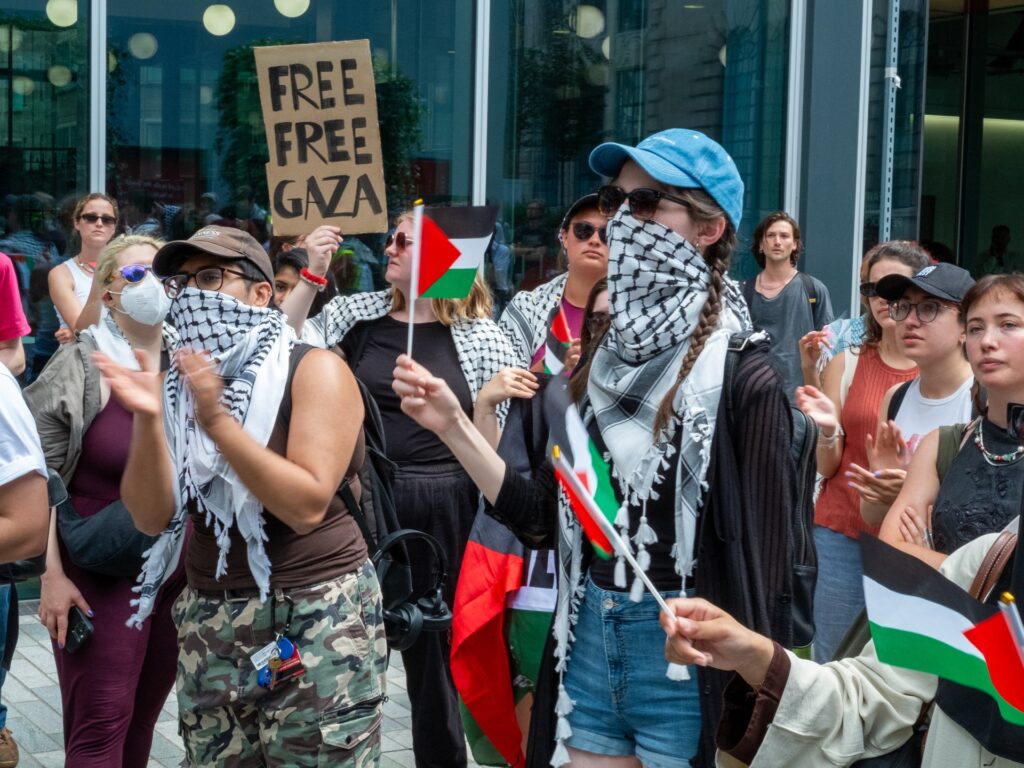
Recent investigations have uncovered that several British universities engaged the services of Horus, a security firm headed by former military intelligence officers, to monitor the activities of pro-Palestine student groups during a wave of campus protests. This revelation has raised concerns over the extent of surveillance on student activists and the implications for academic freedom and privacy on university campuses.
Horus, known for its background in military intelligence, was reportedly contracted to provide detailed reports on student protestors supporting Palestine. These protests had garnered significant attention as students voiced their concerns over the Israeli-Palestinian conflict, organizing demonstrations, sit-ins, and various forms of activism to raise awareness about the Palestinian cause.
The investigation detailed that the security firm gathered extensive information on the identities, plans, and communications of the pro-Palestine groups. Such intelligence gathering was allegedly authorized under the premise of maintaining campus safety and security, but critics argue that it represents an overreach into students’ rights to free expression and assembly.
University officials have been reticent on the matter, with some defending their actions by emphasizing the importance of security management during charged political climates. However, students and civil rights advocates have condemned the surveillance, highlighting that it fosters a climate of fear and distrust, potentially stifling legitimate political discourse.
The use of a private security firm with ex-military intelligence personnel signals a worrying trend in the militarization of campus security, especially concerning political activism. This development has prompted calls for greater transparency around how universities handle protests and the extent to which they cooperate with private entities to monitor student movements.
Experts in privacy law assert that such surveillance might violate data protection regulations and infringe upon students’ rights to privacy and free speech. Legal challenges and advocacy for stronger protections for student activists are anticipated in response to these revelations.
This investigation sheds light on the broader issue of political expression at educational institutions and how it is managed by authorities, raising critical questions about the balance between security and civil liberties. The university sector now faces increased scrutiny over their practices and policies related to monitoring activism on campus, especially when it concerns sensitive geopolitical issues.
As debates continue, the conversation underscores the importance of safeguarding democratic principles within academic environments, ensuring that universities remain spaces for open dialogue and uninhibited expression without fear of surveillance or reprisal. The revelations about Horus and its activities have ignited discussions about the role of intelligence agencies in civilian contexts and the ethical boundaries of employing such methods in academic settings.