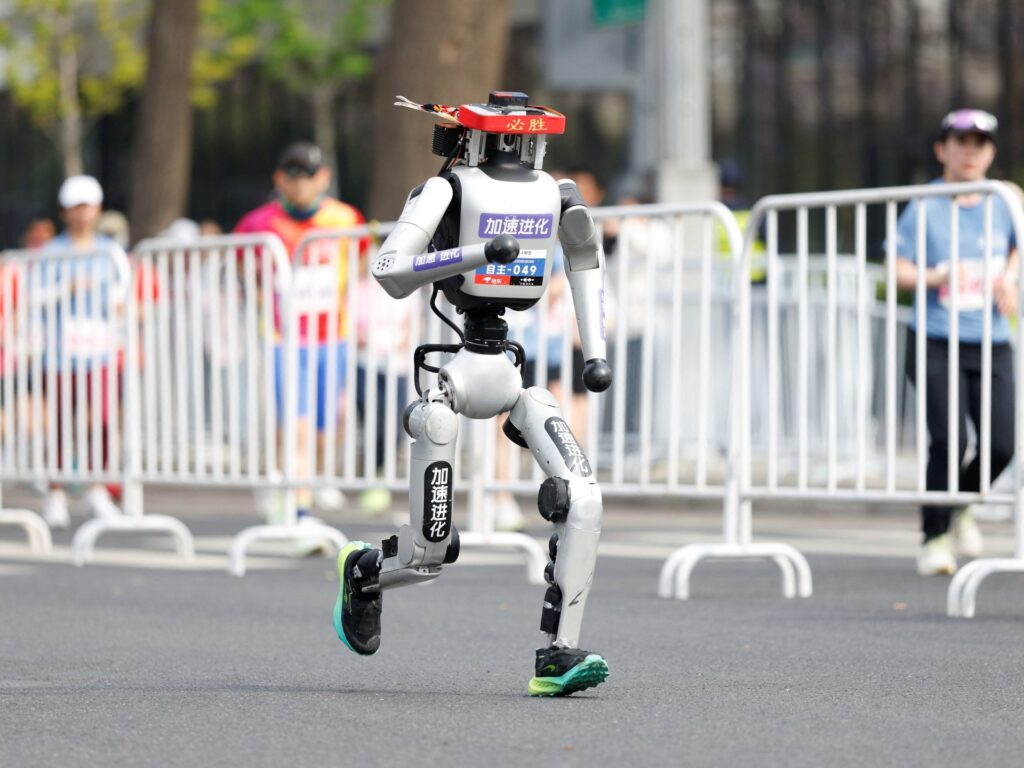
In a groundbreaking event in Beijing, humanoid robots participated in a half-marathon, competing alongside human runners. The race marked a significant milestone in robotics and artificial intelligence, showcasing the advanced capabilities of humanoid robots in endurance and speed. Unlike traditional robot races conducted on flat, controlled environments, this half-marathon tested the robots’ ability to navigate real-world outdoor conditions, including variable terrain, weather, and crowd obstacles. Reports from the event highlighted that the humanoid robots not only completed the 21.0975 kilometers course but also surpassed many human participants in speed.
Developed by leading robotics companies and research institutions, these robots were equipped with sophisticated sensors, balance mechanisms, and AI algorithms enabling adaptive movements and energy-efficient running techniques. The event’s organizers emphasized the potential implications of this achievement, pointing to future applications in search and rescue, delivery services, and medical assistance.
Human runners expressed a mix of awe and curiosity about racing alongside robots, noting the unique experience and the glimpse of future sports events where technology and human endurance might intersect. However, the event also sparked debate about the ethical and regulatory challenges posed by the increasing capabilities of humanoid robots, especially concerning their roles in competitive sports and everyday life.
This half-marathon in Beijing thus stands as a remarkable demonstration of technological progress, symbolizing a new era where humans and robots may increasingly share common spaces and challenges. It raises questions about how society will adapt to such integration, the redefinition of competition, and the cooperative potential between humans and machines. As humanoid robots continue to evolve, similar events are expected to become more frequent, pushing the boundaries of both robotics and human athleticism.