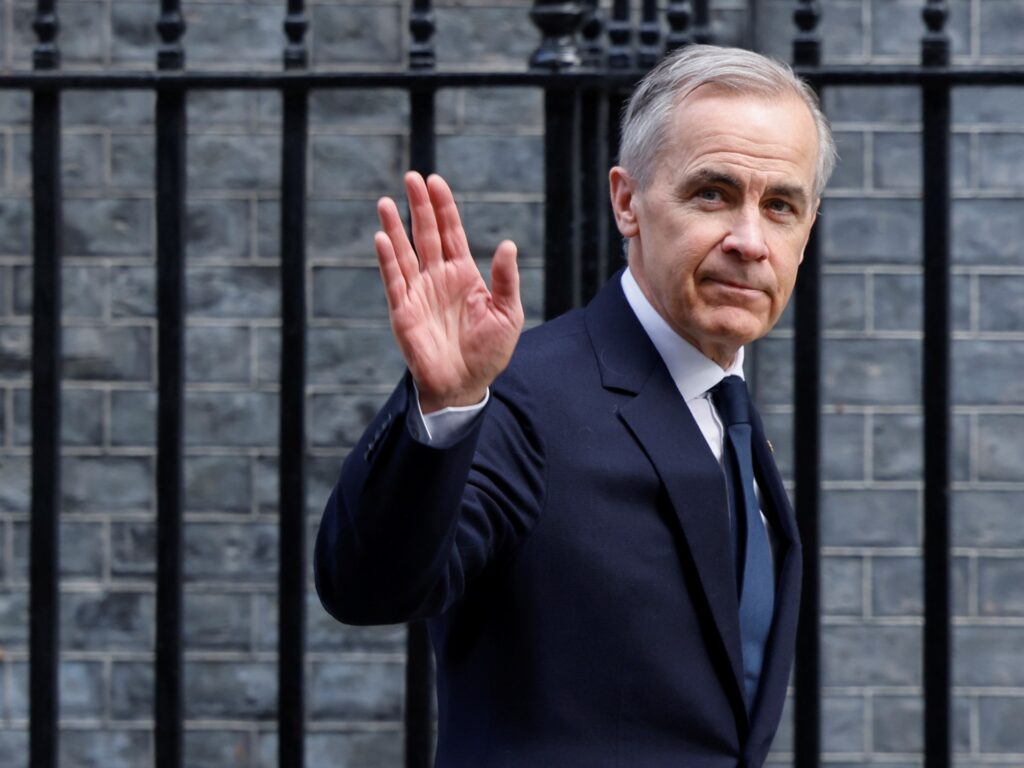
In a candid assessment of Canada’s economic strategy, Prime Minister Justin Trudeau has acknowledged that the country’s close economic ties with the United States have evolved into a potential weakness. This statement marks a significant moment as Canada reflects on its trade dependencies amidst shifting geopolitical and economic landscapes.
Canada’s economy has long been intertwined with that of its southern neighbor, the United States. This relationship has facilitated robust trade flows, investment, and cross-border cooperation, making the US Canada’s largest trading partner. However, recent global events and uncertainties involving US policies have prompted Canadian leadership to reconsider this heavy reliance.
Mark Carney, former Governor of the Bank of Canada and a key economic adviser, has emphasized the urgency for Canada to broaden its economic connections. The call is for Canada to build stronger partnerships with other countries worldwide to mitigate risks associated with concentrating economic ties predominantly on the US. Diversification could safeguard Canada’s economy against potential disruptions or shifts in US trade policy.
The prime minister’s remarks underline several factors influencing this strategic pivot. These include the unpredictability of US trade policies under various administrations, tariff disputes that have arisen over the years, and the necessity for Canada to establish a resilient economic framework that can withstand external shocks.
Canada is currently engaged in multiple trade agreements outside of its dealings with the United States, such as the Comprehensive and Progressive Agreement for Trans-Pacific Partnership (CPTPP) and the Canada-European Union Comprehensive Economic and Trade Agreement (CETA). These frameworks represent tangible steps towards a more diversified economic future.
Trudeau’s administration appears keen to accelerate efforts to deepen relationships with emerging markets in Asia, Latin America, and Europe. By doing so, Canada intends to enhance its global trade footprint, attract foreign investment from diverse sources, and stimulate innovation and competitiveness within its industries.
Economic experts agree that while the US will remain a critical partner, overreliance presents a vulnerability that could jeopardize Canada’s economic stability in turbulent times. Consequently, policymakers are pushing for investment in infrastructure, technology partnerships, and supply chain diversification to support this strategic economic expansion.
This realignment of Canada’s trade and economic outlook comes at a time when global interdependence is being reexamined due to geopolitical tensions, the aftermath of the pandemic, and evolving global economic power centers. Canada’s approach could serve as a model for other nations heavily dependent on a single partner.
In summary, the Canadian government is advocating for a proactive approach to economic diversification. This strategy aims to build resilience by balancing the historically strong ties with the United States with robust and strategic connections across the globe. The message is clear: to secure Canada’s economic future, it must look beyond its traditional partner and embrace broader horizons in the international economic arena.