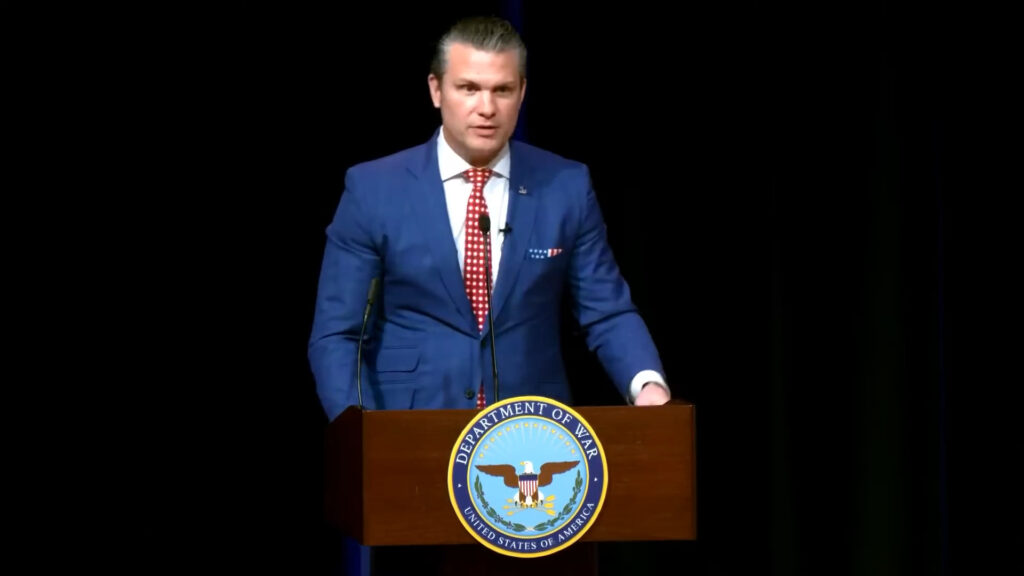
In a surprising and controversial moment, US Defense Secretary Pete Hegseth recently read a prayer during a public event that was drawn from a misquoted Bible verse popularized by the film Pulp Fiction. The verse in question, Ezekiel 25:17, as recited in the movie, is not an accurate representation of the original scripture but rather a stylized and fictionalized passage meant to add dramatic effect in the film.
Pete Hegseth, serving as the Pentagon chief, read this passage in what appeared to be a solemn or reflective context, likely intending to invoke strength or justice. However, the source of the verse being a Hollywood film rather than an authentic scriptural text drew significant attention and criticism from religious communities and the public alike.
The original Ezekiel 25:17 in the Bible differs substantially from the famous Pulp Fiction version, which was crafted by the film’s writer Quentin Tarantino for the character Jules Winnfield, played by Samuel L. Jackson. The Pulp Fiction version is more elaborate and poetic, blending themes of vengeance and moral reckoning distinct from the original biblical message.
This incident raises questions about the awareness of public officials regarding the sources they cite, especially in formal or ceremonial settings. It highlights the potential pitfalls of mixing pop culture with serious religious or historical references without clear acknowledgment of their origins.
Religious scholars pointed out that misquoting scripture can lead to misunderstandings about the faith and its teachings. They stress the importance of accuracy and respect when referencing sacred texts.
In response to the event, some officials defended Hegseth, suggesting that his intent was more about the spirit of the message—justice and retribution—rather than the exact wording or source. Others called for greater care and preparation when quoting any form of scripture or literature during official appearances.
The episode adds to ongoing discussions about the role of religion and cultural references in politics and public life, illustrating how pop culture influences can intersect unexpectedly with governance and public discourse.
As the story circulates, it serves as a reminder to public figures and citizens alike about the importance of knowing the origins and meanings of the words we choose to represent us in public forums. It also reflects the powerful impact that films and other media continue to have on contemporary culture, sometimes blurring the lines between fiction and reality in unexpected ways.