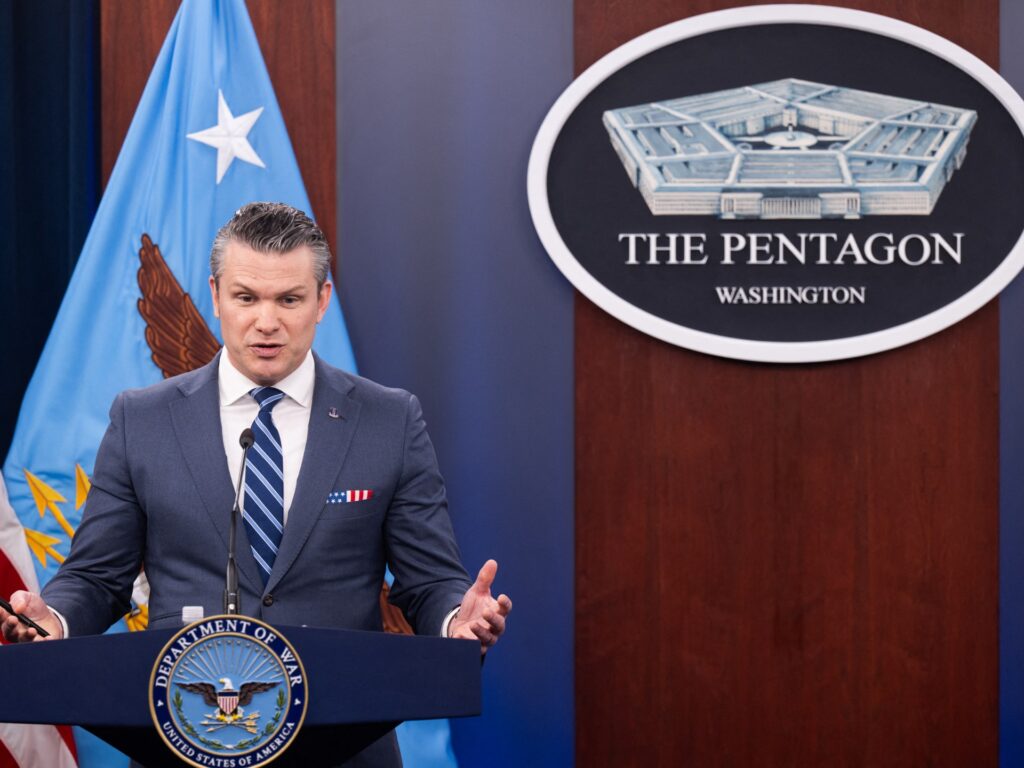
In a recent statement, a U.S. official, Hegseth, has confirmed that the blockade imposed by the United States on Iran will continue. This blockade is primarily targeted at restricting Iran’s energy exports, a critical component of the country’s economy. The ongoing restrictions are part of broader efforts by the U.S. to apply pressure on Iran in response to various geopolitical concerns.
Despite advocating for a diplomatic resolution, with calls for negotiations and talks, the United States has communicated that it remains prepared for potential military actions. The phrase “locked and loaded” used by U.S. representatives underscores the readiness of American forces to resume attacks if deemed necessary.
This stance reflects the complex nature of U.S.-Iran relations, which have been fraught with tension over the years, particularly concerning Iran’s nuclear program and regional policies. The blockade and the threat of renewed strikes aim to discourage Iran from advancing activities that the U.S. and its allies find destabilizing.
Diplomatic channels remain open, with the U.S. encouraging dialogue and peaceful resolution of conflicts. However, the willingness to escalate indicates that Washington is prioritizing a firm approach to prevent Iran from gaining strategic advantages through its energy exports.
The continuation of the blockade impacts global energy markets, as Iran is a significant player in the oil industry. Any disruption or potential conflict in the region could lead to fluctuations in oil prices, affecting economies worldwide.
Analysts suggest that the dual approach of encouraging talks while maintaining military readiness aims to leverage pressure on Iran, compelling it to come to the negotiating table with a willingness to make concessions.
The international community watches closely as these developments unfold, hoping for a de-escalation that would contribute to regional stability and the security of global energy supplies.
In summary, the U.S. position remains firm: maintain the blockade on Iran’s energy sector, advocate for resolution through diplomacy, but stay prepared for possible military escalation. This strategic balancing act highlights the fragile and high-stakes nature of the current geopolitical climate regarding Iran.