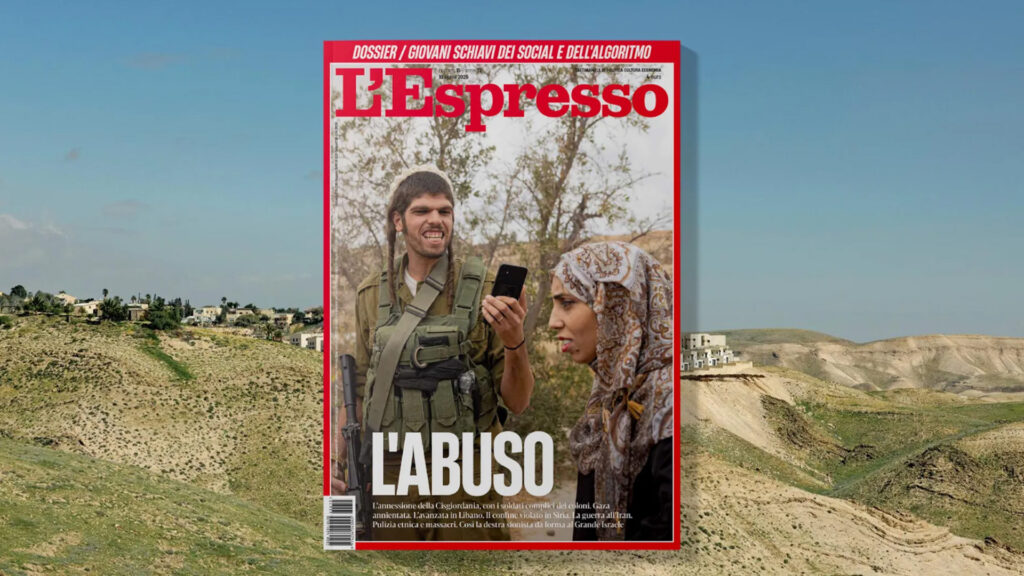
A recent Italian magazine cover featuring an armed Israeli settler grinning at a Palestinian woman has triggered significant diplomatic tensions between Italy and Israel. The provocative image has been met with strong criticism from Israeli officials, who view it as a misrepresentation of the complex realities on the ground.
The cover, published by a well-known Italian magazine, aims to highlight the ongoing conflicts and humanitarian concerns in the Israeli-Palestinian territories. However, the depiction of the Israeli settler armed and smiling while facing a Palestinian woman has been interpreted by many in Israel as an inflammatory and biased portrayal.
Israeli diplomats in Rome have officially expressed their displeasure, calling the cover “distorted” and accusing the publication of fueling negative stereotypes about Israel and its citizens. They argued that such imagery undermines efforts toward peace and mutual understanding.
On the other hand, the magazine’s editorial team defended the cover, stating that its purpose was to provoke discussion and bring attention to the daily realities faced by Palestinians living in contested areas. The editors emphasized that the image was a representation of a broader narrative concerning occupation, resistance, and the human cost of ongoing conflicts.
The publication has ignited a debate on freedom of the press and the responsibility of media in covering sensitive geopolitical issues. Some commentators argue that the magazine’s decision to feature the settler in this manner was necessary to shed light on underreported perspectives. Others claim it was a sensationalist approach that risks exacerbating tensions.
Experts on Middle Eastern affairs have weighed in, highlighting the delicate balance between media freedom and diplomatic sensitivities. They note that images and narratives play a crucial role in shaping public opinion internationally and can have real-world diplomatic consequences.
The Israeli Foreign Ministry has reportedly summoned the Italian ambassador to express its concerns and to request a formal clarification and apology. This diplomatic move underscores the seriousness with which Israel views the publication’s impact.
Meanwhile, civil society organizations and human rights groups have used the incident to call for increased dialogue and efforts toward a peaceful resolution. They stress the importance of nuanced and responsible media portrayals that do not inflame divisions but rather foster understanding.
This incident exemplifies how visual media can become a flashpoint in international relations, particularly in conflict zones where narratives are deeply contested. As the dialogue continues, both sides face the challenge of navigating the complex interplay between media representation, public perception, and diplomatic relations.
In conclusion, the controversial Italian magazine cover has reignited discussions about the Israeli-Palestinian conflict’s portrayal in foreign media and its implications for bilateral relations. The situation remains sensitive, with calls for both respect for press freedom and mindful representation of contentious issues.