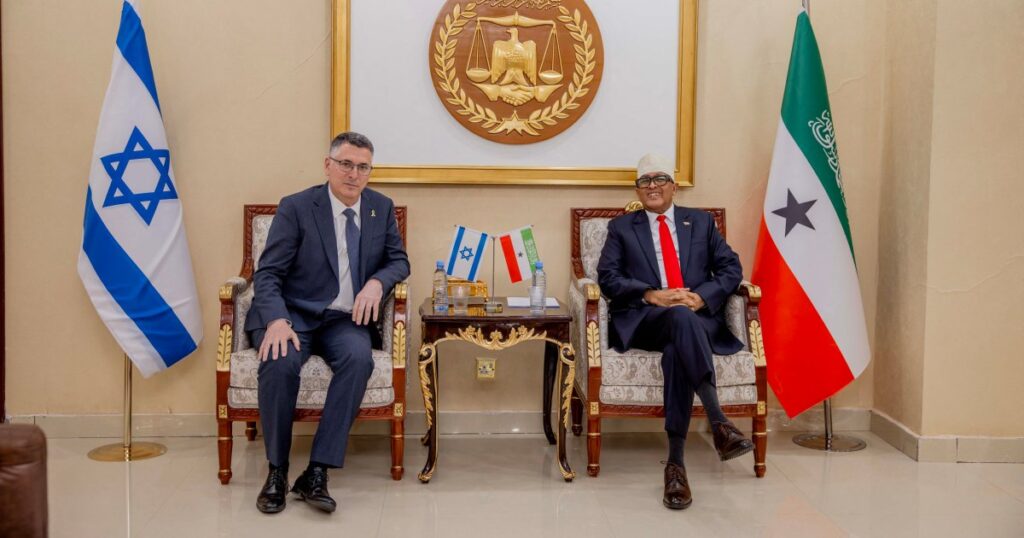
Israel has appointed its first ambassador to Somaliland, marking a significant development in the diplomatic relations between the two entities. This appointment follows Israel’s controversial decision to become the first country to officially recognize Somaliland as a separate territory, a move that received widespread condemnation from the international community. Somaliland, a self-declared state that broke away from Somalia in 1991, has struggled to gain international recognition despite its stable government and relative peace compared to the rest of Somalia.
The decision by Israel to recognize Somaliland and establish formal diplomatic ties is seen as a bold political gesture, reflecting Israel’s interest in expanding its influence and partnerships in the Horn of Africa. The appointment of an ambassador is a crucial step in solidifying these ties, allowing for enhanced cooperation in areas such as trade, security, and cultural exchange.
However, this diplomatic breakthrough has not been without criticism. Many countries and international organizations have expressed concern that recognizing Somaliland independently could undermine regional stability and complicate ongoing efforts to foster peace and unity in Somalia. Critics argue that such unilateral recognition might embolden other separatist movements and potentially lead to further fragmentation in the region.
Supporters of the move highlight Somaliland’s distinct political system, which includes democratic elections and a functional constitution, as justification for its recognition. They contend that engaging directly with Somaliland can contribute positively to the region’s development and security.
Israel’s move also comes in the context of its broader strategy to strengthen alliances in Africa and the Middle East. By opening diplomatic channels with Somaliland, Israel hopes to establish a foothold in a geopolitically strategic area, potentially countering influence from rival powers.
The newly appointed ambassador is expected to focus on building strong bilateral relations, promoting economic cooperation, and addressing security challenges that affect both Israel and Somaliland. Initiatives may include collaborations on technology, agriculture, and defense.
Despite the backlash, Israel remains steadfast in its decision, indicating a willingness to proceed with formal diplomatic relations regardless of international objections. This sets a precedent for other countries that may consider recognizing Somaliland in the future.
In summary, Israel’s appointment of its first ambassador to Somaliland represents a landmark moment in international diplomacy, with significant implications for regional politics, international recognition debates, and the geopolitical landscape in the Horn of Africa. The development underscores the complex interplay between national interests, international law, and regional stability, illustrating how diplomatic decisions can reverberate far beyond bilateral ties.