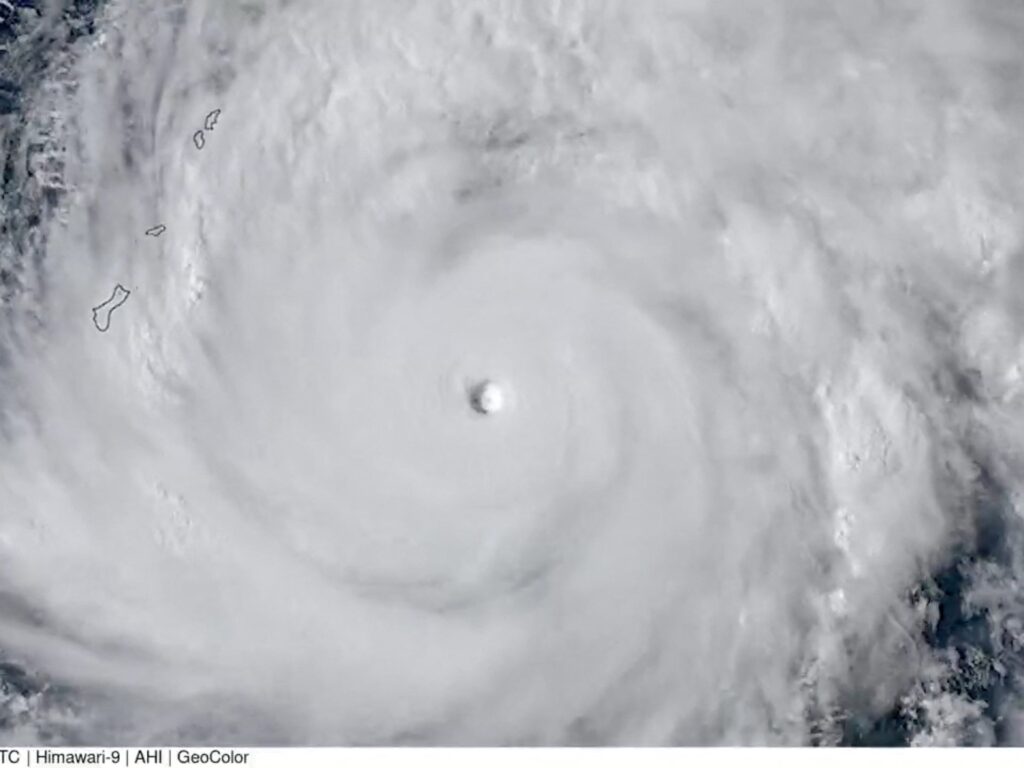
Super Typhoon Sinlaku, a powerful storm system, is currently bearing down on the Northern Mariana Islands and Guam. Despite moving slowly and showing signs of weakening, Sinlaku continues to pose a significant threat to the region due to its dangerous weather conditions.
Sinlaku’s slow progression has allowed it to maintain substantial strength, but recent observations indicate a weakening trend as it approaches these Pacific territories. The tropical cyclone’s movement is critical for residents and local authorities as it determines the extent and duration of the impact.
The Northern Mariana Islands, consisting of 14 islands in the western Pacific, are no strangers to typhoons, but Sinlaku’s size and strength warrant heightened caution. Similarly, Guam, a strategically important U.S. territory, faces potential infrastructure damage, flooding, and disruption of essential services.
Meteorological agencies have issued warnings and advised residents to prepare for heavy rainfall, strong winds, and the possibility of storm surges along coastal areas. Slow-moving storms like Sinlaku increase the risk of prolonged adverse weather, which can exacerbate flooding and landslides.
Authorities in both regions have been proactive in readiness efforts, including opening emergency shelters, pre-positioning supplies, and communicating safety instructions to the public. Evacuation plans are also in place should conditions worsen.
The impact on transportation and daily life is expected to be considerable. Flights may be delayed or canceled, and roads could become hazardous or impassable. Power outages are also a concern due to the storm’s wind intensity.
Local governments are coordinating with federal agencies to monitor the storm’s progression closely. Updates are being provided regularly to ensure that communities remain informed.
Residents are urged to follow official guidance strictly, avoid unnecessary travel, and secure their homes and belongings. The combination of Sinlaku’s strength and slow movement emphasizes the importance of vigilance.
In summary, although Super Typhoon Sinlaku is weakening, it remains a major weather event for the Northern Mariana Islands and Guam. The slow-moving nature of the typhoon means the region will face dangerous conditions for an extended period, requiring ongoing preparedness and caution to minimize risk and damage.