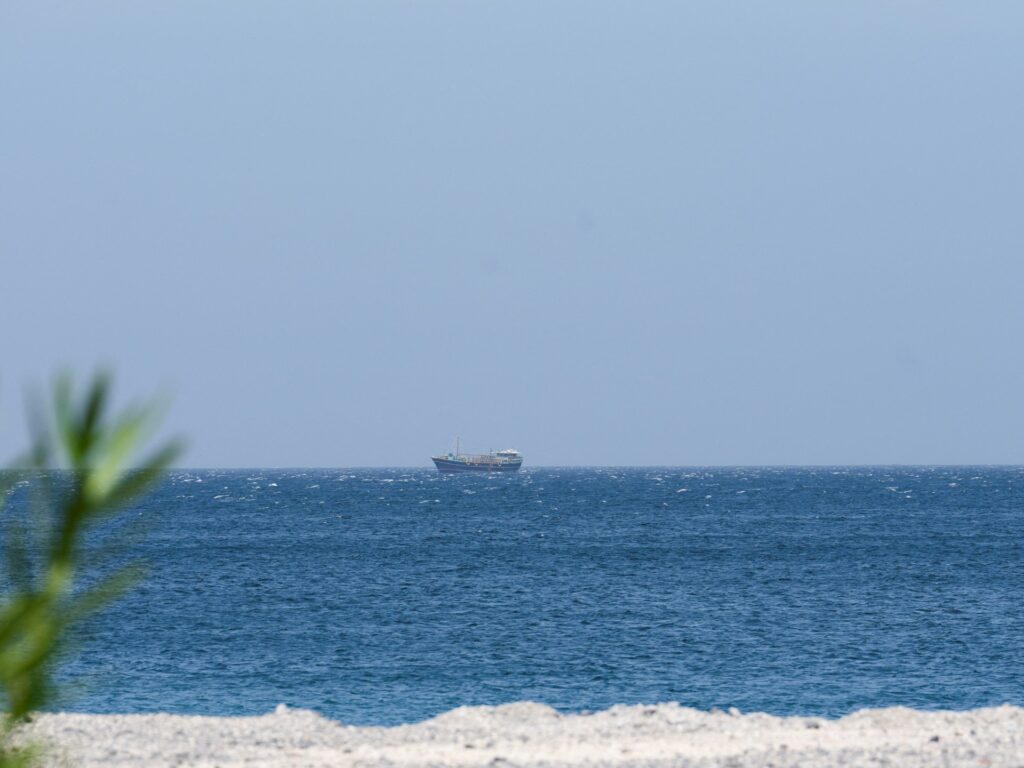
The United States has officially announced that two naval ships have ‘transited’ the Strait of Hormuz, a strategically vital waterway. This movement is part of ongoing mine-clearing operations intended to ensure safe navigation through the strait. The Strait of Hormuz is a critical chokepoint for global oil shipments, and its control has been a flashpoint in US-Iranian relations.
Diplomatic negotiations between the United States and Iranian delegations are currently underway in Islamabad, aiming to defuse tensions and reach agreements on various contentious issues. Among the key sticking points in these talks is the control and security of the Strait of Hormuz. Both sides hold significant strategic interests in maintaining influence over this narrow passage, through which a substantial portion of the world’s oil supply transits.
The US Navy’s recent transit of the strait by these two ships underscores the strategic importance Washington places on maintaining freedom of navigation in the region. Mine-clearing operations indicate ongoing concerns about potential threats from sea mines, which can disrupt maritime traffic and jeopardize international shipping lanes. These efforts aim to reassure regional and global stakeholders that the US remains committed to securing this vital waterway.
The Strait of Hormuz connects the Persian Gulf with the Gulf of Oman and the Arabian Sea, serving as a pivotal artery for international energy markets. Any disruption in the Strait can significantly impact global oil prices and economic stability worldwide.
The ongoing talks in Islamabad reflect a complex and delicate diplomatic process. Both the US and Iran have historically had contentious relations, with the strait symbolizing broader regional and geopolitical power struggles. Control over the Strait of Hormuz is not just about maritime navigation but also represents wider concerns about influence, security, and economic interests across the Middle East.
The current US naval presence and operational activities serve as both a demonstration of operational capability and a reminder of the potential volatility in the region. As negotiations continue, the international community watches closely, hopeful that diplomatic efforts will prevail in reducing the risk of conflict and ensuring unimpeded passage through this critical corridor.
This development is taking place against a backdrop of heightened tensions and an ongoing strategic competition. Both parties have signaled a willingness to engage diplomatically, but significant challenges remain to reach a consensus that will satisfy the competing interests surrounding the Strait of Hormuz.
In this context, the US transit of the strait and its mine-clearing mission represent crucial operational and symbolic acts. They highlight the challenges and complexities involved in balancing national security concerns, regional stability, and international economic interests.
Going forward, the outcome of the US-Iran negotiations and the future status of the Strait of Hormuz will have far-reaching implications. These will affect not only bilateral relations but also broader regional security dynamics and the global energy market.
Stakeholders around the world continue to monitor developments closely as the situation evolves. The safe and secure navigation of the Strait of Hormuz remains a top priority for maintaining peace and stability in the region and for sustaining the flow of vital energy resources to global markets.