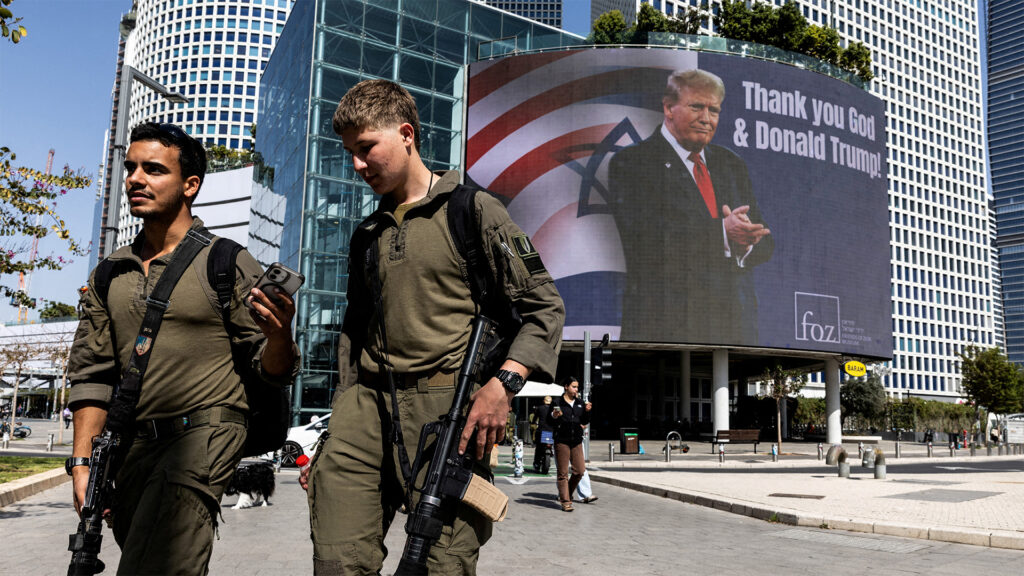
Former U.S. President Donald Trump has voiced his support for Israel amid ongoing conflicts in the Middle East, particularly following recent Israeli strikes on Beirut, Lebanon. Trump emphasized that Lebanon should be considered a “separate skirmish,” distinguishing it from the ceasefire agreement involving Iran. This statement comes as tensions remain high in the region, with concerns about the potential for broader escalation.
According to Trump, the ceasefire deal with Iran does not extend to Lebanon, underscoring a strategic differentiation between the conflicts in the two countries. His remarks highlight the complex geopolitical dynamics at play, where multiple actors and interests intersect in the volatile Middle East environment.
Israeli military actions against targets in Beirut have raised alarm internationally, but Trump’s comments suggest that the U.S. should maintain a focused stance on Iran, while addressing Lebanon’s situation independently. The former president’s position aligns with Israel’s perspective that Hezbollah and other militant groups in Lebanon present separate security challenges.
The Lebanese strikes are part of ongoing confrontations involving Hezbollah, the Iran-backed Shia militant group that maintains significant influence in Lebanon. Israel views Hezbollah as a direct threat and has targeted its infrastructure and operational sites, leading to cycles of retaliation.
Trump’s support for Israel comes amid broader discussions about U.S. foreign policy in the Middle East, where maintaining alliances and countering Iranian influence remain priorities. His declaration that Lebanon is “a separate skirmish” could signal a more compartmentalized approach to regional conflicts, instead of treating them as a monolithic front.
The ceasefire agreement with Iran primarily targets nuclear developments and missile programs, while conflicts in Lebanon involve different actors and motivations. Trump’s distinction between these issues may influence how future diplomatic engagements and military strategies are formulated.
By backing Israel’s right to defend itself and framing Lebanon’s conflict as distinct, Trump is reasserting a hardline position commonly associated with his administration. This stance advocates for strong measures against groups perceived as hostile to Israel and U.S. interests.
The situation remains fluid, with ceasefire negotiations ongoing and the risk of renewed violence ever-present. Analysts note that compartmentalizing conflicts could both help and complicate peace efforts depending on how regional players respond.
In summary, Trump’s recent statements reinforce his administration’s clear support for Israel and clarify his view that Lebanon should be treated separately from the Iran ceasefire context. His comments contribute to the evolving discourse on managing Middle East security and diplomacy in a multi-faceted and contentious environment.