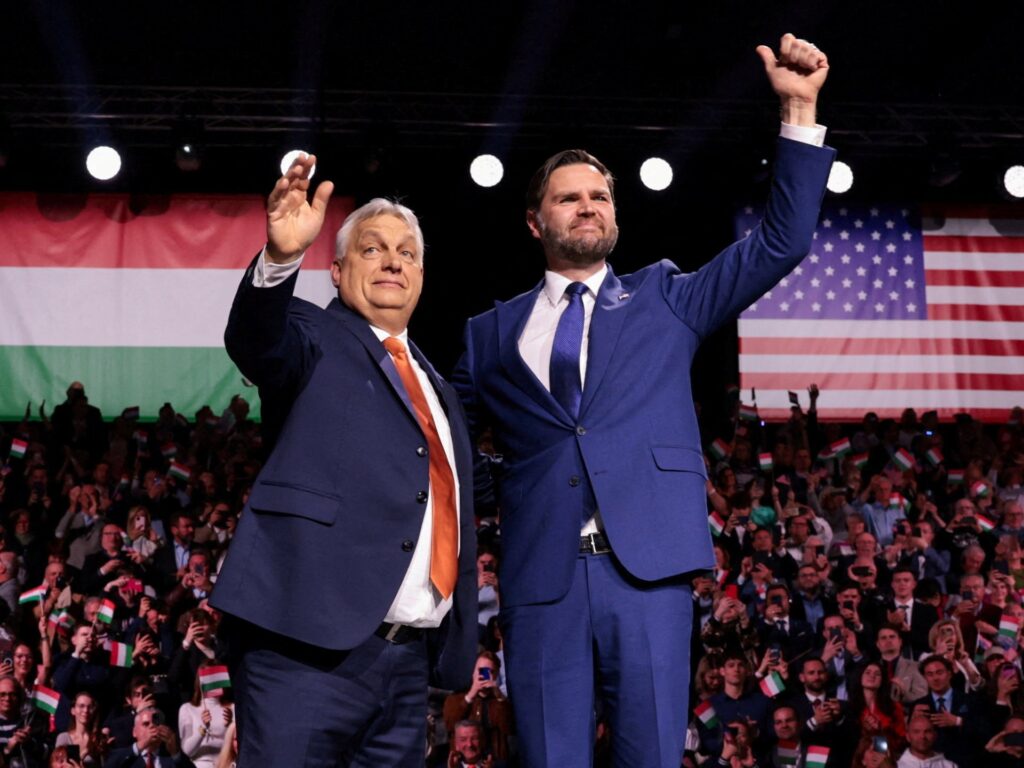
JD Vance, a prominent American political figure, has publicly condemned comments made by Ukrainian President Volodymyr Zelenskyy concerning Hungary’s Prime Minister Viktor Orban. The controversy arose following Zelenskyy’s critical remarks about Orban’s political stance and Hungary’s role in the ongoing geopolitical tensions in Eastern Europe.
During a recent visit to Hungary, the U.S. Vice President condemned Zelenskyy’s statements, describing them as ‘completely scandalous’ and ‘threatening.’ The Vice President emphasized the importance of maintaining diplomatic decorum and cautioned against rhetoric that could escalate conflicts or alienate key regional partners.
Vance echoed these sentiments, highlighting the significance of Hungary in the broader NATO alliance and its strategic partnerships with the United States. He argued that disparaging Hungary’s leadership could undermine efforts to foster unity among allies amid ongoing challenges posed by the war in Ukraine and Russia’s aggressive actions.
The dispute centers on Zelenskyy’s accusations, which targeted Orban for his perceived reluctance to fully support Ukrainian interests and NATO’s collective defense strategies. Zelenskyy expressed concern over Hungary’s cautious approach to sanctioning Russia and providing military aid to Ukraine, suggesting that Orban’s position hampers the international community’s ability to respond effectively to Russian aggression.
In contrast, Vance and the U.S. delegation underscored Hungary’s sovereignty and the complexities of its domestic politics. The Vice President’s remarks aimed to reassure Hungary of America’s commitment to bilateral relations, despite disagreements over policy specifics.
This incident underscores the delicate balance of diplomatic relations in Eastern Europe, where historical ties, national interests, and international alliances intersect. The U.S. administration faces the challenge of managing diverse perspectives within its coalition to present a united front against common security threats.
Experts note that while Zelenskyy’s frustrations are understandable given the circumstances of the war, constructive dialogue and mutual respect among allies remain crucial. Political analysts suggest that public criticisms, while sometimes necessary, should be carefully calibrated to avoid unintended diplomatic fallout.
The situation reflects the broader geopolitical complexities involving Ukraine, Hungary, Russia, and the West. Hungary’s unique position as both a NATO member and a country with economic links to Russia complicates its policy choices.
In summary, JD Vance’s criticism of Zelenskyy’s comments highlights tensions within the international coalition supporting Ukraine. It calls attention to the need for sensitive diplomacy and strategic collaboration as the war in Ukraine continues to reshape regional and global alliances.