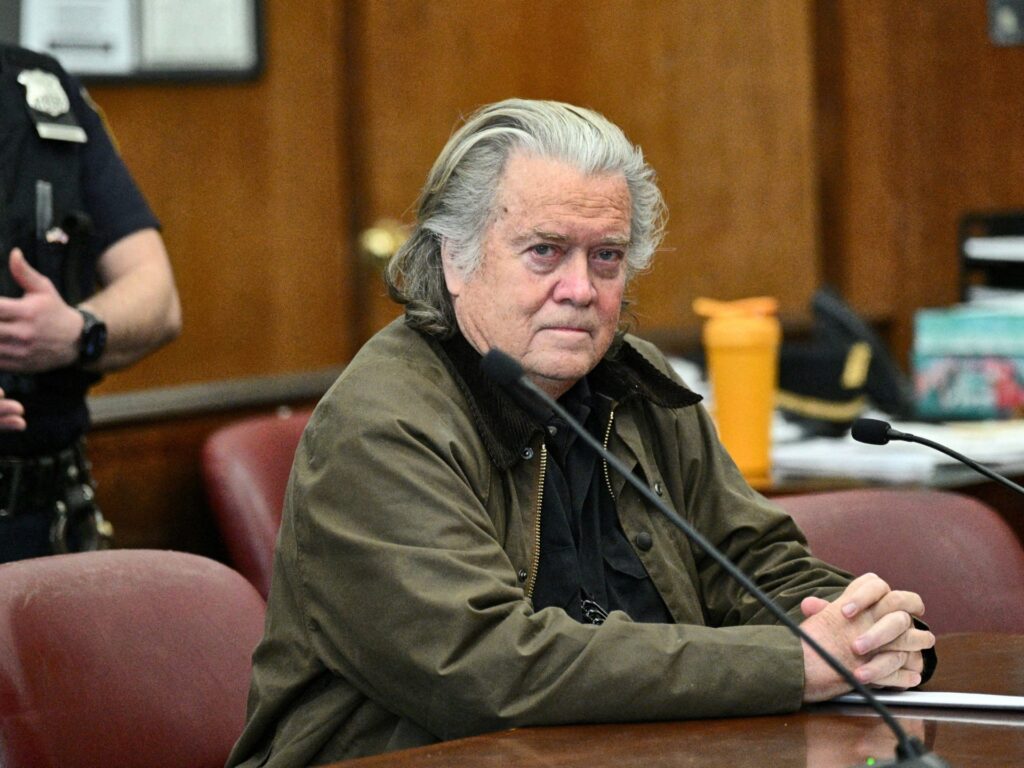
The US Supreme Court has recently taken a decisive step in the legal proceedings involving Steve Bannon, a prominent ally of former President Donald Trump. The Court’s action effectively clears the path for the dismissal of the criminal case against Bannon, marking a significant development in the ongoing saga.
Steve Bannon’s legal troubles began following his 2022 conviction, which resulted in a four-month prison sentence. His conviction was a notable event, considering Bannon’s influential role in American politics and his close ties to Donald Trump.
The Supreme Court’s decision to allow the case’s dismissal signals a potential end to the legal challenges that Bannon has been facing. This move could have broader implications not only for Bannon himself but also for similar cases involving political figures and their legal battles.
Bannon’s conviction in 2022 and the subsequent prison time highlighted the intense scrutiny political allies of Trump have undergone in the legal system. However, the Supreme Court’s recent stance appears to be a corrective measure, possibly aimed at ensuring fairness or addressing procedural issues that may have occurred during the prosecution.
Legal experts are watching closely, suggesting that this resolution might set a precedent or influence how future cases are handled when involving high-profile political figures. The decision underscores the complex interplay between law and politics in the United States.
Supporters of Bannon have expressed relief and satisfaction with the Supreme Court’s decision, viewing it as a vindication. On the other hand, critics remain cautious, emphasizing the importance of accountability irrespective of political affiliations.
The dismissal of the criminal case against Steve Bannon marks a pivotal moment in his legal journey, potentially allowing him to focus on his political and public endeavors without the cloud of legal jeopardy.
While the Supreme Court’s action does not erase Bannon’s past conviction, it significantly affects the legal landscape surrounding his case. This development may also influence public opinion and future legal strategies for individuals entangled in politically charged prosecutions.
As the story develops, both supporters and detractors remain attentive to the implications of this landmark decision. The Supreme Court’s ruling is a reminder of the judiciary’s powerful role in shaping not only legal outcomes but also the broader political discourse in the United States.
In conclusion, the US Supreme Court’s clearance for the dismissal of Steve Bannon’s criminal case represents a noteworthy chapter in American judicial and political history. It reflects the ongoing tension between legal accountability and political allegiance, highlighting the challenges faced by all stakeholders in navigating this complex terrain.