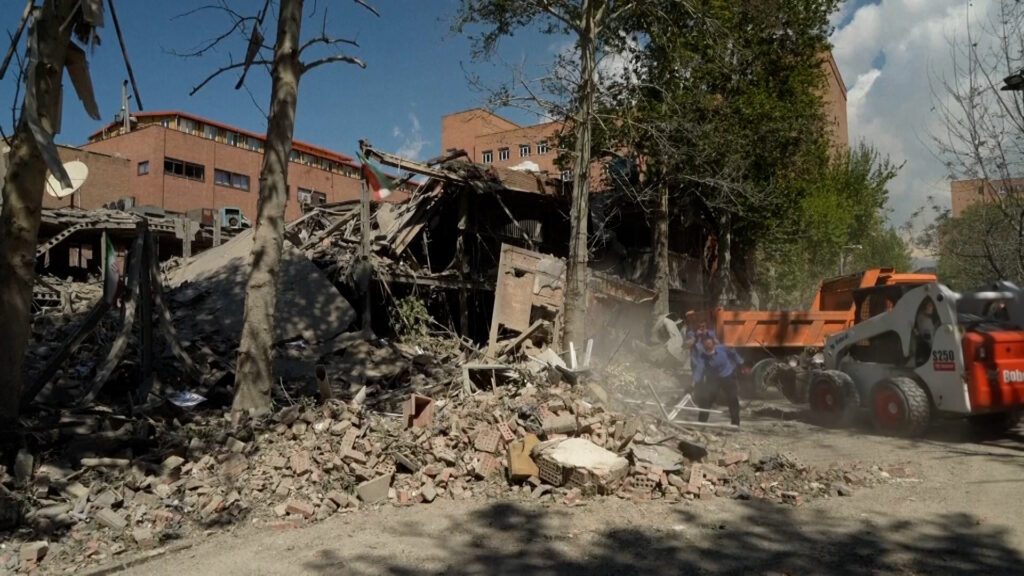
In a striking development amid ongoing tensions in the Middle East, Tehran’s Sharif University, one of Iran’s top academic institutions, suffered extensive damage following a recent US-Israeli aerial strike. Footage released from the campus vividly captures the aftermath, showing severely damaged research buildings that were central to the university’s scientific pursuits.
Sharif University of Technology, renowned for its emphasis on engineering and physical sciences, plays a crucial role in Iran’s academic and technological landscape. The attack has not only affected the infrastructure but has also raised concerns about the disruption of vital research activities that can impact Iran’s technological advancements.
The strike, reportedly conducted jointly by US and Israeli forces, marks a notable escalation in the covert operations targeting Iran’s scientific and military capabilities. Tehran has condemned the attack as an act of aggression aimed at suppressing the nation’s progress and independence in scientific research.
Demonstrations of the damage from the strike have circulated widely on social media, sparking outrage both within Iran and in international circles. Analysts suggest that the targeted facilities may have been linked to projects related to defense technology, although detailed information remains classified.
While the motivations for the strike reflect broader geopolitical tensions, the immediate consequences are clear — a disruption in one of Iran’s premier institutions of higher learning and a stark reminder of the region’s fragile stability. Sharif University officials have vowed to rebuild and continue their academic mission despite the setbacks.
International observers have expressed concern over the implications of such strikes on academic freedom and the safety of educational institutions in conflict zones. The event underscores the risks faced by universities in regions embroiled in conflict, where scientific progress is too often hindered by geopolitical agendas.
As investigations continue, the incident at Sharif University may serve as a catalyst for renewed diplomatic efforts to curb hostilities and protect civilian infrastructure. Meanwhile, the global academic community watches closely, hopeful for a resolution that safeguards the pursuit of knowledge amidst turmoil.
This attack on Sharif University is emblematic of the broader, ongoing conflicts in the region, illustrating how higher education and research centers are increasingly becoming focal points in geopolitical strategies. The resilience demonstrated by the university community symbolizes the enduring human spirit commitment to education and progress in the face of adversity.