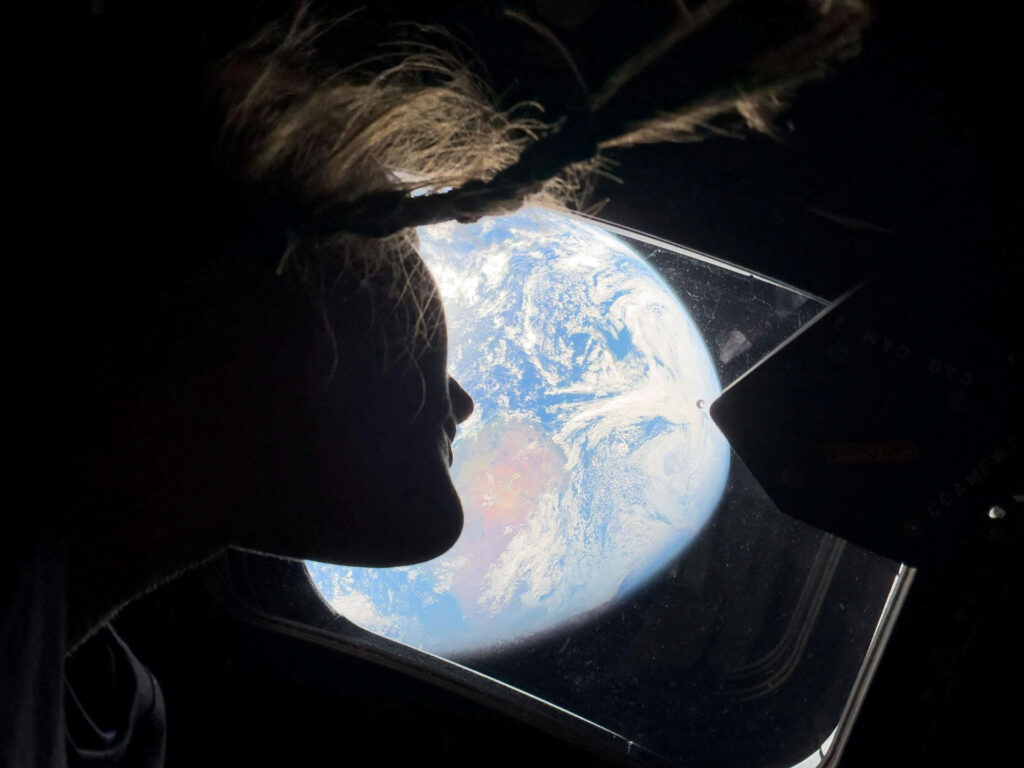
NASA astronaut and Artemis II mission specialist Christina Koch peers out of one of the Orion spacecraft's main cabin windows, looking back at Earth, as the crew travels towards the Moon April 2, 2024. NASA/Handout via REUTERS. THIS IMAGE HAS BEEN SUPPLIED BY A THIRD PARTY
In a historic milestone for space exploration, NASA’s Artemis II mission has set a new record for the furthest distance humans have traveled from Earth. This groundbreaking mission marks a significant advancement in humanity’s quest to explore the solar system and establish a sustainable presence beyond our home planet.
The Artemis II mission, following the successful uncrewed Artemis I flight, is the first crewed mission in NASA’s Artemis program. It aims to send astronauts beyond the Moon, venturing further into deep space than any human has ever gone before. The mission’s primary goal is to pave the way for future lunar landings and eventually, human missions to Mars.
During the mission, the crew aboard the Orion spacecraft traveled around the Moon, reaching a distance surpassing the previous record set during the Apollo 13 mission in 1970. This journey took the astronauts tens of thousands of kilometers beyond the lunar surface, demonstrating the durability and reliability of new spaceflight technologies.
NASA Administrator Bill Nelson praised the mission’s success, stating, “Artemis II represents a bold step forward in our exploration of space. By breaking records and pushing the boundaries of human travel, we are proving that the future of space exploration is bright and full of possibilities.”
The mission also tested crucial life support and navigation systems necessary for long-duration human spaceflight. The data and experience gained will be invaluable for planning Artemis III, which will aim to land astronauts on the Moon’s South Pole, a region previously unexplored by humans.
International collaboration has played a key role in the Artemis program, with partners from around the world contributing technology, expertise, and support. The success of Artemis II not only showcases American innovation but also highlights the potential of global cooperation in space exploration.
Experts suggest that Artemis II’s achievement could accelerate plans for establishing a sustainable human presence on the Moon, serving as a stepping stone for future missions to Mars and beyond. The mission’s success energizes efforts to develop new technologies for habitat construction, resource utilization, and long-term space travel.
Public excitement and interest in space exploration have surged following the mission’s successful record-breaking journey. Educational programs, media coverage, and social media discussions worldwide have emphasized the historic nature of this accomplishment and its implications for humanity’s future.
As Artemis II safely returns to Earth, the achievements of the mission will inspire a new generation of scientists, engineers, and explorers. NASA and its partners are focused on leveraging this momentum to continue pushing the boundaries of what is possible in space.
With Artemis II setting new records in human space travel distance, the dream of exploring deeper into our solar system and eventually reaching other planets is moving closer to reality. The mission underscores the enduring human spirit of exploration and the relentless pursuit of knowledge beyond the stars.
Stay tuned for further updates as NASA continues to unfold the next chapters of its Artemis program, aiming to unlock the mysteries of the Moon, Mars, and the universe beyond.