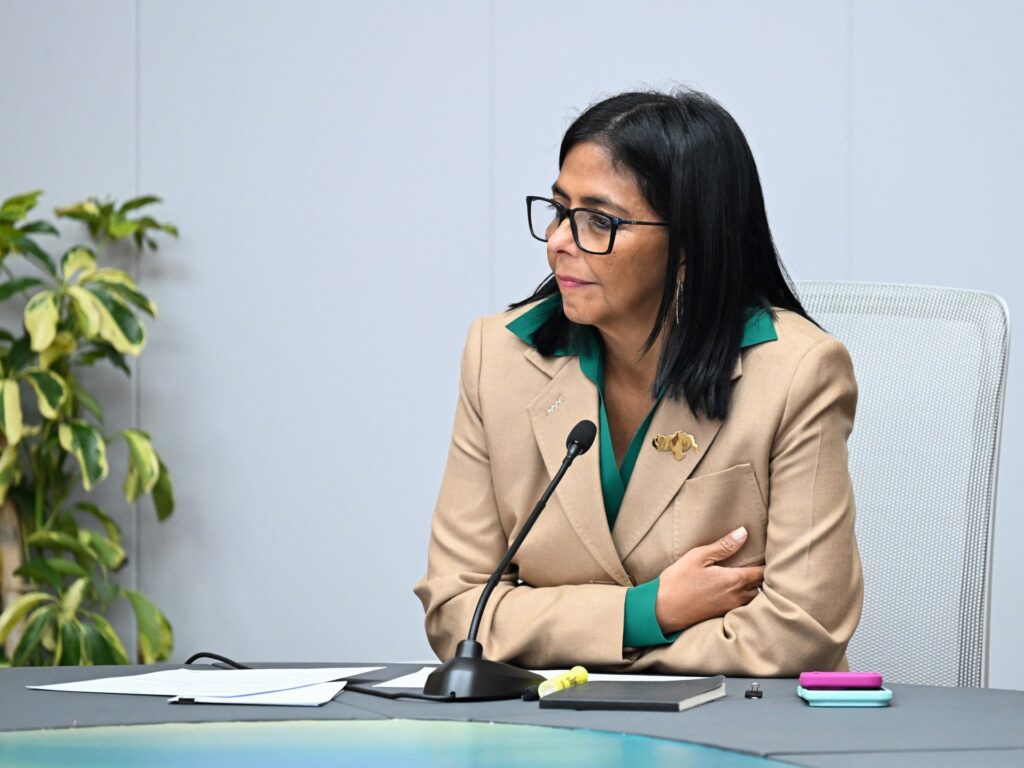
The United States has officially removed sanctions imposed on Delcy Rodriguez, the interim President of Venezuela, marking a significant shift in its approach to the Venezuelan government. This development follows a period of escalating US involvement in Venezuela’s political landscape, notably after the controversial abduction of former President Nicolas Maduro by US forces.
Delcy Rodriguez, who assumed the interim presidency amid Venezuela’s ongoing political crisis, had been under US sanctions due to allegations of human rights abuses and undermining democratic processes. The sanctions removal signals a recalibration of US foreign policy in the region, potentially opening doors for renewed diplomatic engagement and economic interactions.
Over recent months, the United States has intensified its efforts to assert influence over Venezuelan affairs. The abduction of Nicolas Maduro, a move widely condemned on the international stage as a violation of sovereignty, exemplifies the aggressive stance taken by the US government. This action has generated significant tensions and polarization, both within Venezuela and among global actors.
The impact of these sanctions and their subsequent removal on Venezuela’s internal affairs is profound. The sanctions had initially been implemented to pressure the Maduro regime and its affiliates, including Delcy Rodriguez, to step down and allow for democratic reforms. However, these measures also contributed to economic hardships and political instability within the country.
The removal of sanctions could be viewed as a gesture toward stabilizing Venezuela and encouraging constructive dialogue among factions. Supporters argue it might pave the way for easing the country’s severe economic crisis, rebuilding international relationships, and promoting peace. Critics, however, remain cautious, expressing concerns that such a move could legitimize the interim government without securing meaningful democratic changes.
Rodriguez, known for her staunch support of Maduro’s government even before becoming the interim president, now faces the challenge of navigating the complex political environment with potentially increased international legitimacy but also heightened expectations for reform.
Analysts suggest that the US’s recent maneuvers, including lifting sanctions, could be part of a broader strategy to influence Venezuela’s political trajectory indirectly while managing regional stability and countering other geopolitical powers’ presence in Latin America.
International response to the sanctions removal has been mixed. Some countries welcome the move as an opportunity to reset relations and encourage Venezuela’s reintegration into the global community. Others warn against premature optimism, emphasizing the need for sustained commitments to democracy, human rights, and economic recovery.
As Venezuela stands at this critical juncture, the international community watches closely. The United States’ recognition of Delcy Rodriguez through the sanctions’ removal marks a new chapter in Venezuelan-American relations, one fraught with both potential and uncertainty.
Ultimately, how this policy shift will influence Venezuela’s political and economic future remains to be seen. The ongoing dialogue between involved parties, both internally within Venezuela and externally with international actors, will be crucial in shaping the nation’s path forward.