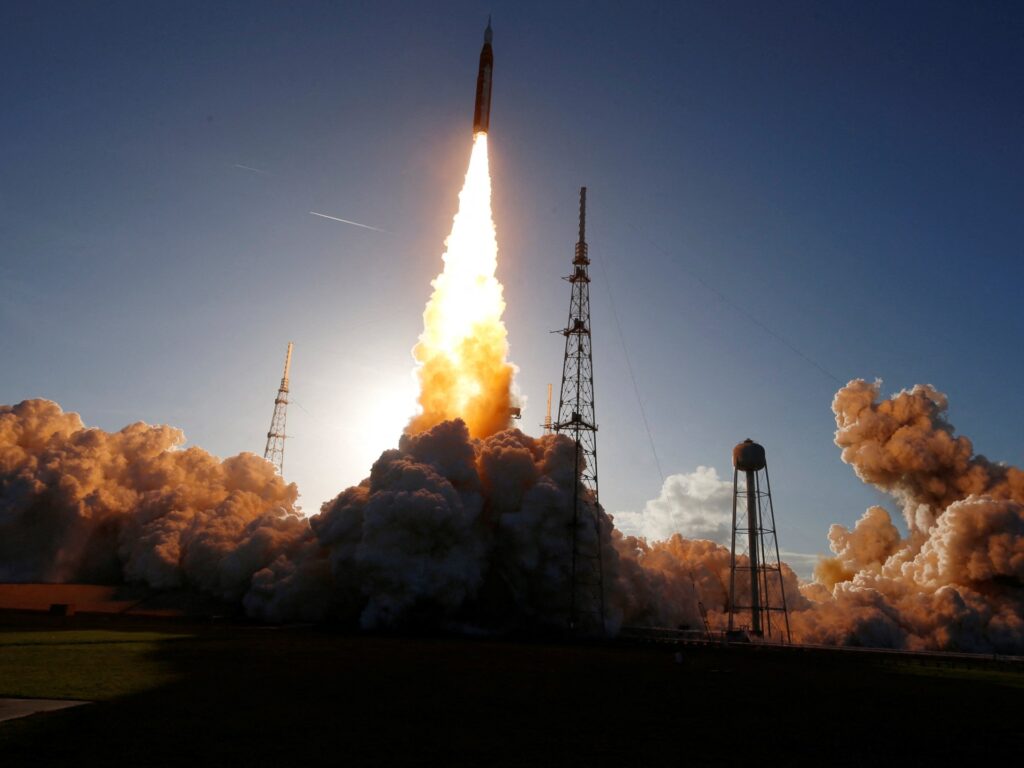
NASA’s Artemis II mission has successfully lifted off, marking a monumental step in the United States’ renewed push for lunar exploration and beyond. This mission represents not only a return to the moon but also a foundational milestone in broader plans to reach Mars with human crews in the coming decades.
Artemis II is the first crewed test flight of NASA’s Artemis program, which aims to land the first woman and the next man on the lunar surface. The program marks a significant advancement in space technology, international cooperation, and scientific research, with aspirations reaching as far as Mars.
The spacecraft carrying the Artemis II crew launched from Kennedy Space Center in Florida, with the crew comprising highly trained astronauts who will be testing critical systems and procedures necessary for deep space missions. During the mission, they will orbit the moon, testing life-support systems and other equipment designed for prolonged human spaceflight.
This mission follows the uncrewed Artemis I flight, which demonstrated the Space Launch System (SLS) and Orion spacecraft’s capabilities by successfully orbiting the moon and returning to Earth. Artemis II takes the next bold leap by carrying humans beyond low Earth orbit for the first time since the Apollo missions more than five decades ago.
The Artemis program represents NASA’s commitment to sustainable human exploration of the moon, focusing on building a long-term presence with plans for lunar surface habitats, research facilities, and potential resource utilization. These efforts are key to developing the technologies and experience needed for future manned missions to Mars.
International partners and commercial space companies are also critical participants in the Artemis program, contributing expertise, technology, and hardware to support NASA’s goals. This collaboration reflects a new era in space exploration, emphasizing partnerships and shared ambitions.
As Artemis II orbits the moon, NASA scientists and engineers will closely monitor the crew’s health and spacecraft performance, gathering vital data to refine future mission plans. This mission’s success will pave the way for Artemis III, which aims to land astronauts on the lunar surface and establish a sustainable human presence.
Excitement and anticipation are high as this mission not only embodies humanity’s enduring fascination with the moon but also lays the groundwork for humanity’s next giant leap into the solar system. With Artemis II underway, NASA stands on the threshold of a new era in human space exploration, promising discoveries and inspiring generations to come.