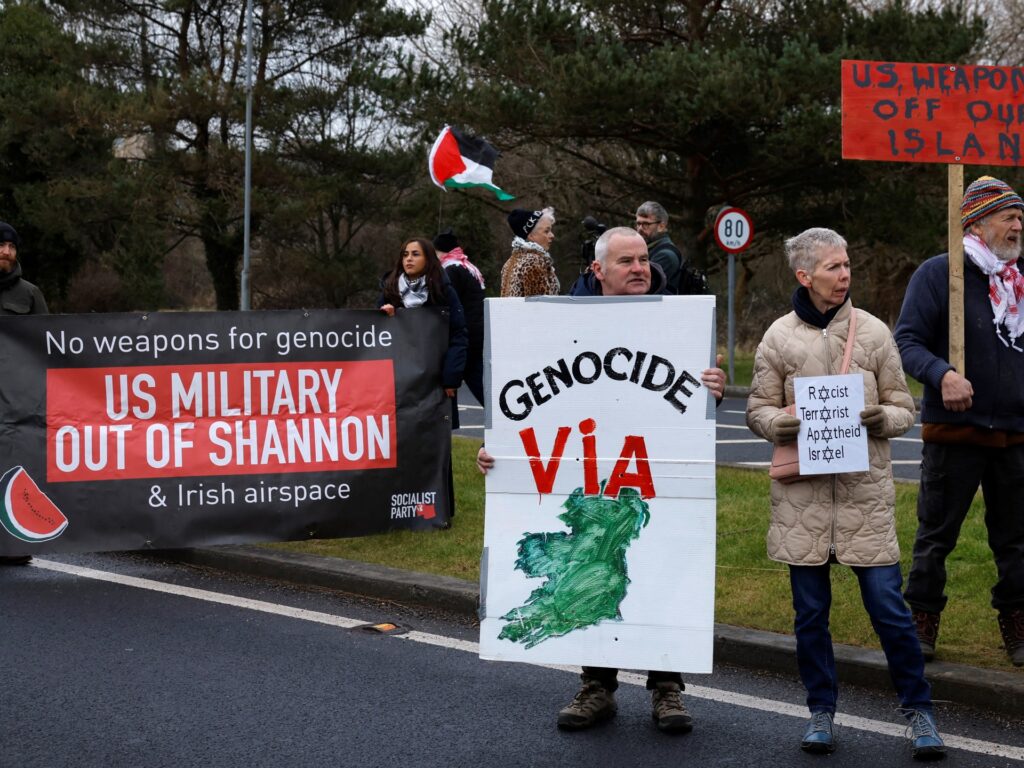
Shannon Airport in Ireland, long recognized as a crucial transit hub for the US military since the Iraq War, is facing renewed scrutiny amid allegations of facilitating weapons transfers to Israel. The controversy surrounding the airport has reignited debates both within Ireland and internationally, particularly from Palestine advocacy groups and other critics concerned about the implications of such transfers.
Since the early 2000s, Shannon Airport has played a strategic role in allowing US military personnel and equipment to transit through Irish territory. This arrangement has been a point of contention in Ireland, known for its neutrality and tradition of opposing military engagements, especially in conflict zones.
Recent reports allege that the airport’s facilities have been used to enable the transfer of weapons and military equipment to Israel, a move that has drawn ire from Palestinian solidarity groups and human rights organizations. Critics argue that Ireland’s tacit approval of such activities contradicts its official stance on neutrality and raises ethical questions about Ireland’s complicity in ongoing conflicts.
Supporters of the airport’s use for transits emphasize Ireland’s commitment to international partnerships and the strategic importance of the relationship with the United States and NATO allies. They argue that the airport’s role is primarily logistical and does not necessarily imply direct involvement in conflicts or endorsement of military actions.
However, opponents contend that by allowing military flights facilitating weapons transfers, Ireland risks becoming an inadvertent participant in geopolitical conflicts, notably the Israeli-Palestinian conflict, which remains one of the most sensitive and divisive international disputes.
The Irish government has so far maintained that it closely monitors all activities at Shannon Airport and adheres to international laws governing military transit. Nonetheless, pressure is mounting for greater transparency and potentially reconsideration of the airport’s role in such military logistics.
The issue has also sparked protests and calls for investigations by Irish civil society organizations, who demand accountability and a reaffirmation of Ireland’s neutrality. This public pressure underscores the broader debate over balancing international alliances with commitments to peace and human rights.
As global attention focuses on the ongoing tensions in the Middle East, Shannon Airport’s involvement symbolizes the complex intersections of military logistics, international diplomacy, and ethical considerations that many neutral countries face.
Moving forward, the Irish government and international community may need to revisit policies concerning military transit to ensure they align with national values and international expectations. This case highlights the challenges nations encounter in maintaining neutrality while participating in global security frameworks.
In summary, the role of Shannon Airport as a transit hub for US military operations, particularly in relation to weapons transfers to Israel, has sparked significant controversy. The debate encapsulates broader issues regarding Ireland’s neutrality, international relations, and ethical responsibilities in global conflicts, with many calling for more oversight and transparency.