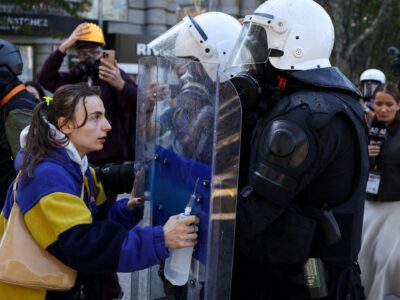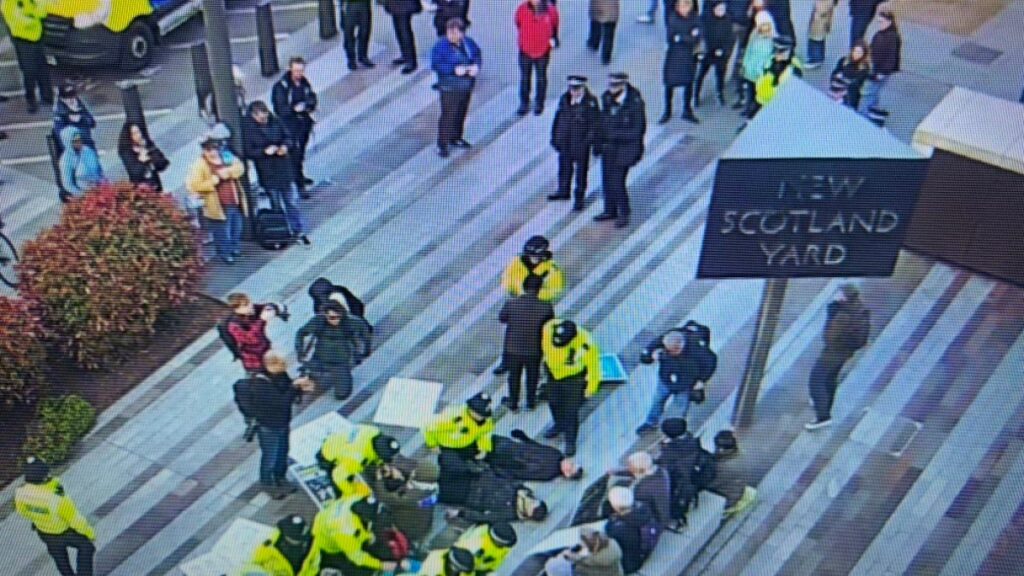
In a significant development, supporters of Palestine Action have been arrested by London’s Metropolitan Police following a sudden reversal in the force’s policy regarding the implementation of a ‘terror’ ban. This change has sparked controversy and raised questions about law enforcement priorities and civil liberties.
The arrests come just days after the Met Police announced a U-turn in their stance, maintaining that despite a recent High Court ruling, the ‘terror’ ban imposed on Palestine Action activists would remain firmly in place. This decision has ignited debates over the interpretation of legal rulings and the balance between security measures and protest rights.
Palestine Action, a group known for its direct action campaigns aiming to disrupt arms trade and promote Palestinian rights, had faced restrictions under the ‘terror’ ban policy, which was initially challenged and partially overturned by the High Court. However, the Met Police’s refusal to lift the ban signals a continued tough stance on protest activities linked to the group.
According to sources within the police, the arrests were carried out because of alleged breaches of the ongoing ban, with activists accused of engaging in activities deemed to incite or support terrorism under the law. Critics argue this interpretation is overly broad and criminalizes legitimate protest.
The reversal has led to condemnation from human rights organizations and civil liberties advocates, who warn that such policies threaten democratic freedoms and the right to peaceful demonstration. They argue that the use of ‘terror’ labels in this context may suppress dissenting voices and fuel mistrust between communities and law enforcement.
Legal experts have expressed concern over the Met Police’s approach, highlighting the complexities of enforcing court rulings that challenge existing policies. The situation underscores the tension between judicial decisions and executive enforcement powers, particularly in politically sensitive cases.
Pro-Palestine groups and their supporters have vowed to continue their activism despite the arrests and the ban, emphasizing their commitment to non-violent resistance and the pursuit of justice for Palestinian people.
The Met Police has stated that it remains dedicated to upholding the law and ensuring public safety while respecting lawful protest. They have called for protesters to engage in dialogue and follow legal routes for their activities.
This development marks a critical point in the ongoing conflict surrounding protest rights and counter-terrorism measures in the UK, highlighting the challenges faced by authorities in balancing security concerns with fundamental freedoms.
As the situation evolves, it will be closely watched by activists, legal analysts, and policymakers, with potential implications for protest regulation and the fight against terrorism.
The controversy also reflects broader global struggles regarding how governments respond to activism tied to international conflicts, raising questions about proportionality, fair treatment, and the protection of human rights.