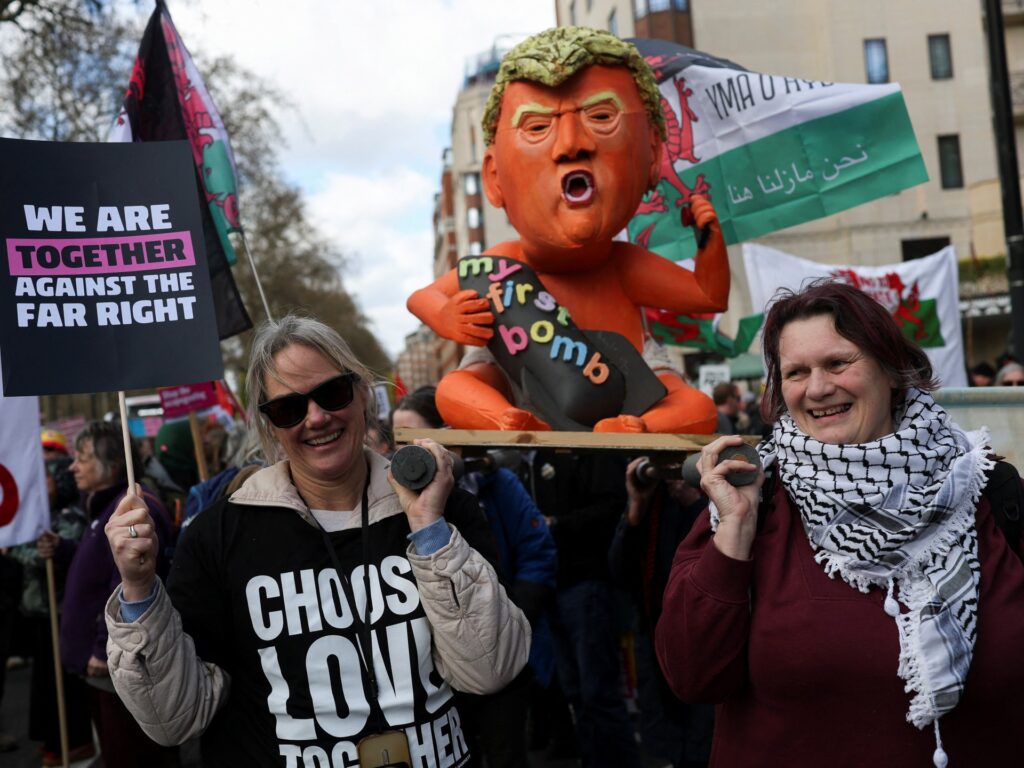
In an unprecedented display of unity and resistance, hundreds of thousands of people gathered in London to stage what organizers are calling the largest anti-far-right march in Britain’s history. The massive crowd took to the streets to demonstrate their collective stand against the rise of far-right extremism and ideology.
Participants spanned all demographics and included individuals from various walks of life, united under a common banner of opposition to hate and division. The march was marked by peaceful protests, speeches, and a strong message of inclusivity and solidarity.
Organizers emphasized the importance of vigilance against any resurgence of far-right ideology that threatens the values of democracy, equality, and respect for human rights. Many speakers addressed the dangers posed by extremist groups and the need for continued public awareness and activism.
The march proceeded through central London, drawing attention from local residents, media, and international observers. It ended in a large rally where activists and community leaders underscored the ongoing commitment to combating hate in all forms.
This event has been hailed as a landmark moment in Britain’s social and political landscape, signaling widespread public rejection of extremist views and affirming the nation’s commitment to tolerance and unity. The turnout and energy at the march demonstrate the power of grassroots movements and the importance of collective action in shaping a more inclusive society.
As concerns about far-right activities persist globally, London’s march serves as a beacon of hope and determination, illustrating how communities can come together to stand firmly against hate and protect the rights and dignity of all citizens. The event has inspired similar movements across the UK and beyond, reinforcing the message that intolerance and hatred have no place in a democratic society.
The successful organization and peaceful nature of the demonstration also highlight the role of civil society in promoting dialogue, understanding, and respect among different segments of the population. Authorities have praised the cooperation between protestors and police, which helped ensure safety and order throughout the day.
In the aftermath of the march, discussions have intensified about the steps needed to further counteract far-right extremism, including educational initiatives, policy reforms, and community engagement programs. The marchers’ resolve and visibility have reignited public discourse on protecting democratic values against threats posed by hate-based ideologies.
Overall, the historic anti-far-right march in London stands as a powerful testament to the strength of democratic activism and the collective will of people committed to building a society founded on principles of justice, equality, and peace.