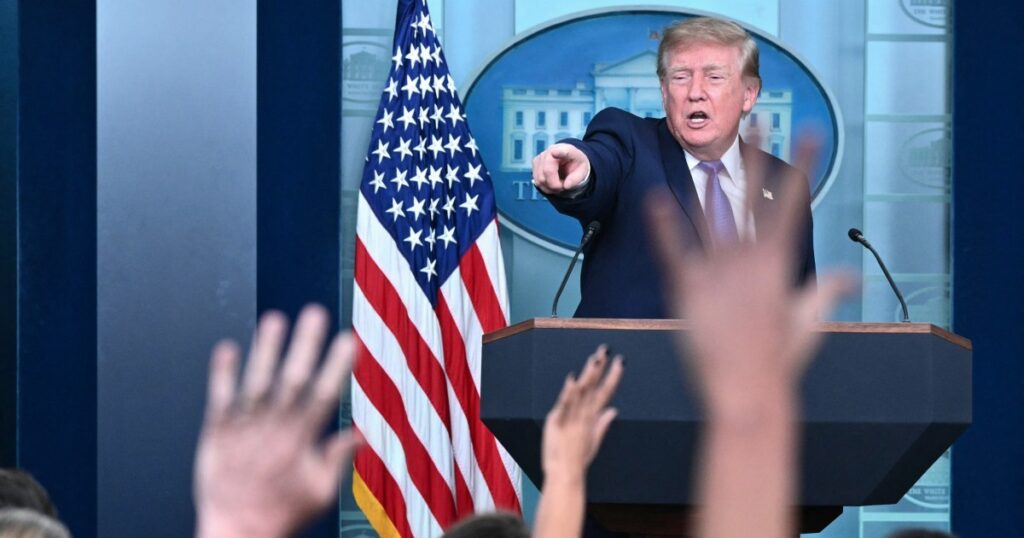
In a significant development in the ongoing Iran conflict, US President Donald Trump announced that the war is “effectively over.” This declaration came after a high-profile meeting with the Prime Minister of Qatar, held in Washington, DC. The remarks represent a pivotal moment in the conflict, raising hopes for a potential de-escalation. However, tensions remain high as Iran has demanded the “surrender” of opposing forces, signaling that the situation is far from resolved.
During the meeting, President Trump and the Qatari Prime Minister discussed various diplomatic efforts to bring stability to the region. The US leader’s statement about the war being over marks a stark contrast to the intense hostilities witnessed in previous weeks. It underlines the possibility of diplomatic breakthroughs facilitated by influential regional allies like Qatar.
Iran’s demand for surrender, however, highlights the deep-rooted challenges that still persist. This demand has been interpreted by analysts as a firm stance against any compromise or negotiations that do not meet Iran’s strategic interests. The Iranian government maintains that their position is non-negotiable, further complicating diplomatic dialogues.
The conflict, which has drawn international attention and concern, involves a complex web of regional and global powers. The public optimism stirred by President Trump’s announcement must be tempered with the reality of Iran’s resolute position. Experts emphasize that while the proclamation may signal the end of active combat, underlying political and ideological disputes remain unresolved.
The meeting in Washington DC was described as constructive, with both leaders showing willingness to engage in further talks. Qatar, positioned as a diplomatic mediator, has expressed its commitment to facilitating peace discussions between the US and Iran to prevent future escalations.
International reactions to the announcement have been mixed. Some world leaders welcomed the prospect of peace, encouraging continuous dialogue. Others remain cautious, pointing out that official declarations have yet to be backed by tangible ceasefire agreements or policy changes on the ground.
Economic implications of the conflict have also played a role in diplomatic urgency. The instability in the Middle East has affected global oil markets and trade routes, prompting involved parties to seek swift resolutions that could restore stability.
Humanitarian concerns remain paramount, with many calling for an immediate easing of hostilities to alleviate civilian suffering. Relief organizations emphasize the need for safe corridors and aid access in the regions affected by the war.
As developments unfold, the world watches closely for further statements from both the US administration and Iranian officials. The coming days are expected to be critical in determining whether President Trump’s assertion marks the beginning of lasting peace or if the conflict will intensify anew.
In summary, the Iran war panorama is at a crossroads, with President Trump’s declaration providing cautious optimism amid Iran’s unwavering demand for surrender. The diplomatic efforts following the Washington DC meeting may chart a new path towards conflict resolution, but significant challenges remain to overcome for durable peace.