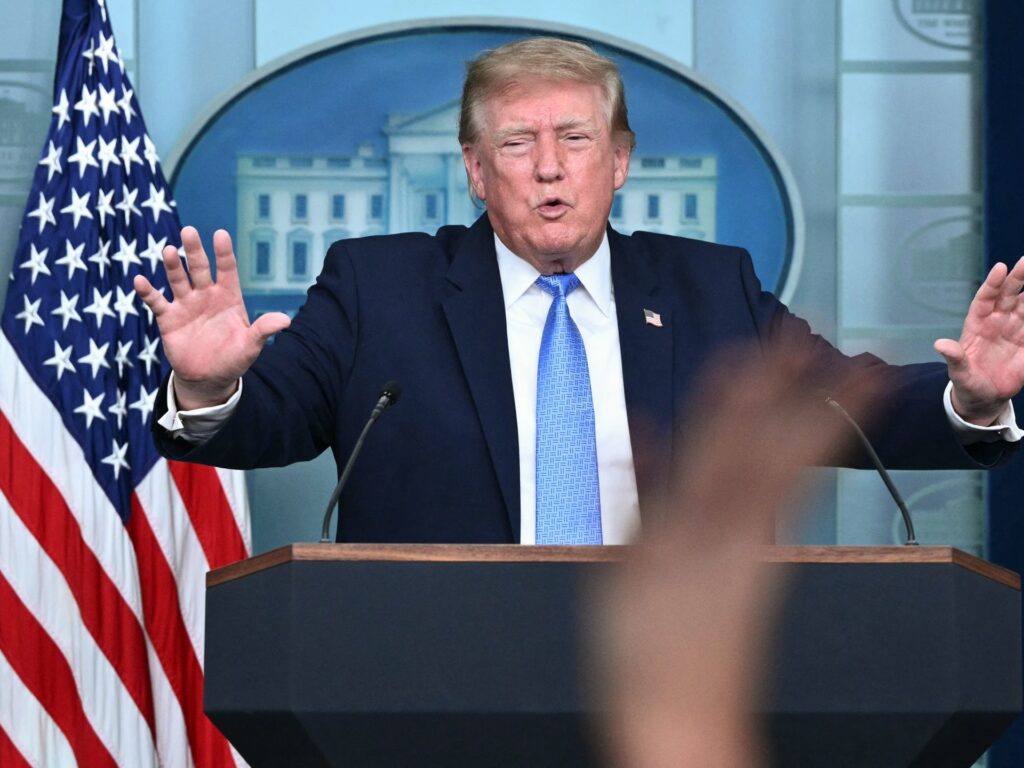
In a surprising development, former US President Donald Trump declared that the ‘war on Iran is effectively over’ following his discussions with Qatar’s Prime Minister. Trump’s remarks were made public recently, stirring significant reactions globally. He suggested that recent diplomatic engagements had paved the way for a de-escalation of tensions between the two nations. However, these comments were quickly dismissed by Iranian officials, who labeled the statements as ‘fake news.’ The Iranian government maintains that no such cessation or change in conflict status has occurred, distancing themselves from Trump’s assertions.
The context of Trump’s statement revolves around ongoing geopolitical tensions in the Middle East, particularly the strained relations between the United States and Iran. These have been marked by economic sanctions, military confrontations, and proxy conflicts over the past years. The conversation with Qatar’s PM reportedly involved discussions aimed at reducing hostilities and seeking peaceful resolutions.
Qatar, known for its mediatory role in regional conflicts, may have been instrumental in facilitating this dialogue. Despite this, the official stance from Iran remains skeptical, portraying Trump’s announcement as unfounded and possibly politically motivated.
Analysts suggest that such declarations, whether true or not, impact international diplomatic dynamics and perception management. The announcement raises questions about the accuracy of information being disseminated and the motivations behind such public statements.
The US-Iran relationship continues to be a complex and sensitive issue, where communication often involves layers of political strategy. The recent talks with Qatar’s leadership indicate a potential, yet cautious, step toward dialogue, even if contentious claims like these emerge. Both sides appear to navigate a cautious path to avoid escalation while managing internal and external political pressures.
As the global community watches closely, the need for clear, verified communication becomes crucial. The situation underscores the challenges of conflict resolution in volatile international contexts and the importance of credible diplomacy over rhetoric. The coming weeks may reveal more about the intentions and outcomes of the recent discussions, as well as the potential for genuine peace initiatives between the US and Iran.