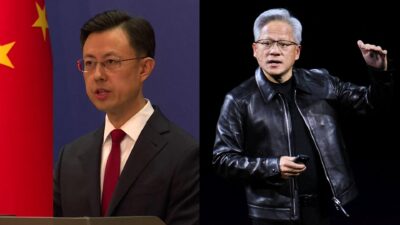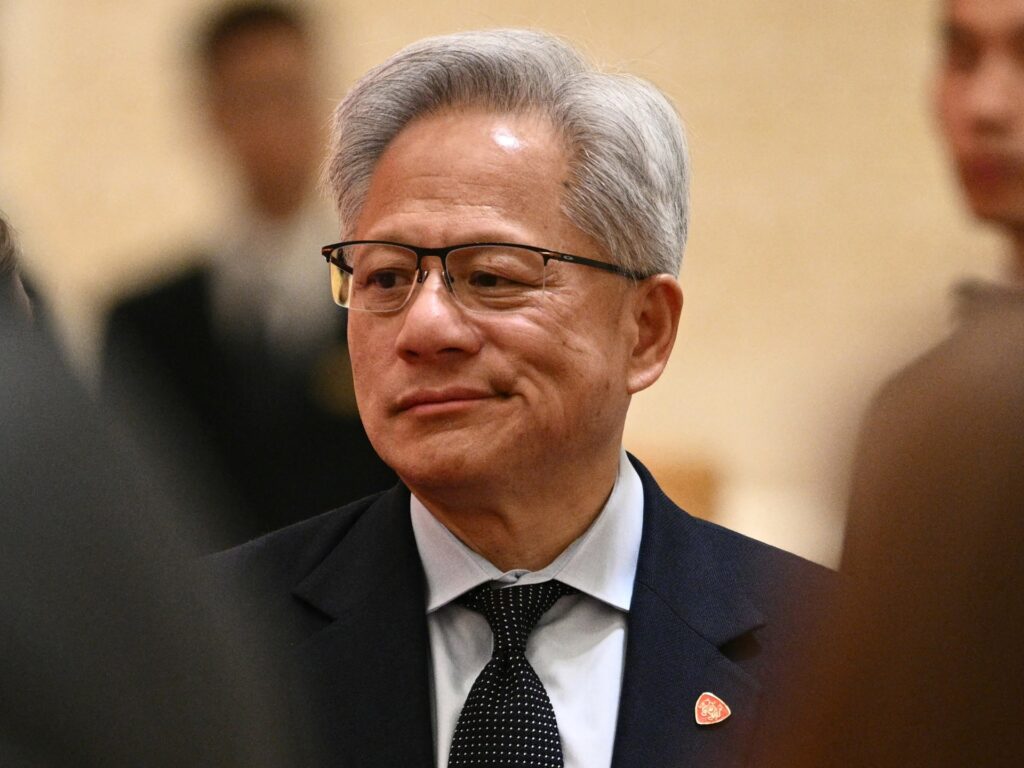
Nvidia’s CEO, Jensen Huang, has found himself at the centre of a high-profile US-China spy scandal that has sent shockwaves through the technology and finance markets. Allegations have surfaced linking Huang to Chinese intelligence activities, sparking widespread concern and speculation. This development has notably impacted Nvidia’s stock performance, with shares dropping more than 4 percent amid investor uncertainty.
The origins of the allegations remain murky, but they reportedly involve accusations that Huang, who is instrumental in leading one of the world’s largest and most influential chipmakers, may have had connections that compromised corporate or national security interests. As Nvidia plays a crucial role in the semiconductor industry—a strategic sector central to technological innovation and national defense—the implications of such claims are significant.
Market analysts point out that Nvidia’s chips are integral to numerous applications, including artificial intelligence, gaming, and increasingly, military technology. The allegations come at a time when US-China relations are already tense, particularly regarding technology transfer and cybersecurity. Huang’s position as a Taiwanese-American leading a company with deep operations and partnerships in both countries adds complexity to the matter.
Industry experts emphasize the need for thorough investigations to clarify the facts. Nvidia has denied any wrongdoing by Huang or the company, asserting their commitment to compliance with all legal and regulatory standards. Meanwhile, shareholders and the broader market watch closely as further details emerge.
This scandal underscores the intense geopolitical rivalry between the US and China, where business leaders in strategic industries often face scrutiny amid national security concerns. The tech sector, especially firms like Nvidia at the forefront of semiconductor innovation, remains a focal point of this tension.
As the situation develops, the outcome of these allegations could have profound implications not just for Nvidia but for the semiconductor industry and international trade relations. Stakeholders await official statements and potential regulatory inquiries that could clarify the scope and validity of these claims.
In conclusion, the allegations against Jensen Huang signal a tense intersection of technology, politics, and national security, reflecting the broader challenges multinational corporations face amid geopolitical conflicts. The market’s reaction reflects uncertainty, but the full impact will depend on the unfolding investigation and responses from all parties involved.