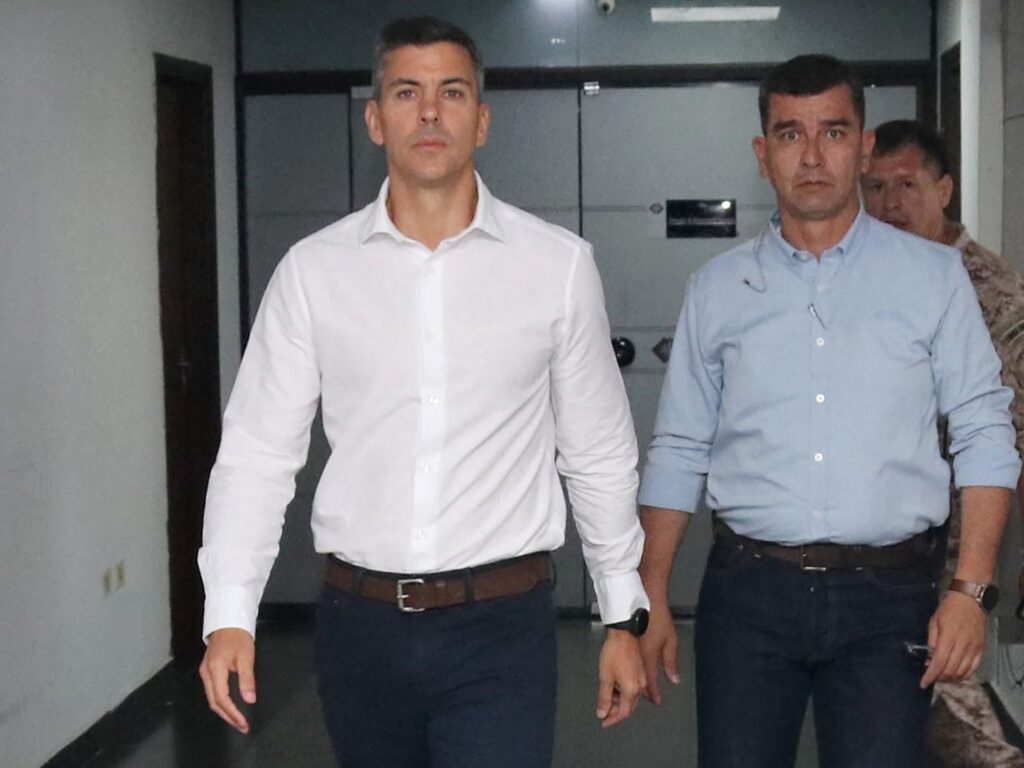
In a sweeping crackdown that has sent shockwaves through Paraguay’s financial and political spheres, authorities raided the home of former President Santiago Pena as part of an ongoing investigation into the catastrophic collapse of Ueno Bank. This unprecedented bank failure has had profound ramifications, jeopardizing the financial stability of nearly half of Paraguay’s population.
The investigation centers on allegations of financial crimes linked to the management and operations of Ueno Bank during Pena’s tenure. Officials suspect that mismanagement, irregularities, and possible corrupt practices may have played a role in the bank’s downfall. This collapse has left countless families and businesses grappling with uncertainty and financial loss, shaking public trust in the country’s banking system.
Ueno Bank was once a pillar of Paraguay’s financial sector, with extensive reach and millions of customers relying on its services for savings, loans, and investments. Its unexpected failure not only disrupted economic activity but also ignited a political crisis, raising questions about regulatory oversight and the accountability of former government officials.
Santiago Pena, who served as president from 2023 to 2028, has been at the center of scrutiny due to his close ties to the bank and his background in economics. Critics argue that policies enacted during his administration may have indirectly facilitated risky financial practices within Ueno Bank, contributing to its vulnerability.
The bank’s collapse has led to widespread protests and demands for transparency from both the government and the financial institutions involved. Citizens affected by the crisis have called for justice and compensation, while opposition leaders leverage the situation to challenge the legitimacy of the current political establishment.
In response to the fallout, Paraguay’s financial regulators have intensified audits of other banking institutions to prevent a similar disaster. International financial organizations have also stepped in to offer support and guidance in stabilizing the country’s banking system and restoring investor confidence.
This development shines a spotlight on the critical need for stronger financial governance and regulatory frameworks in Paraguay. Experts emphasize that ensuring transparency and accountability at all levels is essential to rebuild trust and protect the economy from future shocks.
As investigations continue, Santiago Pena faces potential charges including fraud, embezzlement, and dereliction of duty. Legal proceedings are expected to be lengthy and closely watched both within Paraguay and by the international community.
The Ueno Bank saga serves as a cautionary tale about the dangers of inadequate oversight and the intertwining of political influence with financial institutions. For a nation still striving toward economic progress, the consequences of this crisis will likely reverberate for years to come, shaping policy reforms and public sentiment.
Ultimately, the raid on Pena’s home symbolizes a turning point in Paraguay’s fight against corruption and financial misconduct. It underscores the urgent need for reforms that uphold the rule of law and protect citizens from the fallout of failed financial enterprises. As Paraguay navigates this turbulent period, the world watches closely, hopeful that transparency and justice will prevail, paving the way for a more resilient economic future.