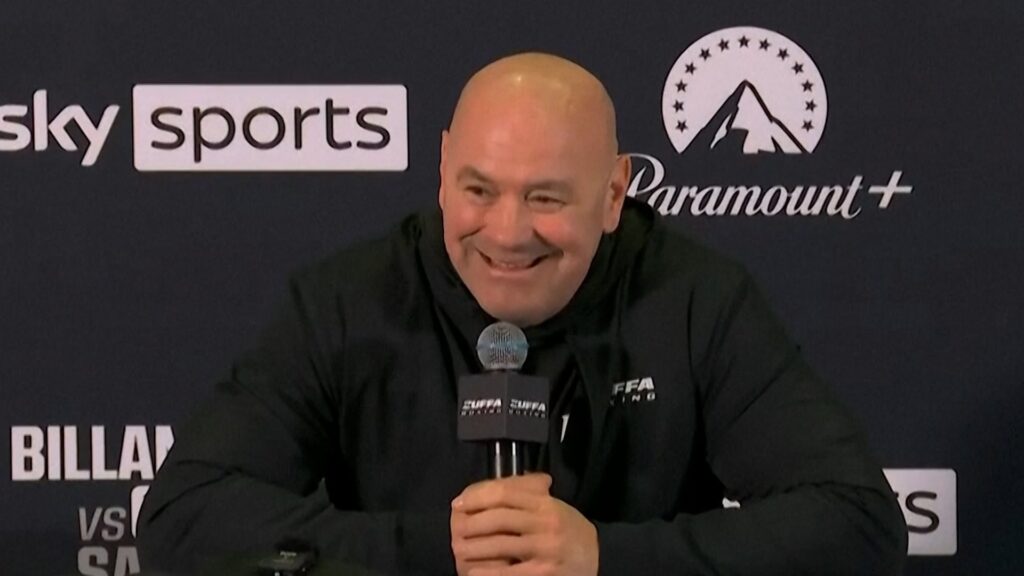
In an unexpected twist merging the worlds of sports and politics, UFC President Dana White finds himself in the spotlight as a potential candidate for the White House press secretary role. This speculation arose after President Donald Trump publicly suggested that White consider taking on the position, a move that surprised many given White’s prominence in the mixed martial arts industry rather than in political communications.
Dana White, known for his larger-than-life personality and his transformative impact on the UFC, has long been a supporter of President Trump. Their shared connection dates back several years, and White’s outspoken support of the president has often been noted in media coverage. The suggestion from Trump came as a casual yet intriguing remark, signaling an openness to bringing unconventional figures into his administration.
Following the president’s encouragement, Dana White confirmed plans to meet with Trump to discuss the possibility further, a development that has attracted significant media and public interest. While White has no traditional background in political communications or government service, his ability to manage high-pressure situations, handle media interactions, and command attention could potentially translate into the press secretary role.
Experts and commentators have weighed in with mixed opinions. Some see White’s bold and straightforward communication style as an asset that could shake up the often-staid nature of White House press briefings. Others express concerns about his lack of experience in political messaging and policy detail, which are critical components of the press secretary’s responsibilities.
The current White House press secretary has faced criticism and turnover, leading to ongoing discussions about the role’s future and the qualities needed in a successor. President Trump’s willingness to consider figures outside the traditional political sphere reflects his broader approach to appointments, which often includes business leaders, celebrities, and other non-career politicians.
Should Dana White accept and succeed in the role, it would mark a significant shift for the White House communication strategy and underscore the blending of entertainment and politics in contemporary American governance. Nonetheless, the potential appointment raises questions about the evolving nature of governmental communication and the balance between effective messaging and professional political expertise.
As discussions continue, the public and political observers alike watch closely, curious to see whether a fight promoter can step out of the Octagon and into the press room of the White House. The unfolding story highlights the unpredictable intersections of celebrity, politics, and media in today’s political landscape.