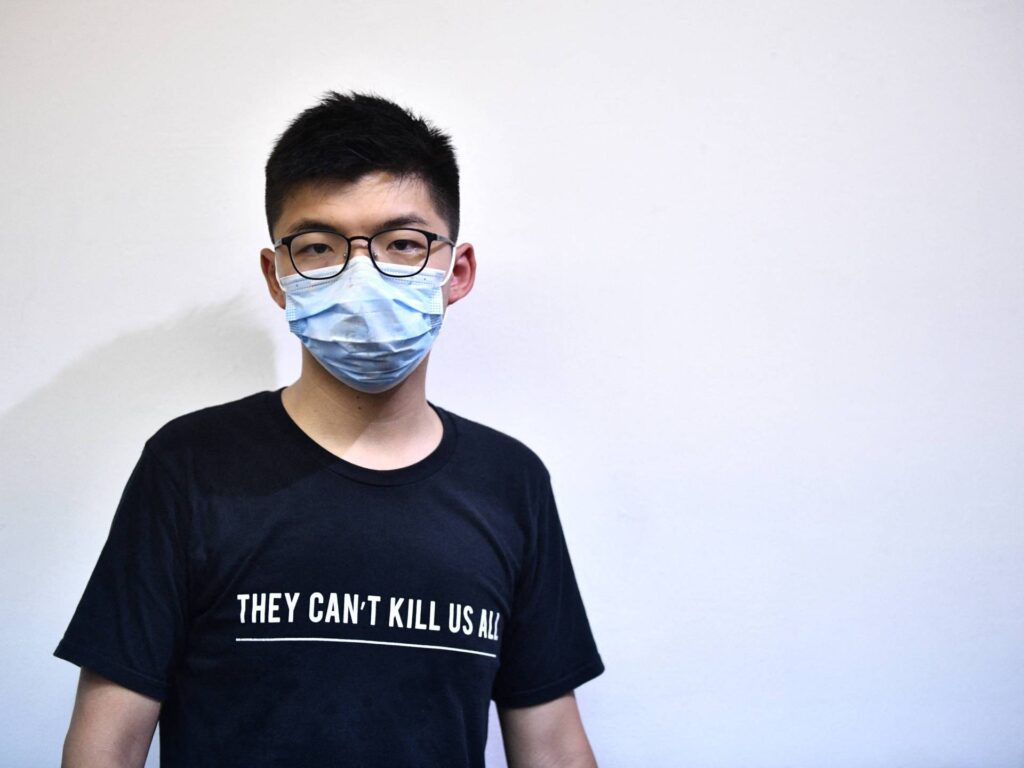
Joshua Wong, a prominent democracy activist in Hong Kong, has been sentenced to 10 years in jail. Wong has been in prison since 2020, and his latest sentence stems from his conviction for colluding with foreign entities, which is a violation of Hong Kong’s national security law. This law, enacted by Beijing in 2020, has been widely criticized for curbing freedoms and suppressing dissent in the region.
Wong, who rose to international prominence as a student leader during the 2014 Umbrella Movement protests, has long been an outspoken advocate for democratic reforms in Hong Kong. His activism has made him a symbolic figure in the struggle against the increasing influence of mainland China over the city’s political landscape.
The charge of collusion with foreign forces is one of the most serious under the national security law, which aims to prevent acts deemed as secession, subversion, terrorism, or collusion with foreign powers. Critics argue that the law is used to target political opponents and silence dissent.
Since the imposition of the national security law, many pro-democracy activists, politicians, and protesters have faced arrests and lengthy sentences. Joshua Wong’s decade-long sentence marks one of the harshest penalties handed down to an activist under the law.
Wong’s supporters contend that these charges are politically motivated and designed to eliminate voices that challenge the central government’s authority in Hong Kong. International human rights organizations have condemned his sentencing, calling it a blow to Hong Kong’s autonomy and freedoms.
The situation highlights the broader crackdown on Hong Kong’s pro-democracy movement, which has seen mass protests, arrests, and a decline in political freedoms since the introduction of the national security law.
As Wong begins serving his sentence, the future of the pro-democracy movement in Hong Kong remains uncertain, with activists facing increasing risks under the current political climate. The international community continues to watch closely, concerned about the implications for rights and freedoms in the city.