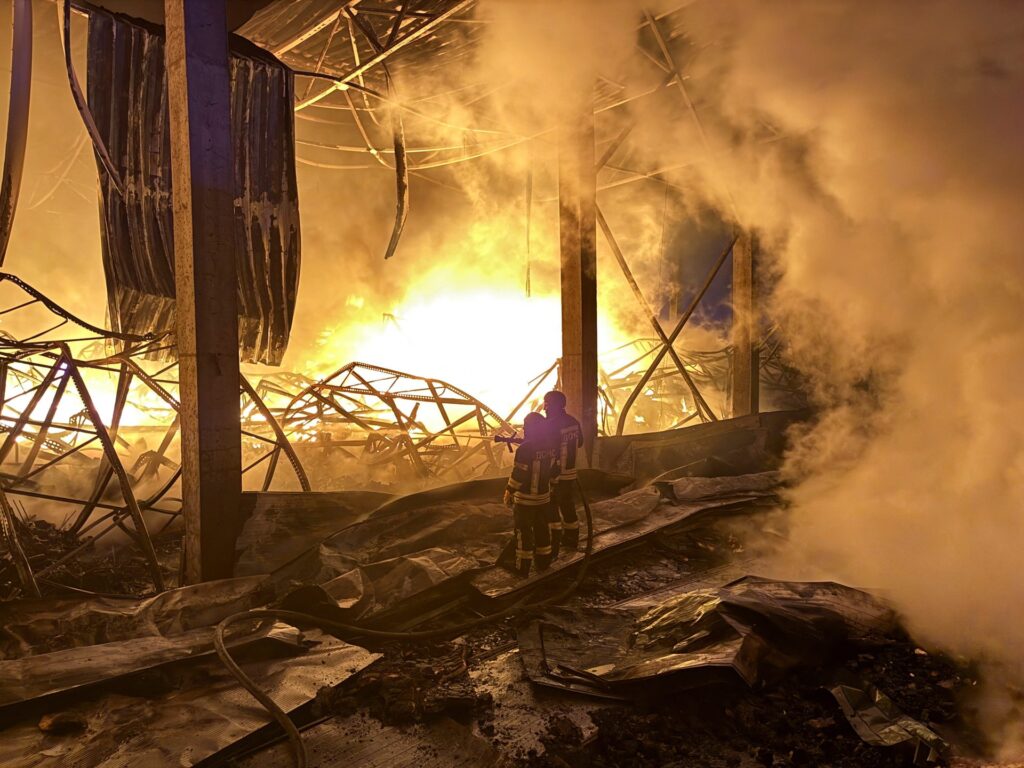
The ongoing conflict between Russia and Ukraine has intensified with recent overnight drone strikes, resulting in injuries on both sides and targeting critical infrastructure. According to Russian reports, their forces successfully hit a key Ukrainian postal hub and a ship, disrupting logistics and communication channels vital for Ukraine’s ongoing operations. This attack forms part of the larger strategic exchanges occurring across the border.
In retaliation, Ukrainian forces launched a strike on the Russian city of Ryazan, signaling a significant escalation in hostilities that now extend deep into Russian territory. Ryazan, an important city for Russia’s military and industrial operations, came under targeted attack demonstrating Ukraine’s capability and willingness to strike beyond the conflict’s usual frontlines.
The sequence of drone strikes highlights the increasing use of unmanned aerial vehicles in modern warfare, especially in targeting energy and logistical sites critical to both nations’ military capabilities. Russian officials emphasized that the attack on the Ukrainian postal hub was aimed at disrupting the enemy’s communication and supply chain, thereby attempting to weaken Ukraine’s operational effectiveness.
Meanwhile, Ukrainian sources confirmed the strike on Ryazan, framing it as a defensive measure aimed at deterring further Russian aggression. Both nations reported injuries among military personnel and possibly civilians, although detailed casualty figures remain unclear as the situation continues to develop.
Energy infrastructure has also been caught in the crossfire, with several drone strikes targeting power plants and distribution centers. These attacks threaten to cause wider disruption to civilian populations and stress the increasing humanitarian costs of the conflict. Authorities on both sides are warning of potential escalations as each seeks to undermine the other’s operational and logistical capabilities.
Analysts observing the situation note that the target selection underscores a shift toward more strategic, high-value locations rather than purely military bases. The attacks on postal hubs, ships, and cities like Ryazan suggest a broader campaign to disrupt everyday life and national resilience in both countries.
The international community continues to express concern over the rising violence and urges both Russia and Ukraine to avoid further escalation. Diplomatic efforts to broker peace have so far been unsuccessful, and these recent drone strikes cast doubt on near-term prospects for a ceasefire.
In summary, the latest round of drone attacks marks a notable intensification in the Russia-Ukraine conflict. With strikes hitting key logistical hubs, energy sites, and urban centers on both sides, the human and strategic costs are mounting. As injuries are reported and tensions soar, the conflict shows signs of deepening with no immediate resolution in sight.