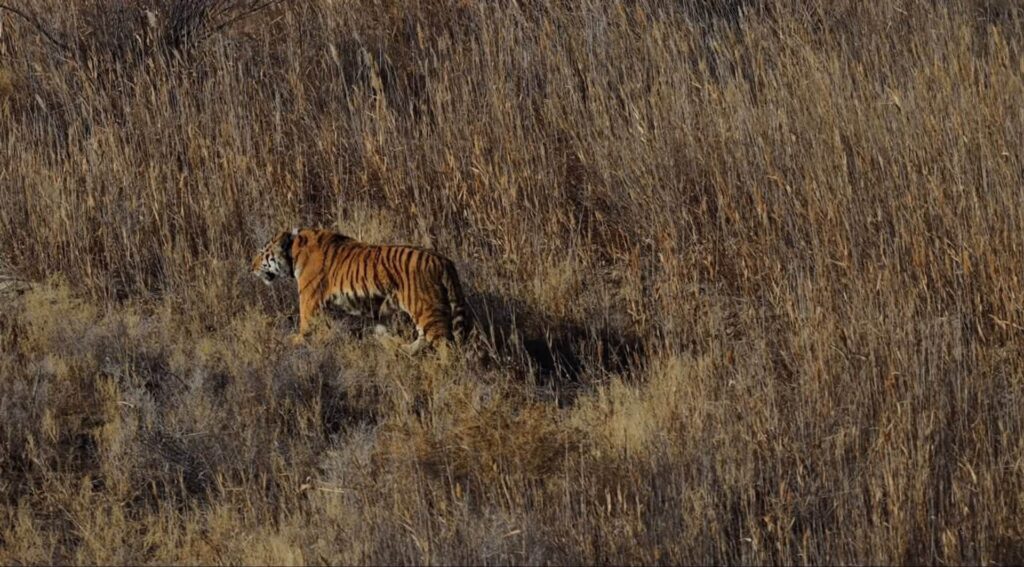
Kazakhstan has made a significant step in wildlife conservation by releasing its second Siberian tiger into the wild. This time, the tiger is a male named Amur, who has been set free in a protected nature reserve. The release marks an important milestone in efforts to restore the population of this endangered species in the region.
The first Siberian tiger, which Kazakhstan released into the wild, was a female. The introduction of Amur, alongside the previous female tiger, is expected to help initiate the natural breeding and increase the population of tigers in Kazakhstan’s vast wilderness.
The Siberian tiger, also known as the Amur tiger, is one of the most iconic and endangered big cats in the world. Native to the forests of Eastern Russia and parts of northeastern China, the tiger had long been extinct or nearly extinct in Kazakhstan.
Conservationists in Kazakhstan have been working for years to create safe habitats for tigers and to rehabilitate and reintroduce them into the wild, after decades of habitat loss, poaching, and human encroachment devastated their populations.
The nature reserve where Amur has been released offers a protected environment with abundant prey and minimal human interference. This is crucial to ensure the tiger’s survival and to allow it to adapt and thrive in its natural surroundings.
The release of Amur into the wild was carefully planned and executed by a team of wildlife experts, conservationists, and local authorities. The tiger was monitored for several months before its release to ensure it was healthy and capable of surviving independently.
This initiative is part of Kazakhstan’s broader environmental and wildlife conservation strategy. Authorities aim not only to bring back the Siberian tiger but also to preserve other endangered species and promote biodiversity in the region.
Local communities surrounding the nature reserve have been engaged in the conservation efforts to foster coexistence and reduce potential conflicts between humans and wild animals.
The successful release of Amur is expected to inspire further conservation projects and encourage international cooperation in protecting endangered species and their habitats.
Experts highlight the importance of ongoing monitoring and protection efforts to guarantee the long-term survival of the Siberian tiger in Kazakhstan. They emphasize that the reintroduction of these majestic predators is a critical step towards restoring ecological balance and promoting a healthy ecosystem.
Kazakhstan’s commitment to wildlife conservation through projects like the release of Amur the Siberian tiger offers hope for the survival of endangered species globally. It showcases how dedicated efforts and modern conservation techniques can help reverse decades of population decline.
The conservation community worldwide is closely watching Kazakhstan’s progress, hopeful that the project will provide a model for similar efforts in other regions where endangered wildlife faces severe threats.
As Amur roams the wild, he symbolizes a new beginning for Siberian tigers in Central Asia and the resilience of nature when humans intervene wisely and compassionately.