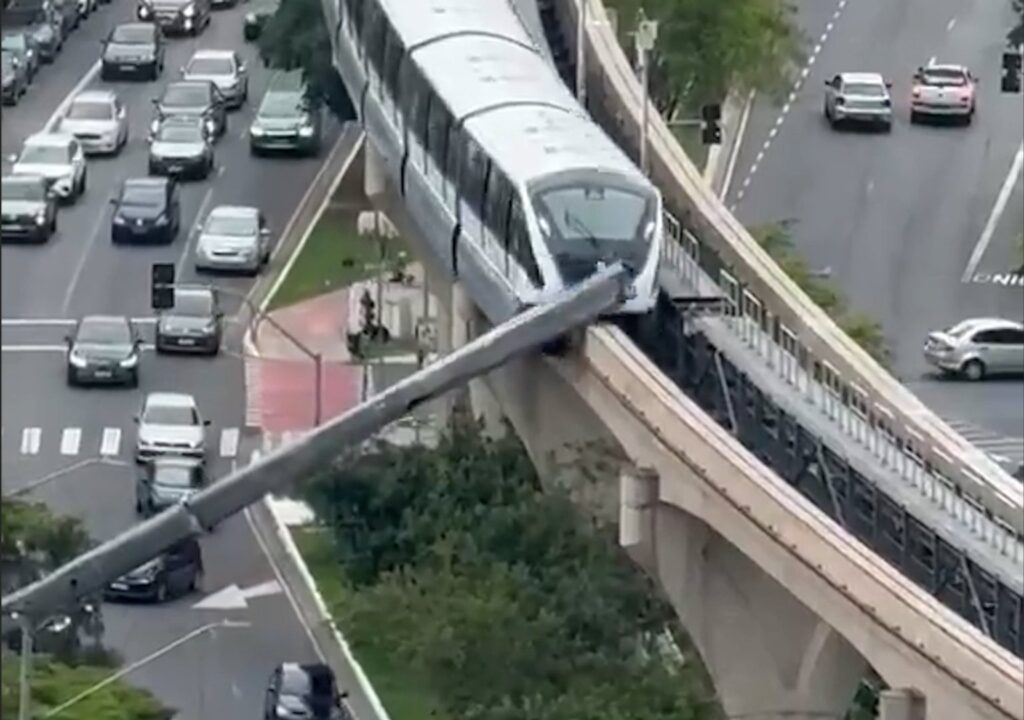
A dramatic incident occurred in Brazil when a train slammed into a crane that had collapsed onto the railway line. The accident was captured on video, revealing the moment the train struck the fallen crane, highlighting the dangerous situation on the tracks.
The crane had reportedly toppled onto the railway line prior to the train’s arrival, causing an obstruction that the train could not avoid. Eyewitnesses and surveillance footage show the train approaching the site at speed before the collision, emphasizing the suddenness of the event.
Authorities have launched an investigation into the cause of the crane’s collapse. Initial reports suggest that the crane might have been involved in construction or maintenance work near the railway and fell due to either mechanical failure or unstable ground conditions. However, detailed assessments are still underway.
Fortunately, there have been no immediate reports of casualties or serious injuries among the train passengers or crew. Emergency services responded promptly to manage the situation, secure the area, and assist anyone affected.
The incident has raised concerns about safety measures around infrastructure work near active railway lines. Experts emphasize the importance of stringent safety protocols to prevent such accidents, especially in busy transport corridors.
Railway operators are currently assessing the damage to both the train and the railway infrastructure. The collision has caused disruptions to train services on the affected line, with rerouting and delays expected as cleanup and repairs are conducted.
Local authorities have urged the public to stay clear of the accident scene and adhere to any travel advisories related to the incident. They have also assured that a thorough review will be implemented to enhance safety and prevent future occurrences.
This episode serves as a stark reminder of the risks involved in construction and maintenance work near railway tracks, underscoring the necessity for comprehensive risk management and coordination between construction teams and railway operators.
Further updates will be provided as more information becomes available, including the outcomes of the investigation and the status of the railway line’s restoration.