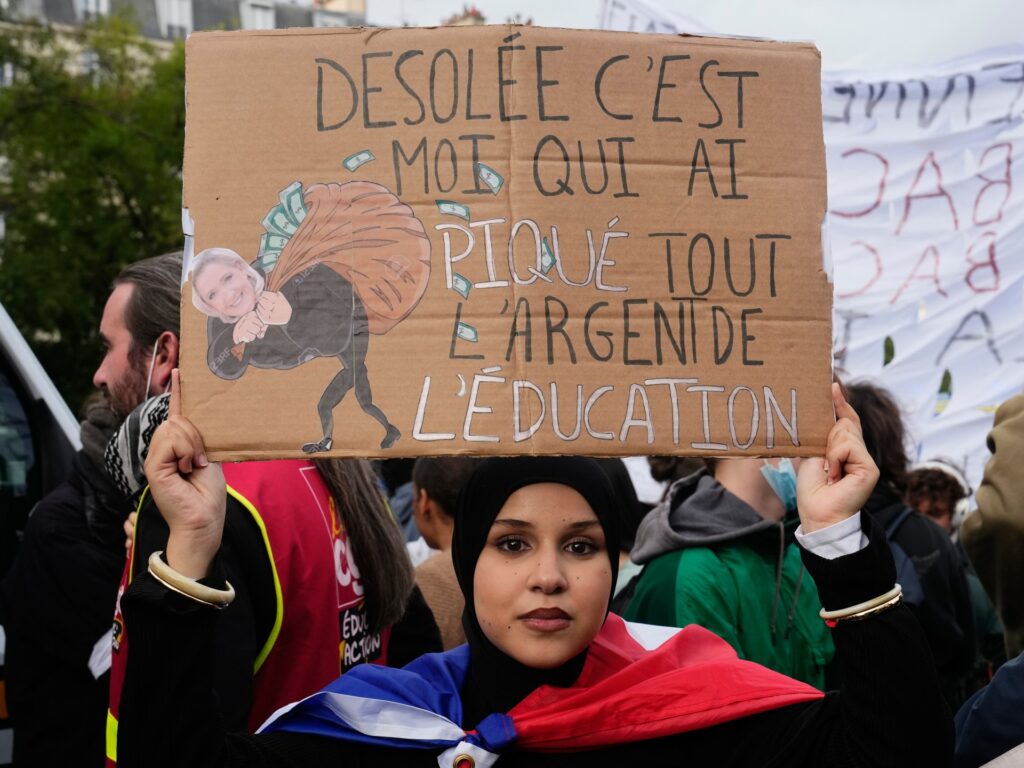
Amid ongoing widespread protests across France, President Emmanuel Macron is set to meet student representatives for the first time this Friday. This significant move comes as France continues to grapple with escalating demonstrations primarily led by students and other groups opposing recent government policies.
The current wave of protests has been marked by dynamic and sustained demonstrations in cities across the country. These protests are fueled by a combination of factors, including opposition to pension reforms, economic challenges, and demands for improved social conditions. The student groups have been particularly vocal, organizing strikes and sit-ins in universities and public spaces.
President Macron’s decision to engage directly with student leaders indicates an acknowledgment of the growing unrest and the need to address the concerns of younger generations. The meeting aims to open dialogue and explore possible solutions to defuse tensions that have led to clashes with law enforcement and disruptions in daily life.
Observers note that this engagement could set the tone for the government’s approach moving forward. Successful talks may pave the way for compromises or adjustments in policy, potentially steering protests toward peaceful resolution. Conversely, if talks falter, it may further embolden protestors and lead to intensified demonstrations.
The government’s willingness to engage with students contrasts with earlier phases of the unrest, where responses were primarily characterized by police intervention and limited political outreach. Now, facing sustained pressure and the risk of broader social destabilization, Macron’s administration appears to be recalibrating its strategy.
The student representatives are expected to voice key concerns, including demands for educational reforms, job prospects, and social equity. These issues resonate beyond student circles, highlighting broader societal anxieties about France’s economic future and governance.
Public opinion remains divided, with some citizens supporting the protestors’ calls for change, while others express concern over the disruptive impact on public order and daily routines. The coming days will be critical in determining whether dialogue can bridge these divides.
As Friday’s meeting approaches, the question many ask is where France’s protests are heading. Will this engagement mark a turning point toward resolution and reform, or will it be another chapter in ongoing social unrest? The answers will significantly influence France’s political landscape and social cohesion in the months ahead.