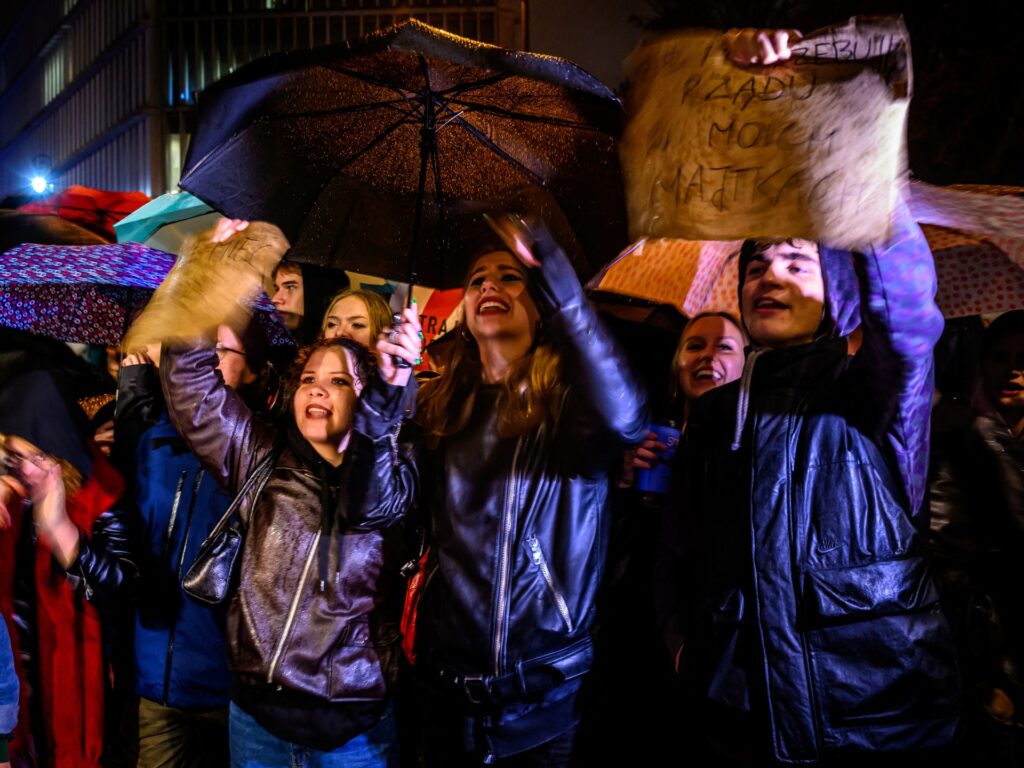
Thousands of demonstrators took to the streets across Poland to protest for free and legal access to abortion services. The protests coincided with the sixth anniversary of Poland’s highest court imposing a near-total ban on abortions in the country.
The ruling, which drastically restricted abortion rights, has been a point of contention and protest in Poland ever since its implementation. The law allows abortion only in limited circumstances, such as when the pregnancy poses a threat to the woman’s life or results from rape or incest, effectively barring most women from legally accessing abortion services.
On this significant anniversary, activists and citizens alike gathered in numerous cities to express their discontent with the law and demand wider reproductive rights. The protests saw participation from various demographics, including women’s rights groups, medical professionals, and students.
The demonstrators called on the government to amend the restrictive legislation and provide women with the autonomy to make decisions about their own bodies. They emphasized the need for safe, legal, and accessible abortion services as a matter of fundamental human rights and public health.
The protests were marked by speeches, marches, and symbolic acts of solidarity among the participants. Many carried banners and signs advocating for reproductive freedom and highlighted the negative impact the ban has had on women’s health and socio-economic conditions.
Despite the government’s stance, the protests highlight the persistent demand among a significant portion of the Polish population for change. The movement has received international attention, with global human rights organizations criticizing Poland’s abortion laws and supporting the ongoing struggle for women’s rights in the country.
This day of protest also rekindled debates on reproductive rights within Poland, pushing them back into the national conversation. The demonstrators urged politicians to prioritize women’s health and rights and called for comprehensive sexual education and support services to accompany any changes in the law.
As Poland continues to grapple with divisive abortion laws, this anniversary serves as a reminder of the ongoing fight for reproductive freedom. The voices calling for change remain loud, determined, and united across the nation.